
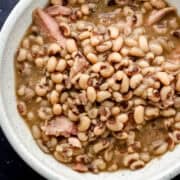
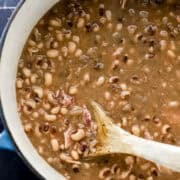
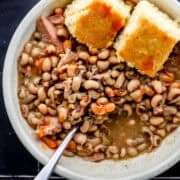
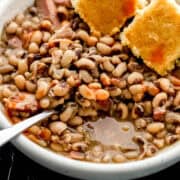

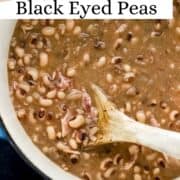

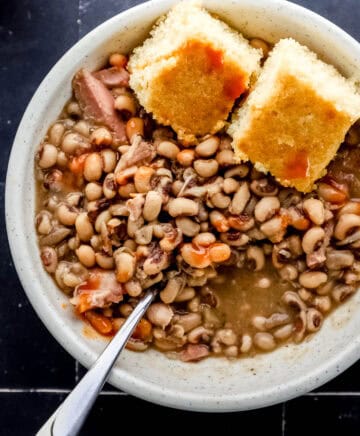
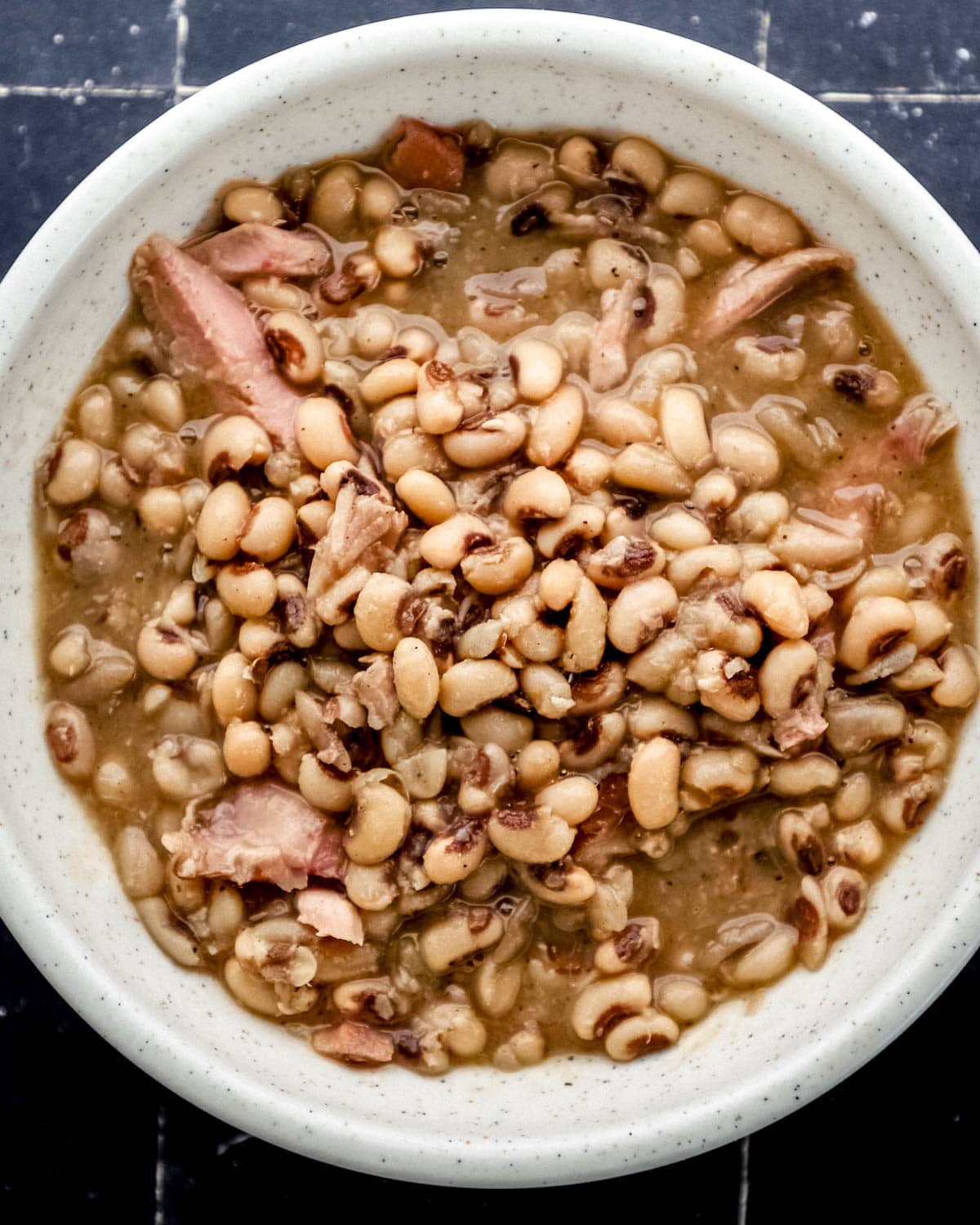
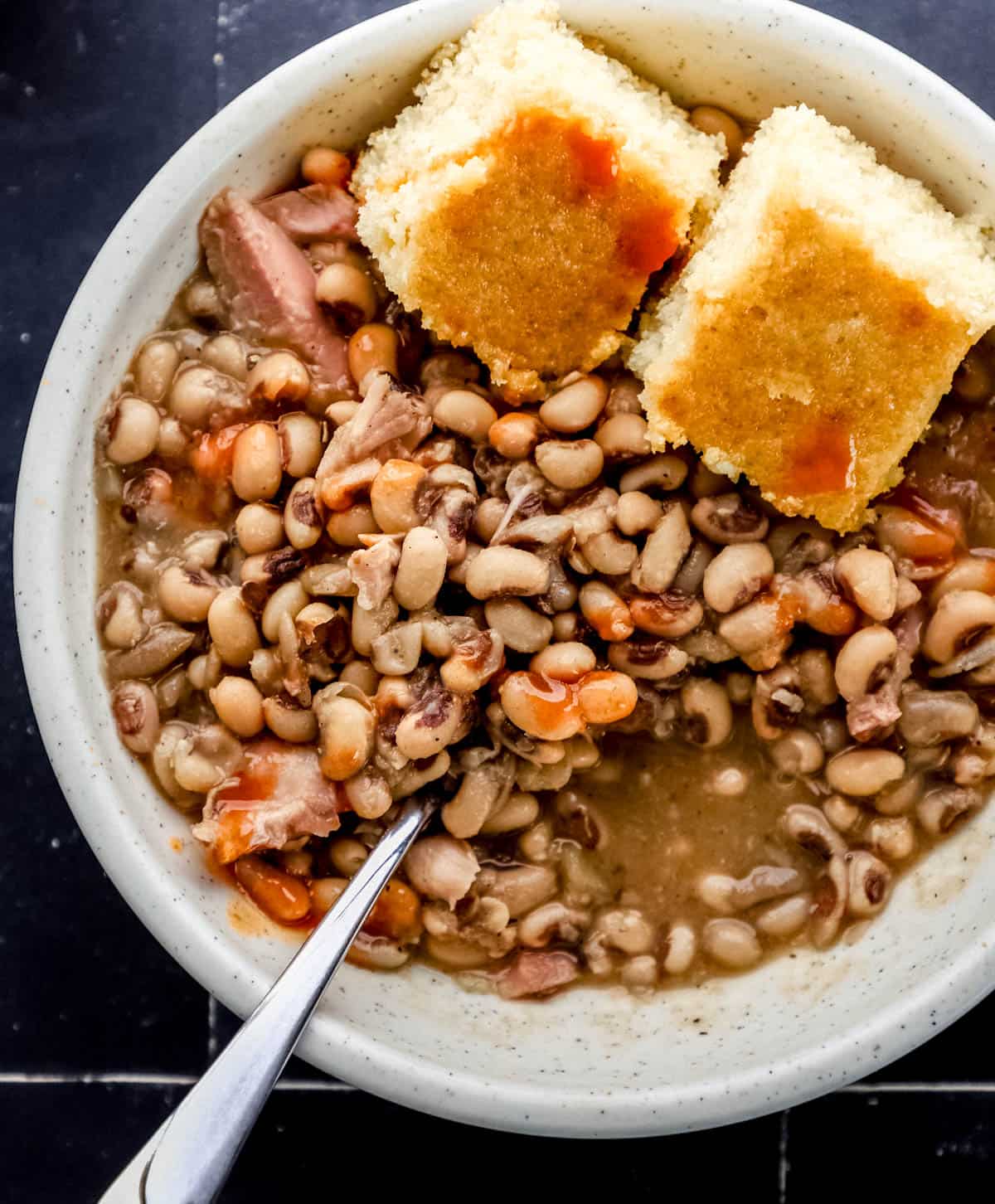
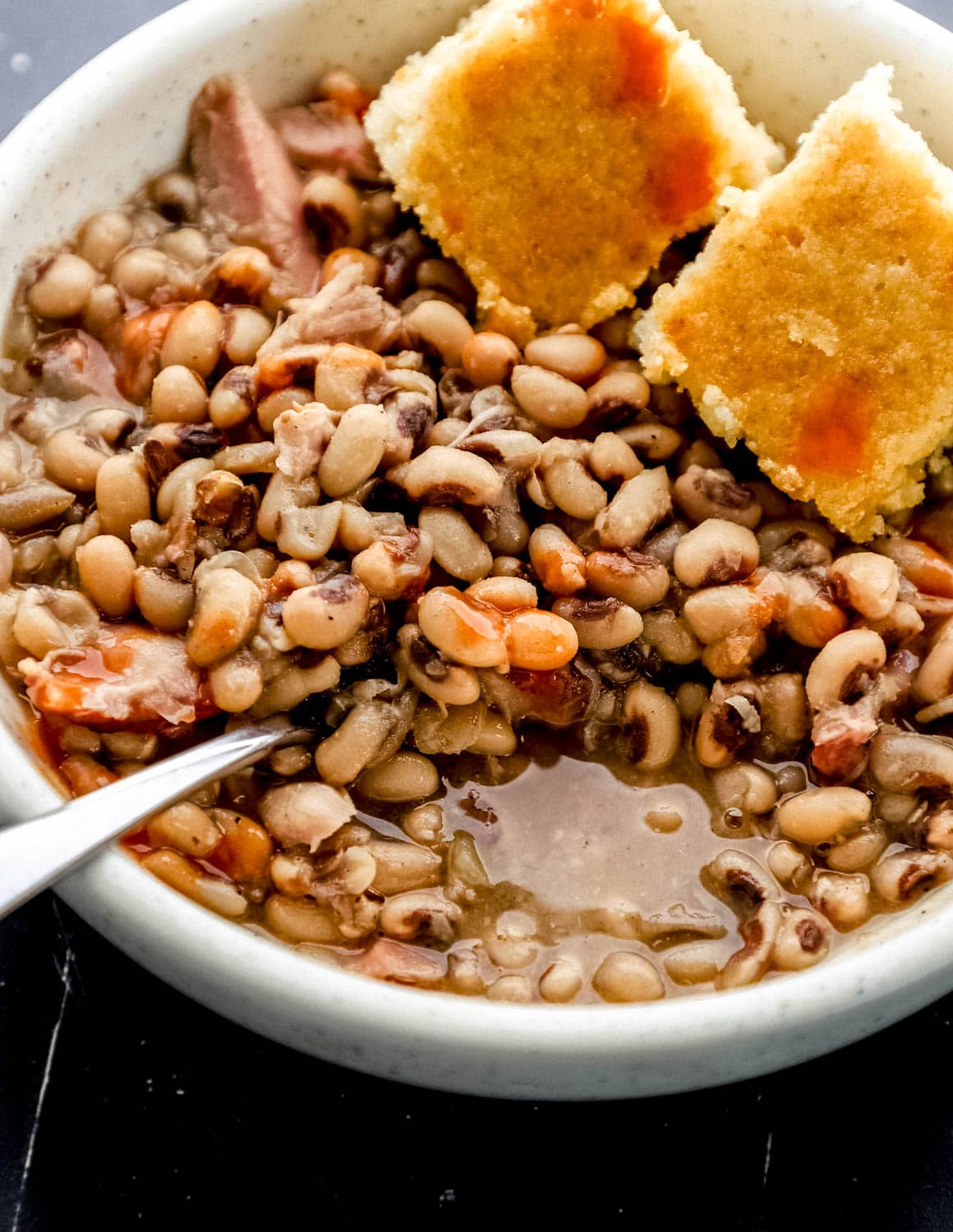
This Southern black eyed peas recipe starts with dried peas slow-cooked in a savory broth with smoked turkey wings, sautéed onions, and aromatic seasonings. The result? Creamy, tender peas in a thick, flavorful sauce that's perfect for New Year's Day or any Sunday dinner. Pair them with cornbread and collard greens for a classic Southern soul food feast.
Updated November 2025 with enhanced instructions, additional expert tips, and a comprehensive FAQ section to help you find and make this recipe more easily. Originally posted on December 13, 2024.
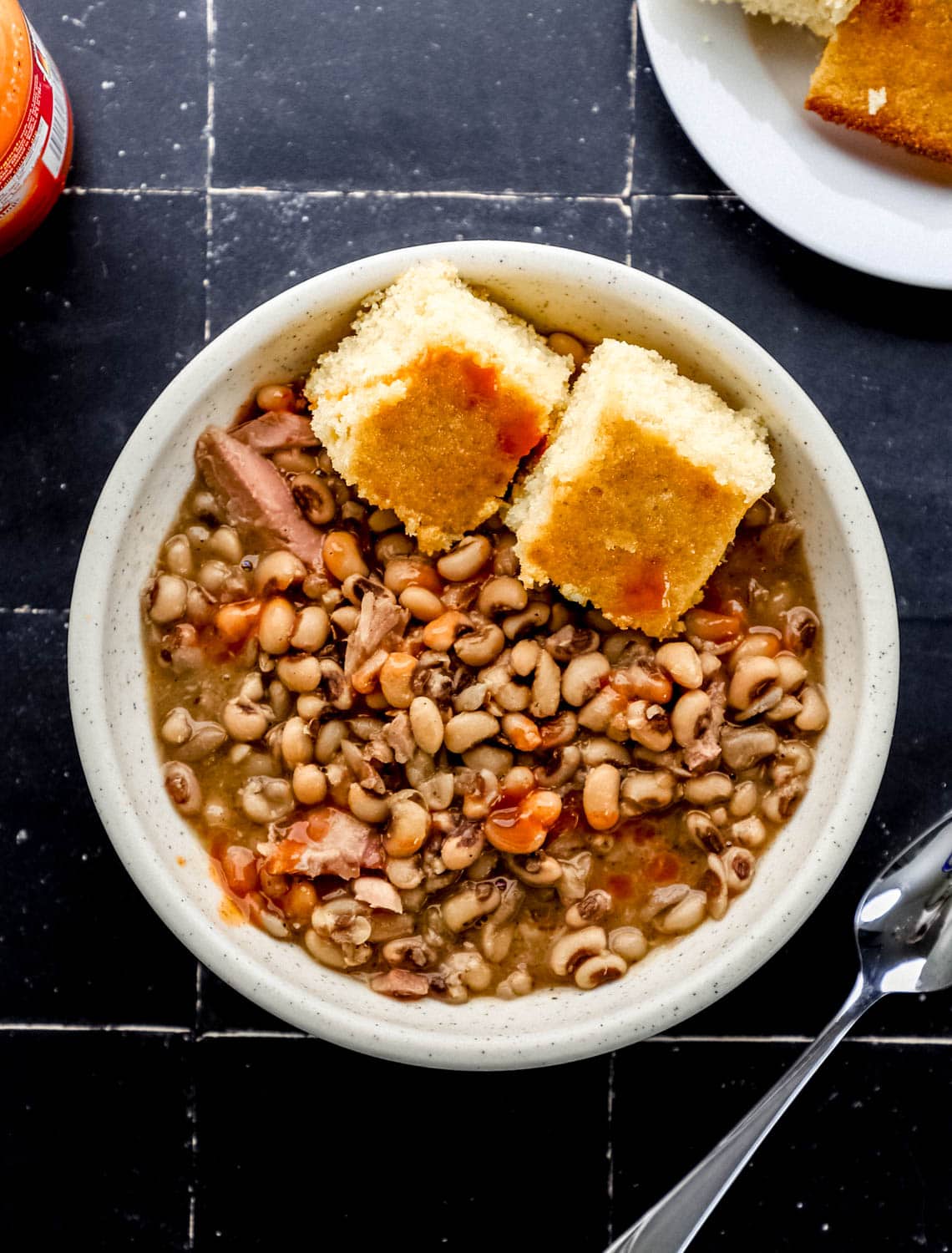
I grew up eating black eyed peas every New Year's Day in my Southern kitchen, where they symbolize good luck and prosperity for the coming year. This stovetop method is how my family has made them for generations, low and slow with smoky meat and just the right seasonings. You can find more about my Southern cooking journey on my About page.
Try making my slow cooker version of Black Eyed Peas with Pork Chops as well. Pair these creamy black eyed peas with Fried Chicken and Cornbread for a complete meal.
Let's get started!
Jump to:
- Why You'll Love This Recipe
- Cultural Significance of Black Eyed Peas
- Ingredients You'll Need
- Preparing Dry Black Eyed Peas
- How to Make Black Eyed Peas
- 📖 Recipe
- What to Serve with Black Eyed Peas
- Expert Tips for Perfect Black Eyed Peas
- Best Meat for Black Eyed Peas
- Frequently Asked Questions
- Storage Tips
- Want More Recipes To Pair with These Delicious Black Eyed Peas?
Why You'll Love This Recipe
- Authentic Southern flavor - Made with smoked turkey and traditional seasonings for that classic soul food taste.
- Creamy, tender texture - Slow-cooked until perfectly tender but not mushy.
- Budget-friendly - Dried peas are incredibly affordable and feed a crowd.
- Traditional New Year's dish - Bring good luck and prosperity into your home.
- Simple stovetop method - No special equipment needed, just a large pot.
- Make-ahead friendly - Tastes even better the next day as flavors meld together.
- High in protein and fiber - A nutritious addition to any meal.
Cultural Significance of Black Eyed Peas
Black eyed peas hold deep cultural significance in Southern cuisine, especially on New Year's Day. The tradition of eating black eyed peas on January 1st represents good luck and prosperity for the coming year. This custom has roots in the Southern United States and is believed to have originated during the Civil War era.
Many Southern families pair black eyed peas with collard greens (representing money or "greenbacks") and cornbread (symbolizing gold) for a meal that promises financial prosperity. Some cooks even add a dime or penny to the pot while cooking, and whoever finds the coin in their bowl is said to have extra good luck throughout the year!
These humble legumes are also the main ingredient in Hoppin' John, a traditional Lowcountry dish where black eyed peas are served over rice with smoked meat. While the name's origin is debated, the dish remains a Southern staple year-round.
Beyond their cultural significance, black eyed peas are packed with protein, fiber, folate, and iron, making them a healthy and hearty choice for any meal.
Ingredients You'll Need
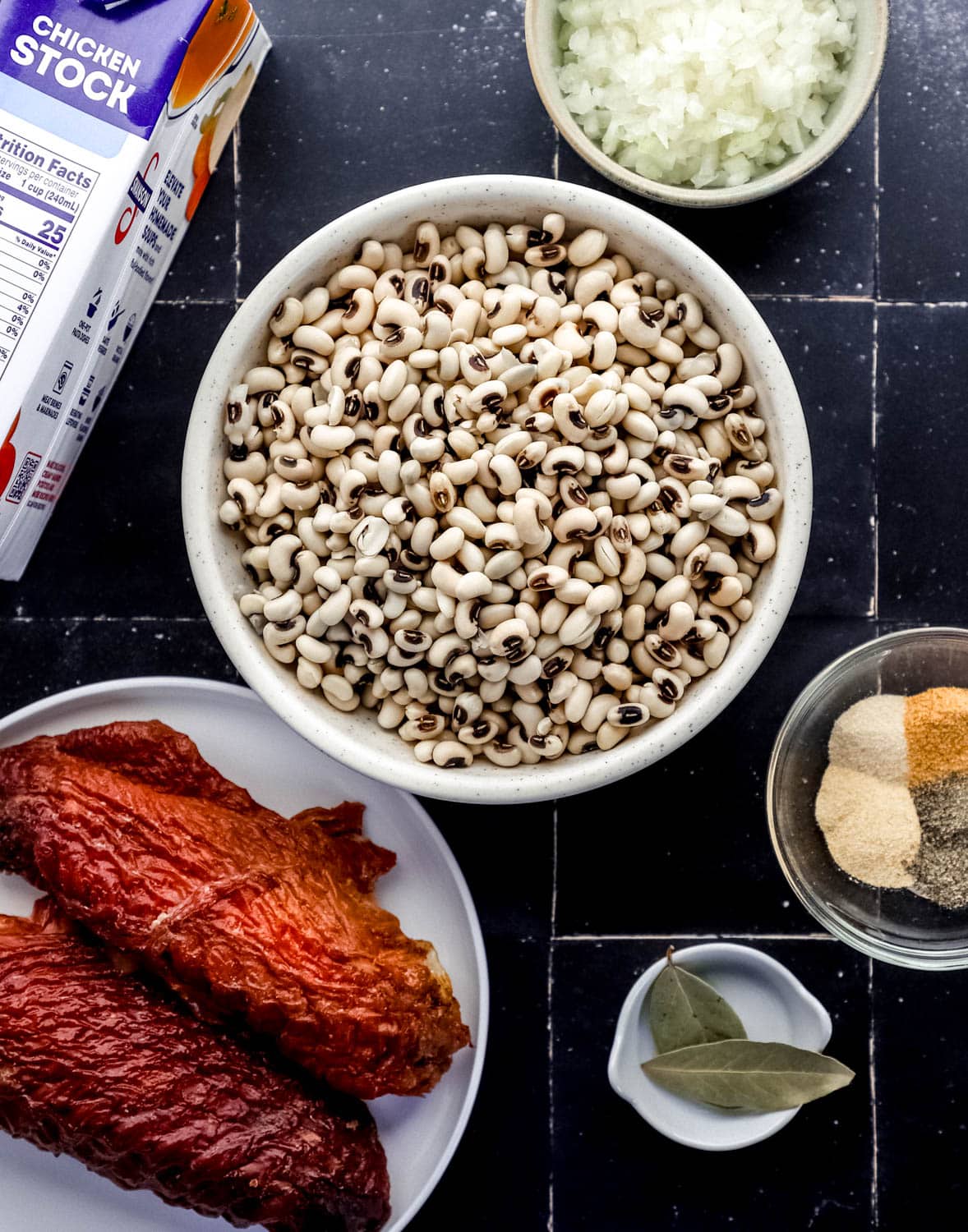
Main Ingredients
- Black Eyed Peas - Use 1 pound of dried peas, which need to be soaked before cooking for the best texture.
- Olive Oil - For sautéing the onions to create a flavorful base.
- Butter - Adds richness and helps develop the aromatic foundation.
- Onion - Yellow or white onion adds an earthy, aromatic flavor (diced green bell pepper is optional).
Seasonings
- Salt - Essential for bringing out the flavors and preventing bland peas.
- Ground Black Pepper - Adds warmth and peppery notes.
- Garlic Powder - Provides deep, pungent garlic flavor.
- Seasoned Salt - A savory blend that adds complexity.
- Onion Powder - Intensifies the onion flavor.
- Bay Leaf - Adds subtle herbal depth.
Key Flavor Components
- Smoked Meat - I prefer smoked turkey wings for their lighter flavor, but ham hocks are also traditional. This is what gives the peas their signature smoky, savory taste.
- Chicken Stock - Creates a rich, flavorful broth. You can substitute chicken broth, vegetable broth, or even water.
👉🏾 See the recipe card below for exact quantities and full instructions.
Preparing Dry Black Eyed Peas
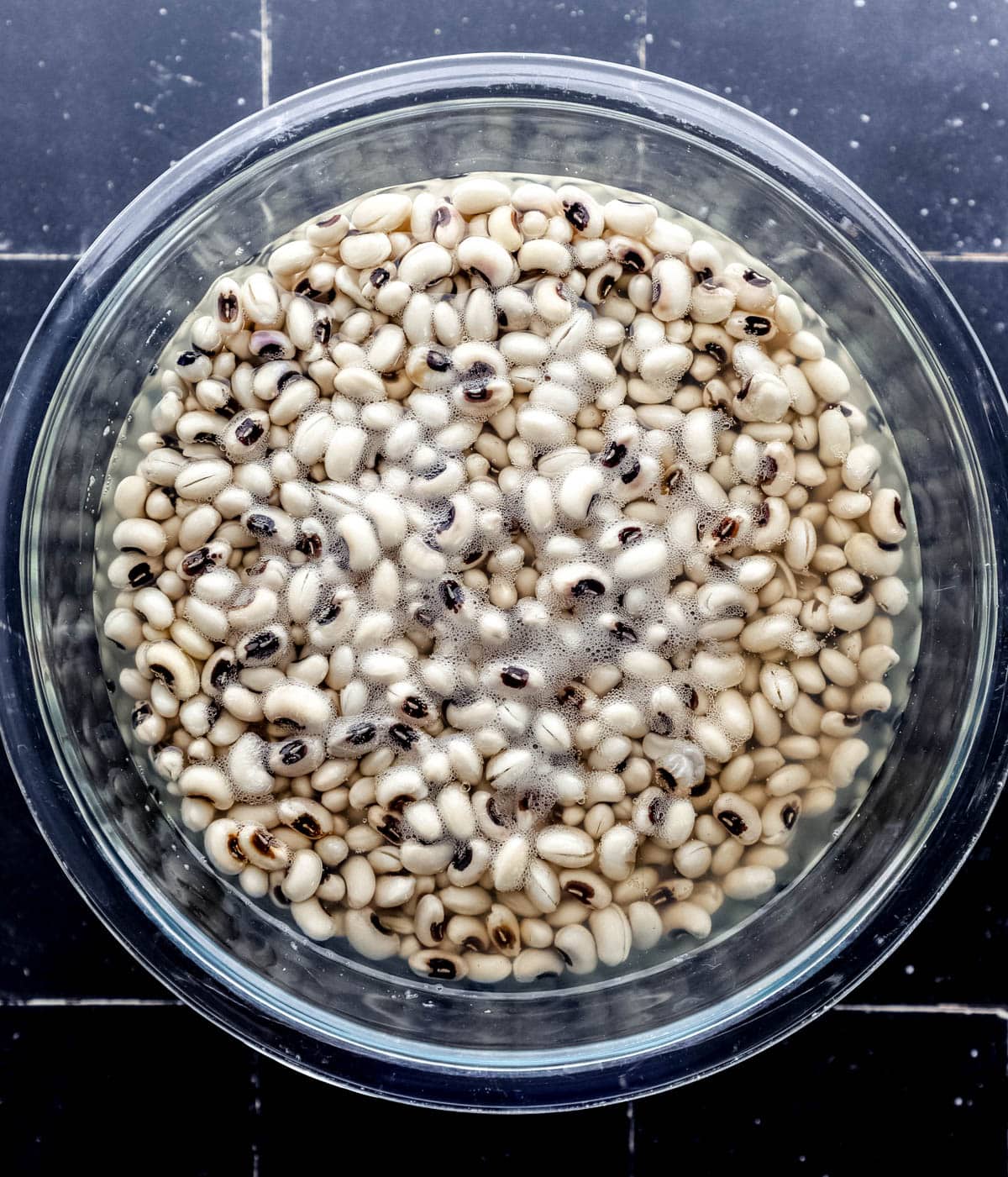
Proper preparation of dried black eyed peas is essential for the best results:
- Sort the peas: Remove them from the bag and sort through them, discarding any debris, broken pieces, or damaged peas.
- Rinse thoroughly: Give the black eyed peas a good rinse under cold water.
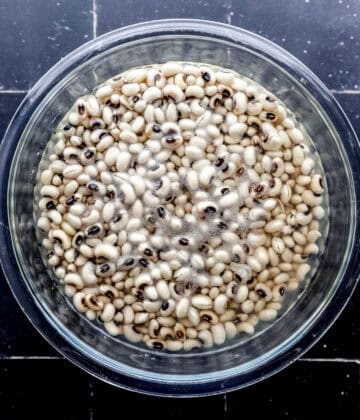
- Soak overnight: Place peas in a large bowl and cover with 2-3 inches of water. Cover and refrigerate overnight (8-12 hours).
Quick Soak Method (If You Forgot to Soak)
If you're short on time, use this quick-soak method:
- Place the beans in a large pot and cover with water.
- Bring to a boil over high heat.
- Turn off the heat, cover the pot, and let sit for 1 hour.
- Drain and proceed with the recipe.
How to Make Black Eyed Peas
Step 1: Sauté the Aromatics
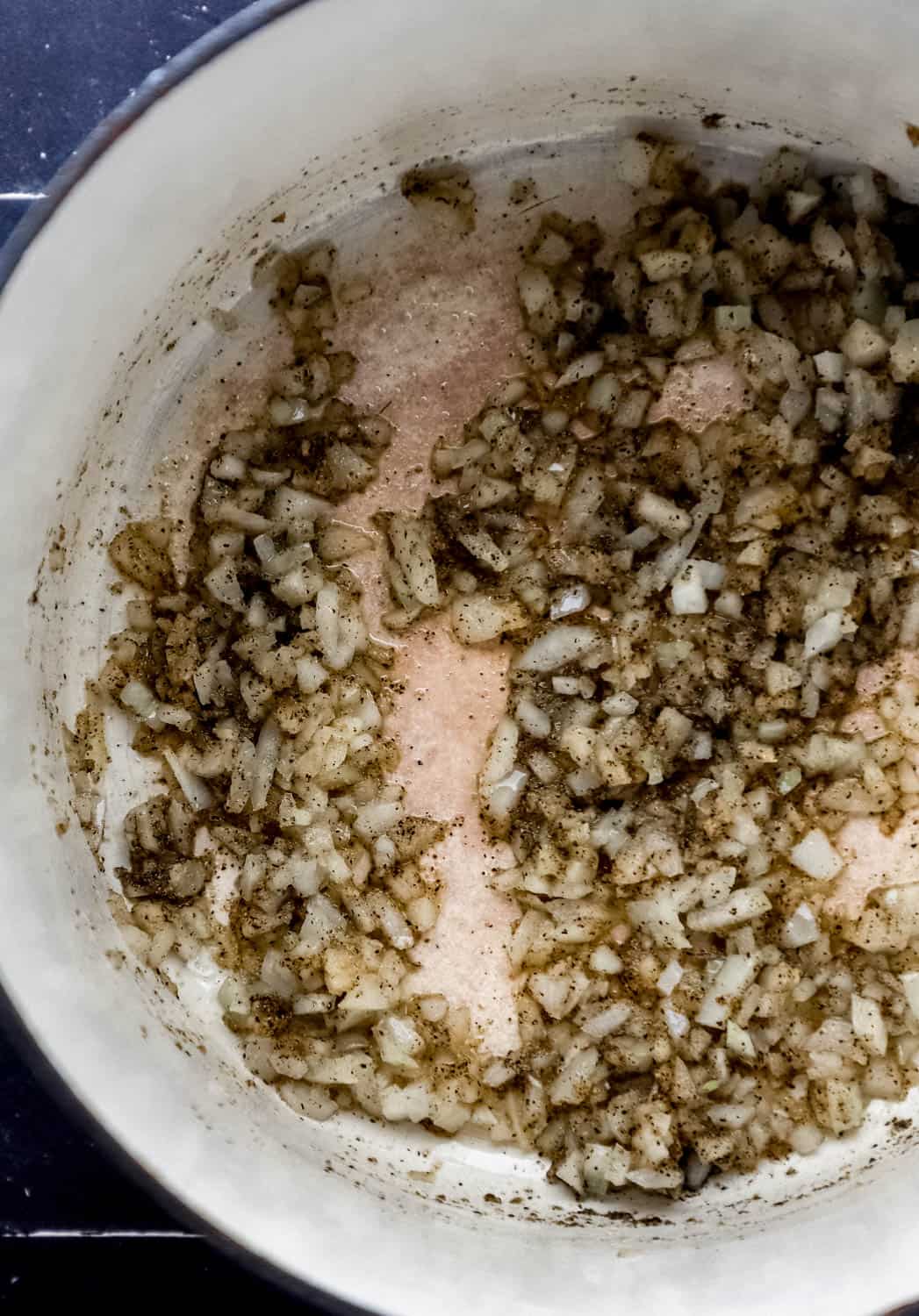
Begin by placing a large pot or Dutch oven on the stovetop over medium heat. Add the olive oil, butter, and diced onion. Stir and cook until the onions have softened and become slightly translucent, about 5 to 10 minutes.
Step 2: Add Seasonings and Meat
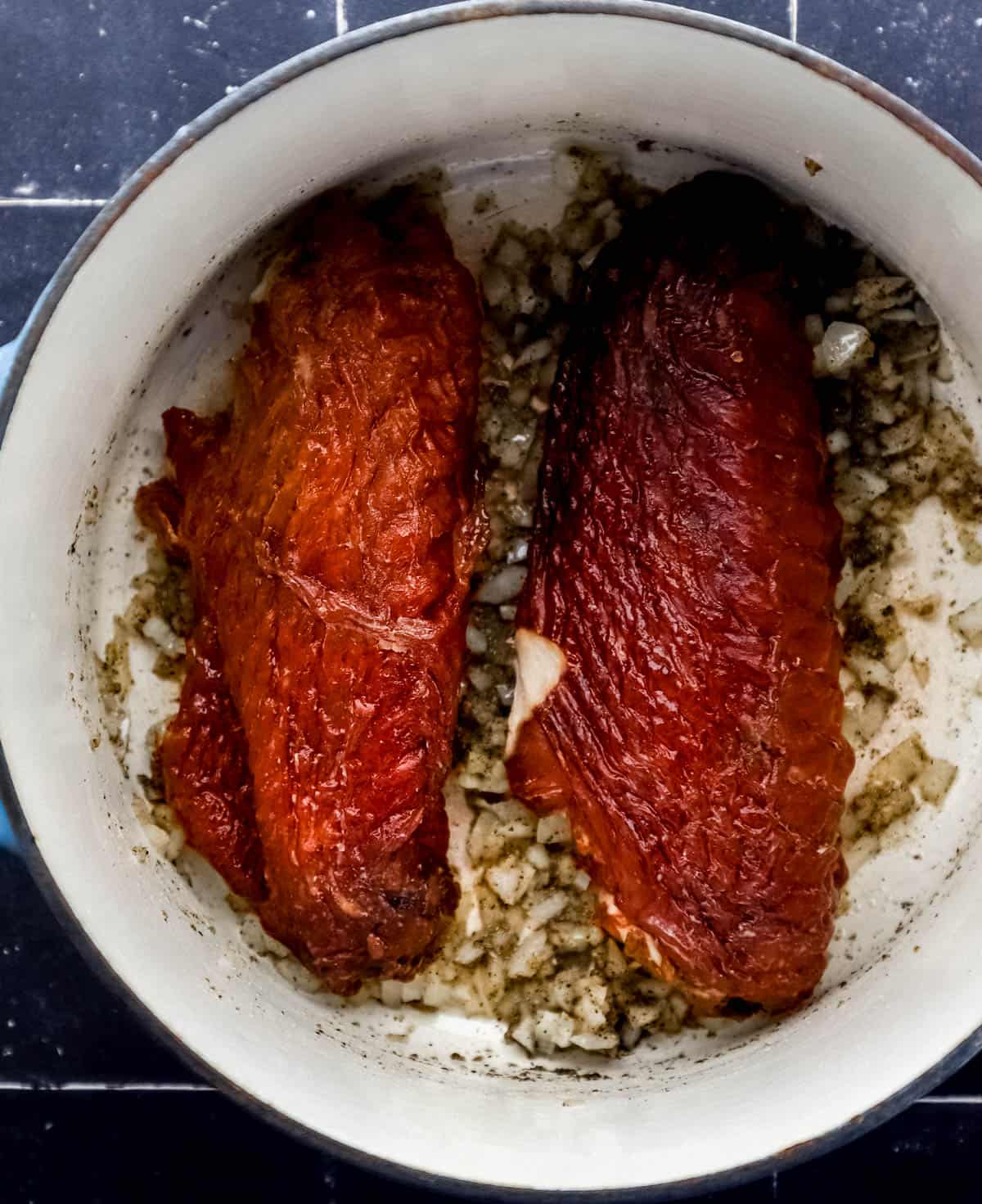
Add the salt, ground black pepper, garlic powder, seasoned salt, and onion powder. Stir to combine and let the spices bloom in the butter for about 1 minute. Add the smoked meat (today I'm using smoked turkey wings).
Step 3: Add Peas and Liquid
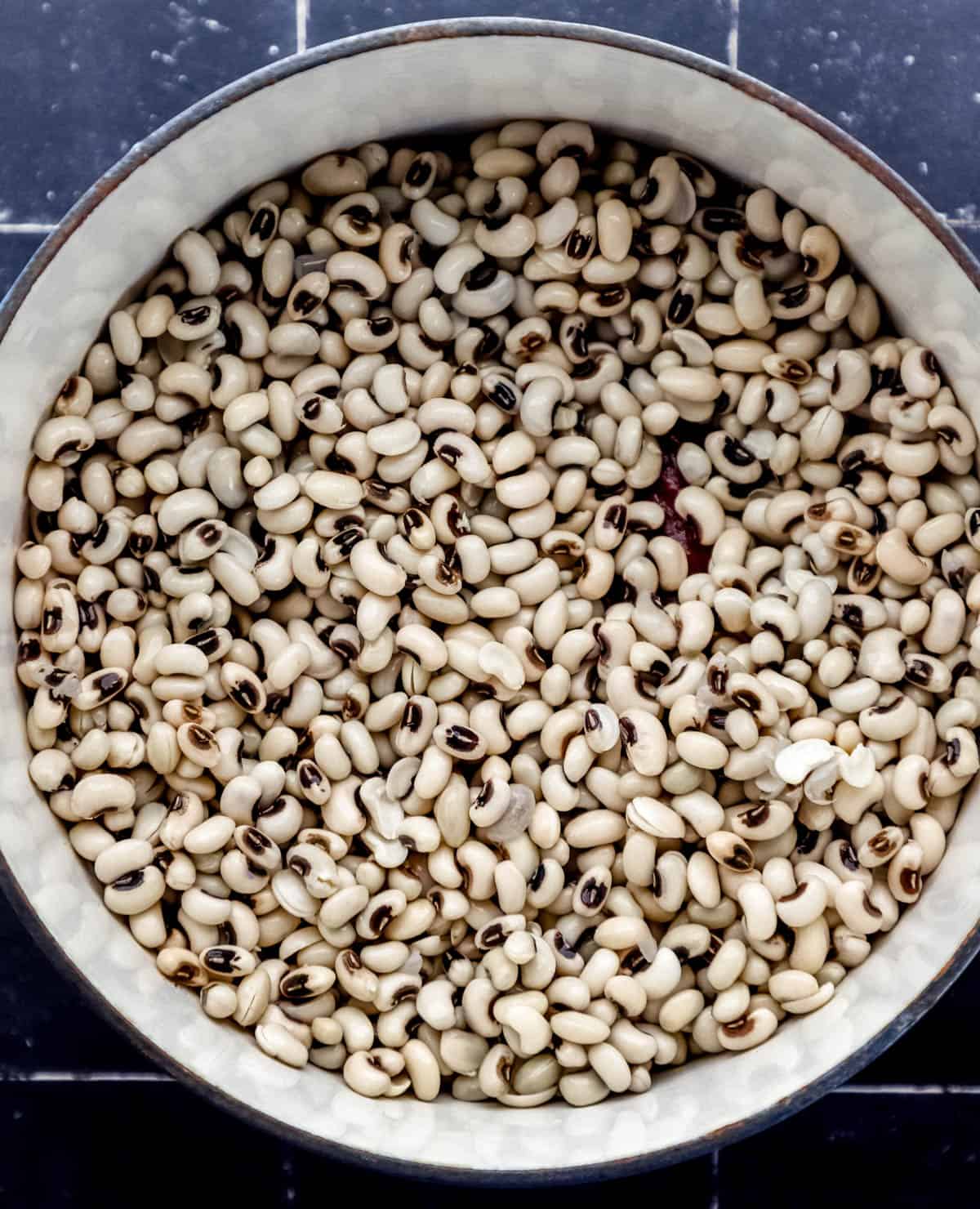
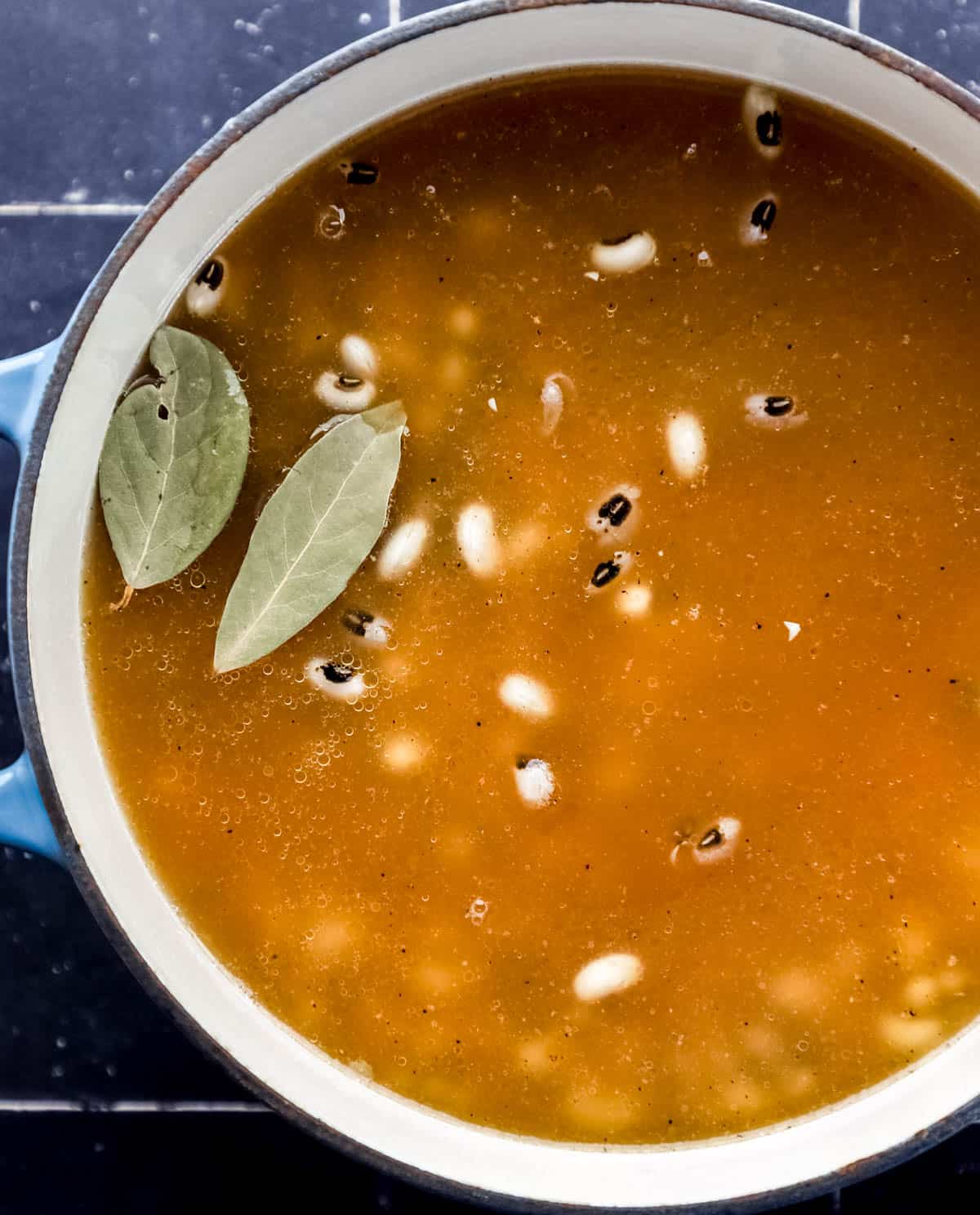
Top with the soaked and drained black eyed peas, chicken stock, and bay leaves.
Step 4: Simmer Until Tender
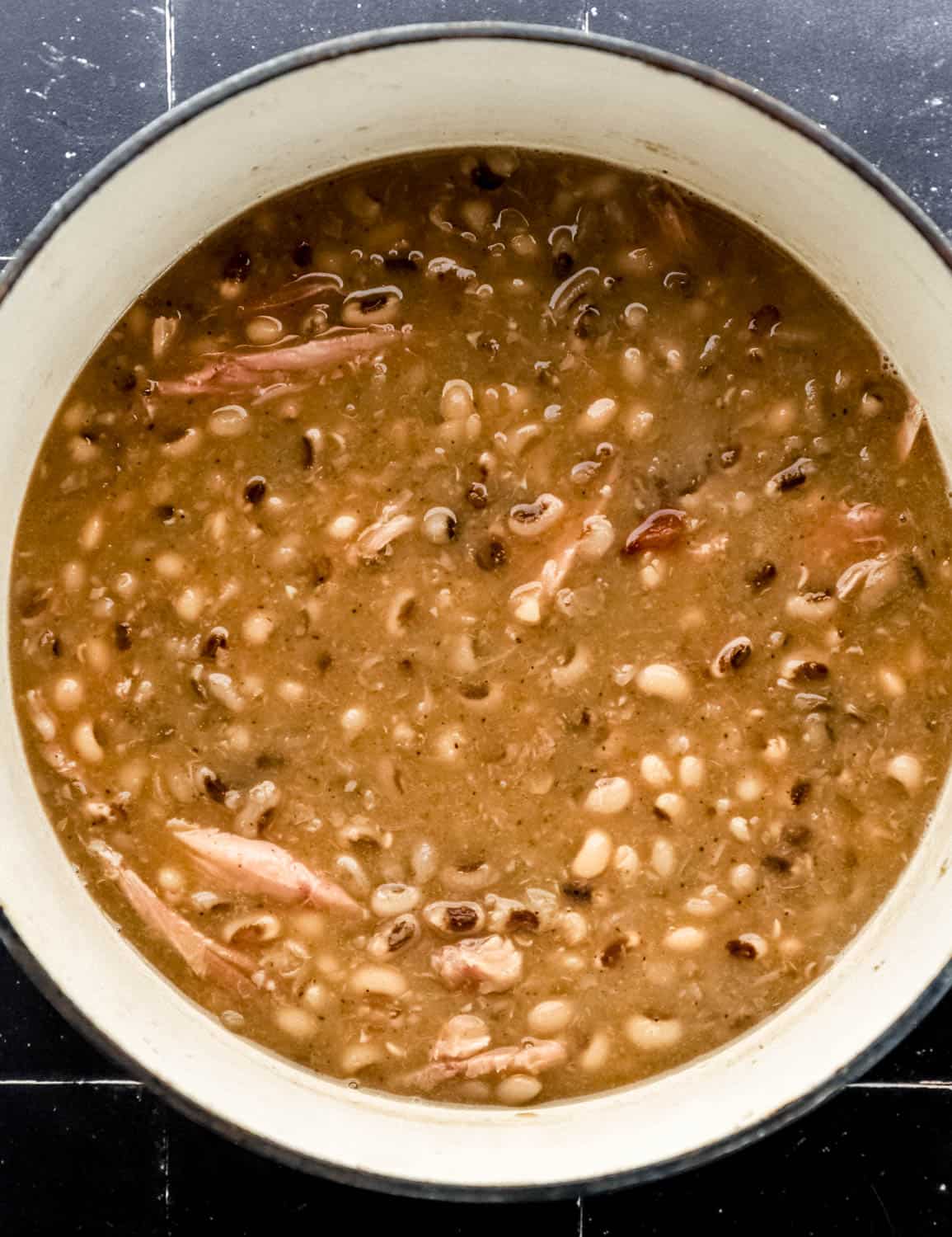
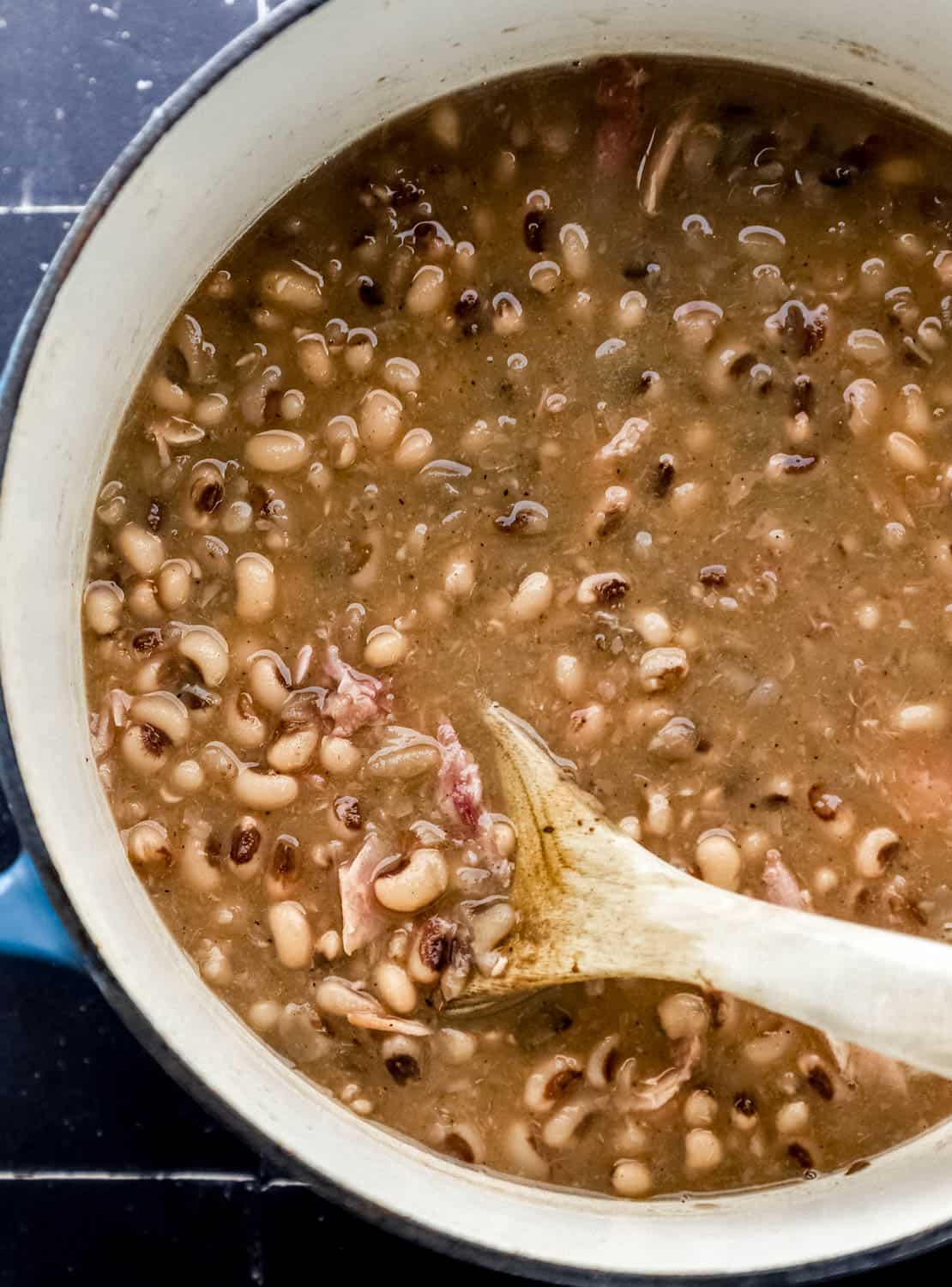
Allow the mixture to come to a boil, then reduce the heat to a low simmer. Cover and cook the beans until tender, about 1 to 1½ hours.
Pro tip: Skim off any impurities that rise to the surface during cooking. Keep the heat at a gentle simmer, boiling too vigorously can cause the peas to split and become mushy.
Step 5: Finish and Serve
Give the peas a good stir, remove and discard the bay leaves, and remove any bones from the meat. Taste and adjust seasoning if needed. Let the peas rest for 10-15 minutes off the heat to allow flavors to meld together. Serve warm over white rice or alongside cornbread and enjoy!
📖 Recipe
Southern Black Eyed Peas Recipe (Stovetop)
Equipment
- 1 large container or bowl (for soaking)
- 1 large pot or Dutch oven
- 1 wooden spoon
Ingredients
- 1 tablespoon olive oil
- 1 tablespoon butter
- 1 cup onion, diced
- 1 teaspoon salt
- 1 teaspoon ground black pepper
- 1 teaspoon garlic powder
- 1 teaspoon seasoned salt
- ½ teaspoon onion powder
- 1 pound smoked turkey wings or any smoked meat
- 1 pound dry black eyed peas (cleaned and soaked)
- 6 cups chicken stock (or enough to cover peas by 1 inch)
- 1-2 whole bay leaves
Instructions
- Prepare the peas: Soak the 1 pound dried black eyed peas overnight in cold water (see "Preparing Dry Black Eyed Peas" section above). Drain and rinse before using.
- Sauté aromatics: In a large pot or Dutch oven over medium heat, add 1 tablespoon olive oil, 1 tablespoon butter, and 1 cup diced onion. Cook, stirring occasionally, until onions are softened and translucent, about 5-10 minutes.
- Add seasonings: Stir in 1 teaspoon salt, 1 teaspoon black pepper, 1 teaspoon garlic powder, 1 teaspoon seasoned salt, and ½ teaspoon onion powder. Cook for 1 minute to bloom the spices.
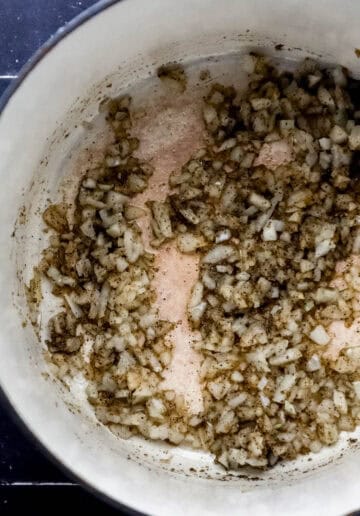
- Add meat, peas, and liquid: Add 1 pound smoked turkey wings, soaked and drained black eyed peas, 6 cups chicken stock, and 1-2 bay leaves. The liquid should cover the peas by about 1 inch. Add more stock or water if needed.
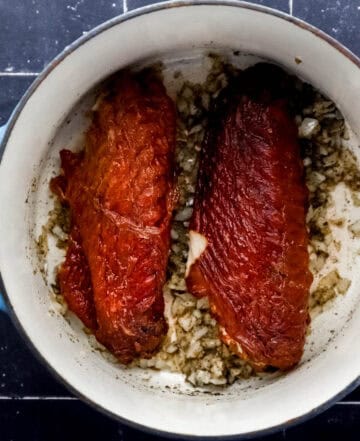
- Bring to boil: Increase heat and bring the mixture to a boil.
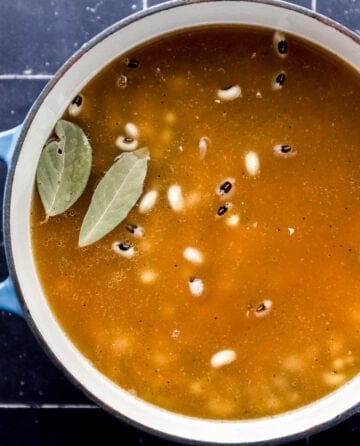
- Simmer: Reduce heat to low, cover, and simmer gently until peas are tender, about 1 to 1½ hours. Check occasionally and skim off any foam or impurities that rise to the surface. Add more liquid if needed to keep peas submerged.
- Finish: Remove bay leaves and any bones from the meat. Taste and adjust seasoning with additional salt and pepper if needed. Let rest 10-15 minutes before serving.
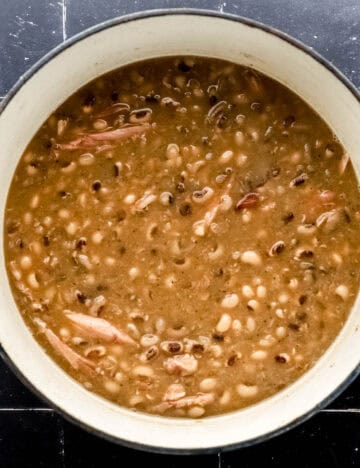
- Serve: Serve warm over white rice, or alongside cornbread and collard greens.
Notes
- For creamier peas: Mash a few cooked peas against the side of the pot with the back of a spoon to naturally thicken the broth.
- Meat options: Smoked turkey wings, ham hocks, bacon, andouille sausage, or smoked pork shoulder all work beautifully.
- Spice level: Add red pepper flakes or cayenne pepper for heat.
- Flavor boost: Finish with a splash of apple cider vinegar, hot sauce, or extra butter.
- Fresh vs. dried: This recipe is for dried peas. If using canned, add them in the last 10 minutes.
Storage
Refrigerator: Store in an airtight container for up to 3-4 days.Freezer: Freeze for up to 2 months in a freezer-safe container.
Reheating: Reheat on stovetop over medium heat until warmed through, adding a splash of stock or water if needed.
Want To Save This Recipe?
What to Serve with Black Eyed Peas
Black eyed peas are incredibly versatile and pair beautifully with many Southern favorites:
Classic Combinations:
- Southern Cornbread or Honey Butter Cornbread
- White rice (for Hoppin' John style)
- Southern Collard Greens
Additional Sides:
Main Dishes:
Expert Tips for Perfect Black Eyed Peas
Cooking Technique
- Keep it gentle: Maintain a gentle simmer to prevent the peas from splitting or becoming mushy. Vigorous boiling will break them apart.
- Skim the foam: Remove any foam or impurities that rise to the surface while cooking for a cleaner-tasting broth.
- Don't rush it: Low and slow is the key. The longer simmer allows flavors to develop and peas to become creamy.
Seasoning and Flavor
- Season generously: Black eyed peas can handle plenty of seasoning. Don't be shy with the salt and spices.
- Layer flavors: Sauté your aromatics first to build a flavor foundation.
- Finish with acid: A splash of apple cider vinegar or hot sauce at the end brightens the flavors.
- Add butter: A pat of butter stirred in at the end adds richness and silky texture.
- Try different spices: Smoked paprika, thyme, red pepper flakes, or cayenne all work beautifully.
Meat Selection
- Bone-in is best: Smoked meat with bones adds more flavor as it cooks.
- Bacon lovers: Cook bacon first and use the drippings to sauté your onions for extra richness.
- Turkey vs. pork: Smoked turkey wings are lighter; ham hocks are richer and more traditional.
- Don't skip the meat: The smoked meat is what gives these peas their signature flavor.
Texture Control
- For creamier peas: Mash some cooked peas against the pot with a spoon, or blend 1 cup and stir back in.
- For thicker broth: Cook uncovered for the last 15-20 minutes to reduce the liquid.
- Avoid mushiness: Don't overcook. Test peas after 1 hour, they should be tender but hold their shape.
Make Ahead Tips
- Rest before serving: Let cooked peas sit 10-15 minutes off the heat for flavors to meld.
- Even better next day: Make these a day ahead, they taste incredible reheated.
- Prep ahead: Soak peas and dice vegetables the night before for quick assembly.
Best Meat for Black Eyed Peas
The right smoked meat is essential for authentic Southern black eyed peas. Here are your best options:
My Top Choices
Smoked Turkey Wings (My Personal Favorite)
- Lighter than pork but still incredibly flavorful
- Fit easily in the pot and stay submerged
- Perfect if you're reducing pork consumption
- The meat falls off the bone when done
Ham Hocks (Most Traditional)
- Classic choice in Southern cooking
- Provides deep, rich, smoky flavor
- Creates a more robust, savory broth
- Contains more fat for extra richness
Other Excellent Options
Bacon
- Adds salty, smoky richness
- Cook first and use the drippings to sauté onions
- Crumble and add back at the end
- Use 6-8 slices for 1 pound of peas
Smoked Turkey Legs
- Similar to turkey wings but meatier
- Great for feeding a crowd
- Easy to find in grocery stores
Pork Shoulder or Pork Butt
- Adds tenderness and richness
- Creates a more substantial, meaty dish
- Use about 1-1.5 pounds, cut into chunks
Andouille Sausage
- Brings a Cajun twist with spicy flavor
- Slice before adding to the pot
- Adds both spice and smokiness
- Use 12-16 oz
Ham Bone
- Perfect use for leftover ham bones
- Still has meat and flavor attached
- Creates a rich, porky broth
- An economical option
For the Vegetarian Version: Use smoked paprika and liquid smoke for that smoky flavor, and replace chicken stock with vegetable broth.
Frequently Asked Questions
Soaking is highly recommended as it reduces cooking time from 2+ hours to about 1-1.5 hours and makes the peas more digestible by removing some of the complex sugars that cause gas. If you forget to soak overnight, use the quick soak method: bring peas to a boil in water, turn off heat, cover, and let sit for 1 hour before draining and proceeding with the recipe.
Yes! Canned peas are already cooked, so add them during the last 10 minutes of cooking just to heat through and absorb flavors. You'll need about 3 (15 oz) cans, drained and rinsed. The texture won't be quite as creamy as dried peas, but they work in a pinch.
Smoked turkey wings are my favorite for a lighter option with great flavor. Ham hocks are the most traditional and add incredible depth. Bacon, andouille sausage, smoked pork shoulder, or even a ham bone all work beautifully. Choose based on your flavor preference and what you have available.
Slow cooker: Use soaked peas and cook on low for 6-8 hours or high for 3-4 hours.
Instant Pot: No soaking needed! Cook on high pressure for 25-30 minutes with natural release. Reduce the liquid to 4 cups since there's no evaporation.
For a thicker, creamier consistency, mash a handful of cooked peas against the side of the pot with the back of a spoon. This breaks them down and naturally thickens the broth. You can also remove about 1 cup of peas, blend them, and stir them back in. Be careful not to overcook, as this can make them mushy rather than creamy.
Old dried peas can take much longer to soften. Check the package date, peas older than 1-2 years may not cook properly. Also, adding acidic ingredients (like tomatoes or vinegar) too early can prevent softening, so add those near the end. Hard water can also affect cooking time. Finally, make sure your peas are fully submerged and at a proper simmer.
Absolutely! Black eyed peas freeze beautifully for up to 2 months. Let them cool completely, then transfer to freezer-safe containers or bags, leaving some room for expansion. Thaw overnight in the refrigerator and reheat on the stovetop, adding a splash of stock if needed.
Hoppin' John is a specific dish that includes black eyed peas served over rice with smoked meat, onions, and spices. It's a Lowcountry tradition, especially on New Year's Day. This black eyed peas recipe can be served as Hoppin' John by simply serving it over white rice.
-Use homemade or high-quality chicken stock instead of water.
-Sauté your aromatics first to build a flavor base.
-Add a ham bone or smoked meat with bones for depth.
-Include a splash of apple cider vinegar or hot sauce at the end.
-Stir in a tablespoon of butter for richness.
-Add a pinch of smoked paprika or a dash of hot sauce.
-Let them rest 10-15 minutes before serving so flavors meld.
Storage Tips
Refrigerator Storage
Allow the black eyed peas to cool to room temperature (within 2 hours of cooking for food safety). Transfer to an airtight container and store in the refrigerator for up to 3-4 days. The flavors will continue to develop, often tasting even better the next day!
Reheating Instructions
- Stovetop (Best Method): Place peas in a saucepan over medium heat. Add a splash of chicken stock or water if they've thickened. Stir occasionally until heated through, about 5-8 minutes.
- Microwave (Quick Option): Transfer to a microwave-safe bowl, cover, and heat in 1-minute intervals, stirring between each, until hot throughout.
Freezing for Later
Black eyed peas freeze exceptionally well for 1-2 months:
- Let peas cool completely to room temperature.
- Transfer to freezer-safe containers or heavy-duty freezer bags.
- Leave about 1 inch of headspace for expansion.
- Label with date and contents.
- Freeze flat for easy storage.
Reheating from Frozen
- Thaw overnight in the refrigerator.
- Reheat on the stovetop over low-medium heat, stirring occasionally.
- Add extra liquid if needed to restore the desired consistency.
- Heat until warmed through, about 10-15 minutes.
Want More Recipes To Pair with These Delicious Black Eyed Peas?
More Southern Sides:
- Sweet and Sour Cabbage
- Sweet Potato Casserole
- Southern Cheese Grits
- Easy Cornbread Dressing
- Southern Fried Cabbage Recipe
Perfect Main Dishes:

Have any comments, questions, or other delicious ideas for these Southern Style Black Eyed Peas? Please share them in the comments below!

Gil says
I will definitely try this recipe. My dad also served his black eyed peas over hot rice. I have saved your site for other recipes..thank you!
LaKita says
Thank you so much! I love hearing that because serving black-eyed peas over hot rice is exactly how I grew up enjoying them too. It’s such a simple and comforting meal. I’m so glad you saved the site, and I hope you find plenty of other recipes here to enjoy. Thank you for being here!