
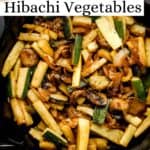
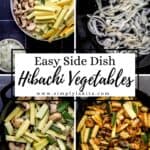
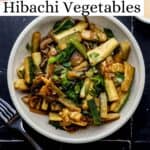
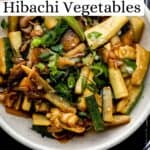
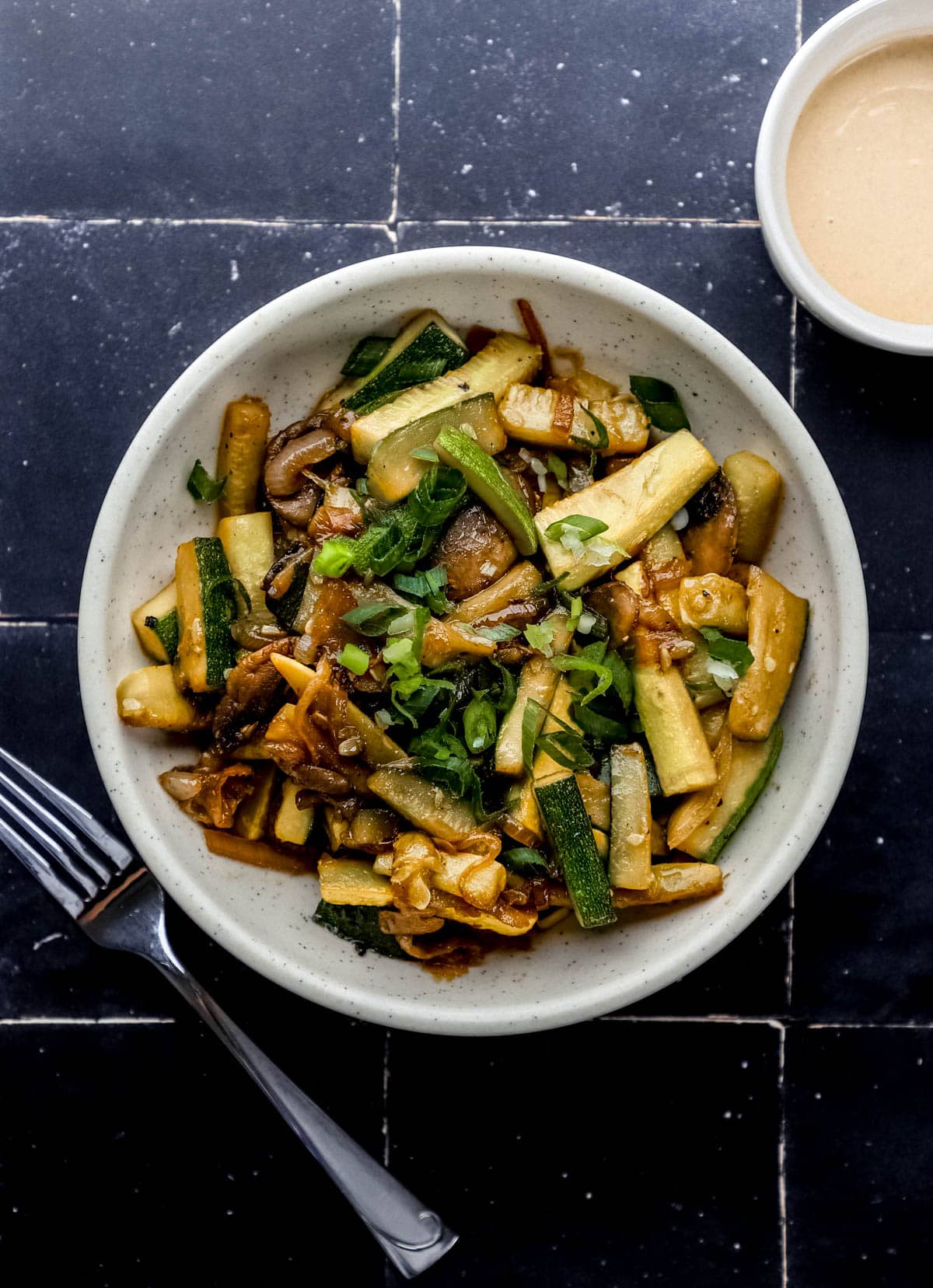
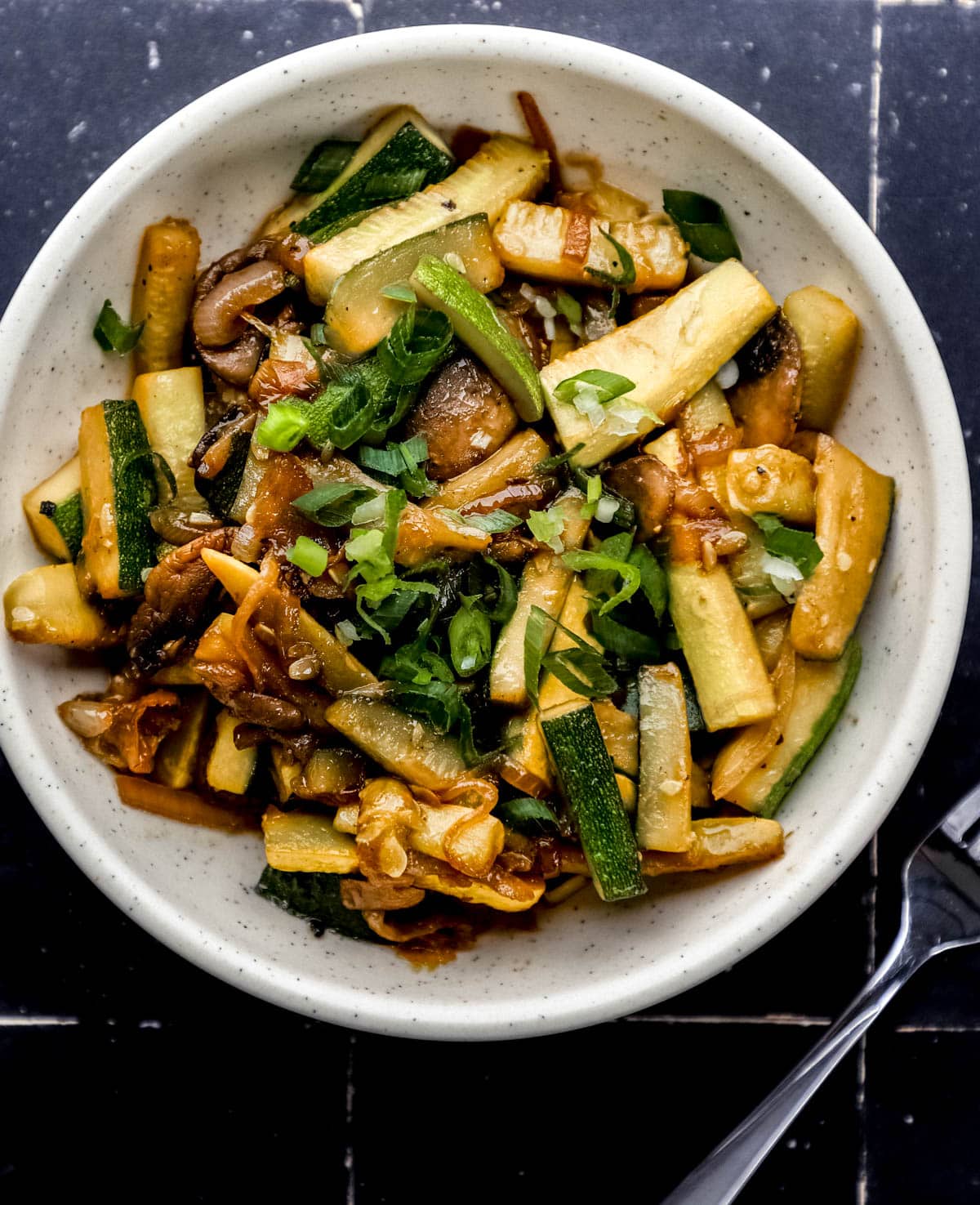
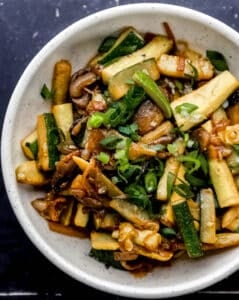
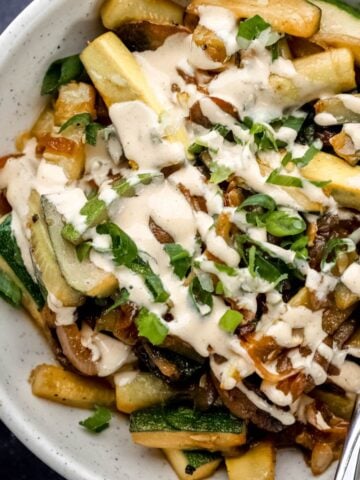
Hibachi Vegetables are made with fresh yellow squash, zucchini, mushrooms, and onions. It is the same Japanese-style restaurant version in the comfort of your own home. Simple to make, with few ingredients.
Updated August 28, 2026: I've refreshed this post with new tips, expanded FAQs, and helpful make-ahead instructions based on your questions and feedback. Same delicious recipe, even more helpful! Originally posted on March 4, 2020, and photo updated on February 23, 2024.
Want To Save This Recipe?
Watch this quick video tutorial!
The first time my family sat down at a hibachi table, my youngest spent the whole meal waiting for the onion volcano and I spent the whole meal watching the vegetables. Not the steak, not the shrimp, the vegetables. Something about the way they came off that flat top, glossy and browned at the edges with that buttery, soy-rich smell, made them the thing I actually wanted to eat. I came home and tried to make them that same week.
It took me a while to get there. My first few batches steamed instead of seared and came out pale and a little soggy, which is the exact thing that ruins this dish. I've been making these in a cast iron skillet for years now, and I've tested them enough times to know precisely where the mistakes happen and how to avoid every one of them.
This hibachi vegetables recipe gives you the same buttery, savory, steakhouse-style vegetables at home with nine ingredients and one skillet. Let's get started!
Jump to:
Why You'll Love This Hibachi Vegetables Recipe
- Ready in about 30 minutes - Prep is just slicing, and the vegetables cook in roughly twelve minutes from the moment they hit the pan.
- No special equipment - A large cast iron skillet does everything a flat top grill does for a home-sized batch.
- Genuinely flexible - Zucchini, squash, mushrooms, and onions are the classic mix, but almost any firm vegetable works with a small timing adjustment.
- Rounds out a whole hibachi dinner - Add rice, a protein, and a sauce and you've got the full steakhouse spread on a weeknight.
ingredients You'll need
Here's everything you'll need to make this recipe.
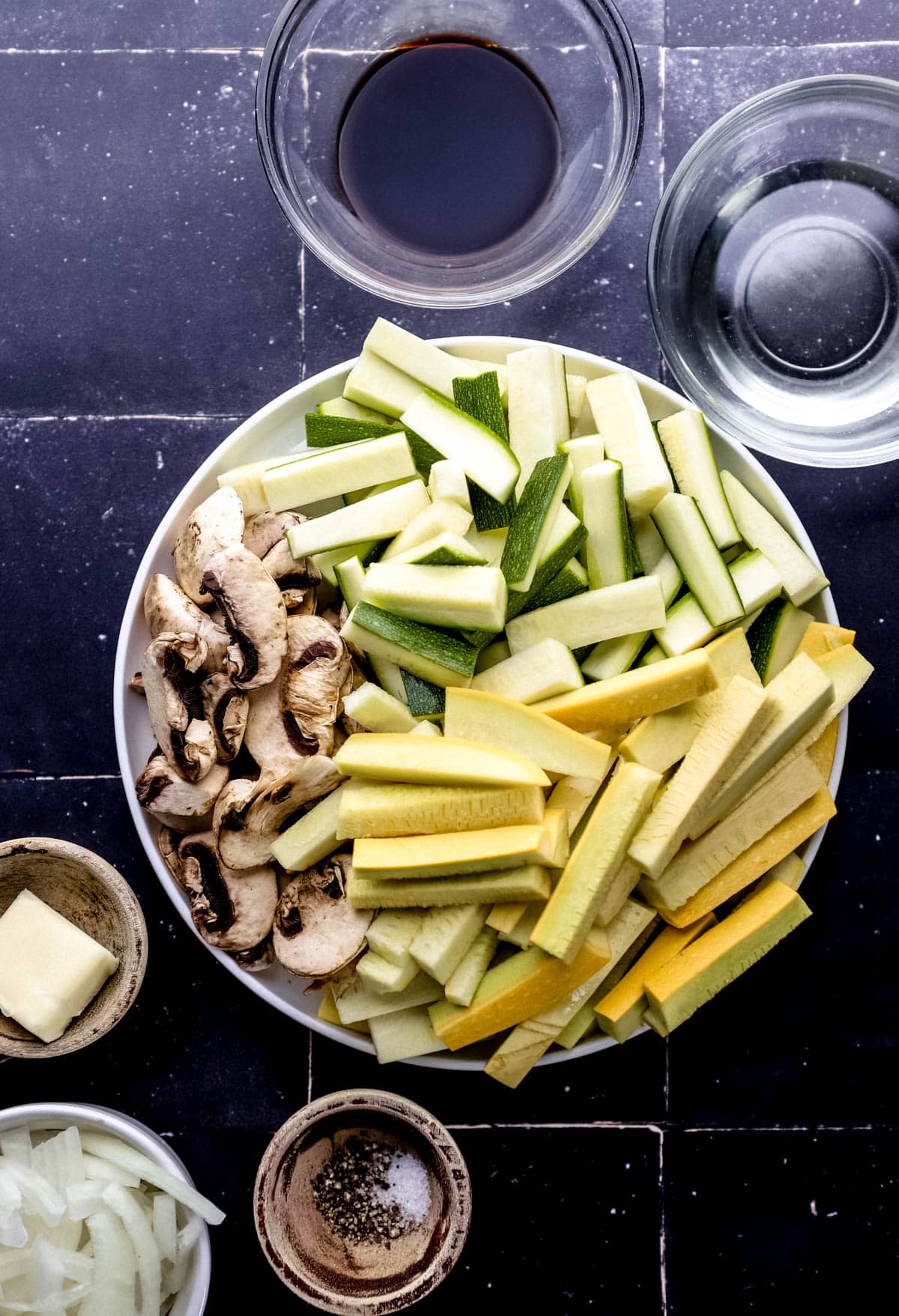
- Butter and oil together. This combination is the reason restaurant hibachi tastes the way it does. Butter brings the flavor and helps with browning. Oil raises the smoke point so the butter doesn't scorch at the high heat this dish needs. Use real butter, salted or unsalted. Margarine won't brown the same way.
- Onion. Yellow or white onion, quartered and sliced thin. It goes in first because it needs the longest head start and because it seasons the oil for everything that follows.
- Zucchini and yellow squash. Leave the peel on, it holds the strips together and gives you the color contrast you see at the restaurant. How you cut these matters more than people expect, and I've covered it in the steps below.
- Mushrooms. White button, baby bella, or cremini all work. Mushrooms release a lot of water, so they benefit from slightly different handling than the squash. If you're not a mushroom household, leave them out, the recipe doesn't depend on them.
- Soy sauce. This carries the umami and gives the vegetables their darker, glossy finish. Regular or low-sodium both work. For a gluten-free version, use tamari or coconut aminos.
- Salt and freshly ground black pepper. Simple, but when you add them changes the result. More on that below.
👉🏾 See the recipe card below for exact quantities and full instructions.
How to Make Hibachi Vegetables
Here's a quick overview of the process. Full step-by-step instructions are in the recipe card below.
Step 1: Cut Everything the Same Size
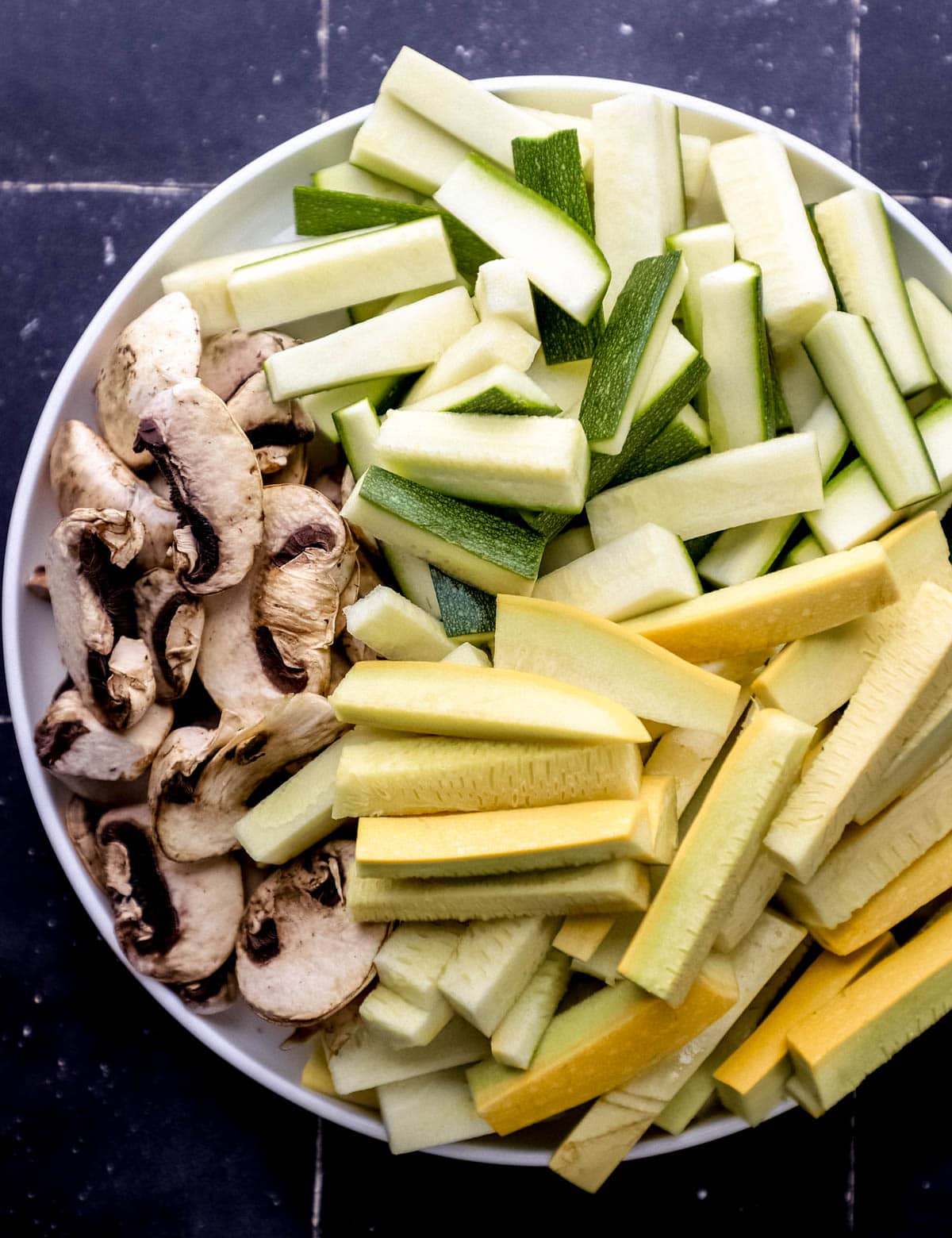
Slice the zucchini and squash into strips roughly the thickness of your finger. Trim the ends, halve them lengthwise, then cut each half lengthwise again, and slice those long quarters into pieces about two inches long. Uniform pieces are what let everything finish at the same moment. Do all your cutting before the pan goes on the heat. Once you start, this dish moves quickly, and there's no time to catch up.
Step 2: Get the Pan Genuinely Hot
Heat your skillet over medium-high until a drop of water skitters across the surface instead of sitting still. Add the butter, let it melt and start to foam, then add the oil. A pan that isn't hot enough is the single most common reason homemade hibachi vegetables come out limp. The vegetables release their water faster than the pan can cook it off, and you end up steaming them.
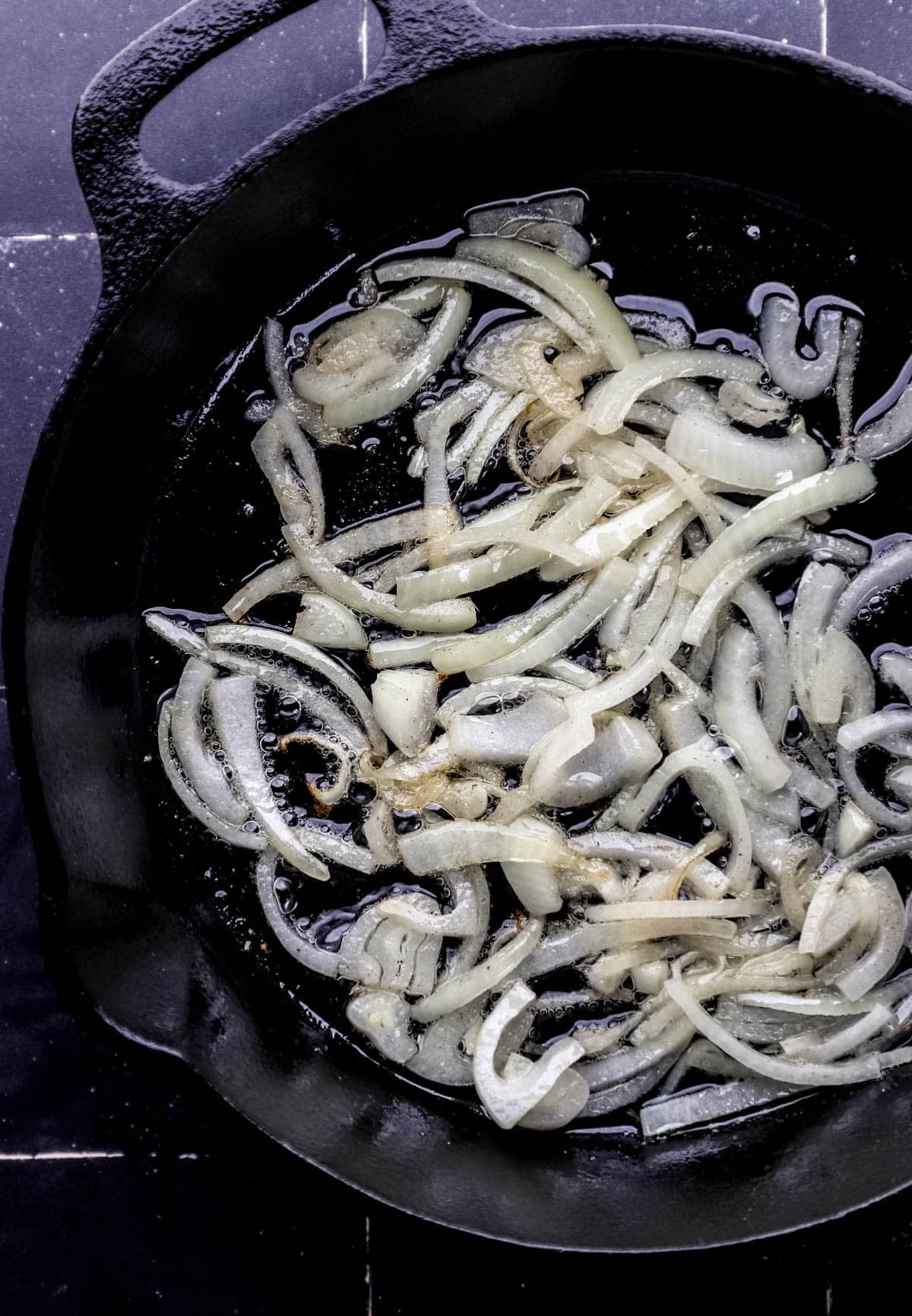
Step 3: Start the Onion
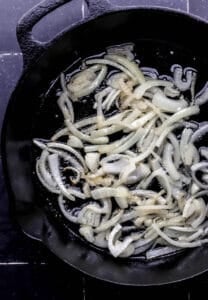
Add the onion and let it cook about two minutes, until it softens and turns translucent at the edges. You're not caramelizing it, just softening it and letting it flavor the fat before everything else arrives.
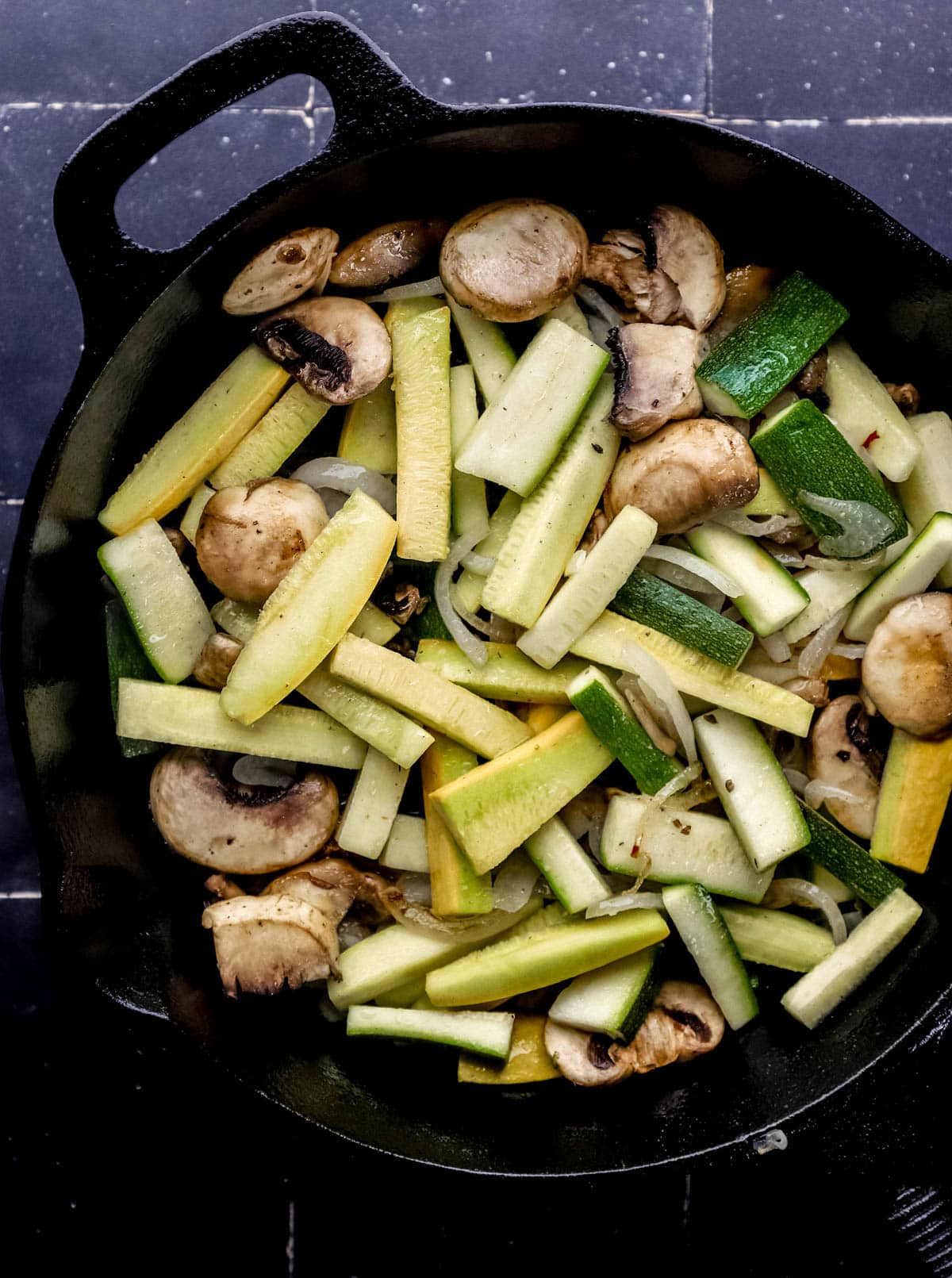
Step 4: Add the Rest and Give Them Room
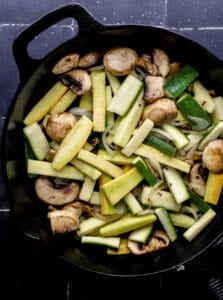
Add the zucchini, squash, and mushrooms. Spread them into as close to a single layer as your pan allows and let them sit for a moment before you stir. Contact with hot metal is what creates browning, and constant stirring prevents it. If your skillet is crowded, cook in two batches, a crowded pan is a steaming pan.
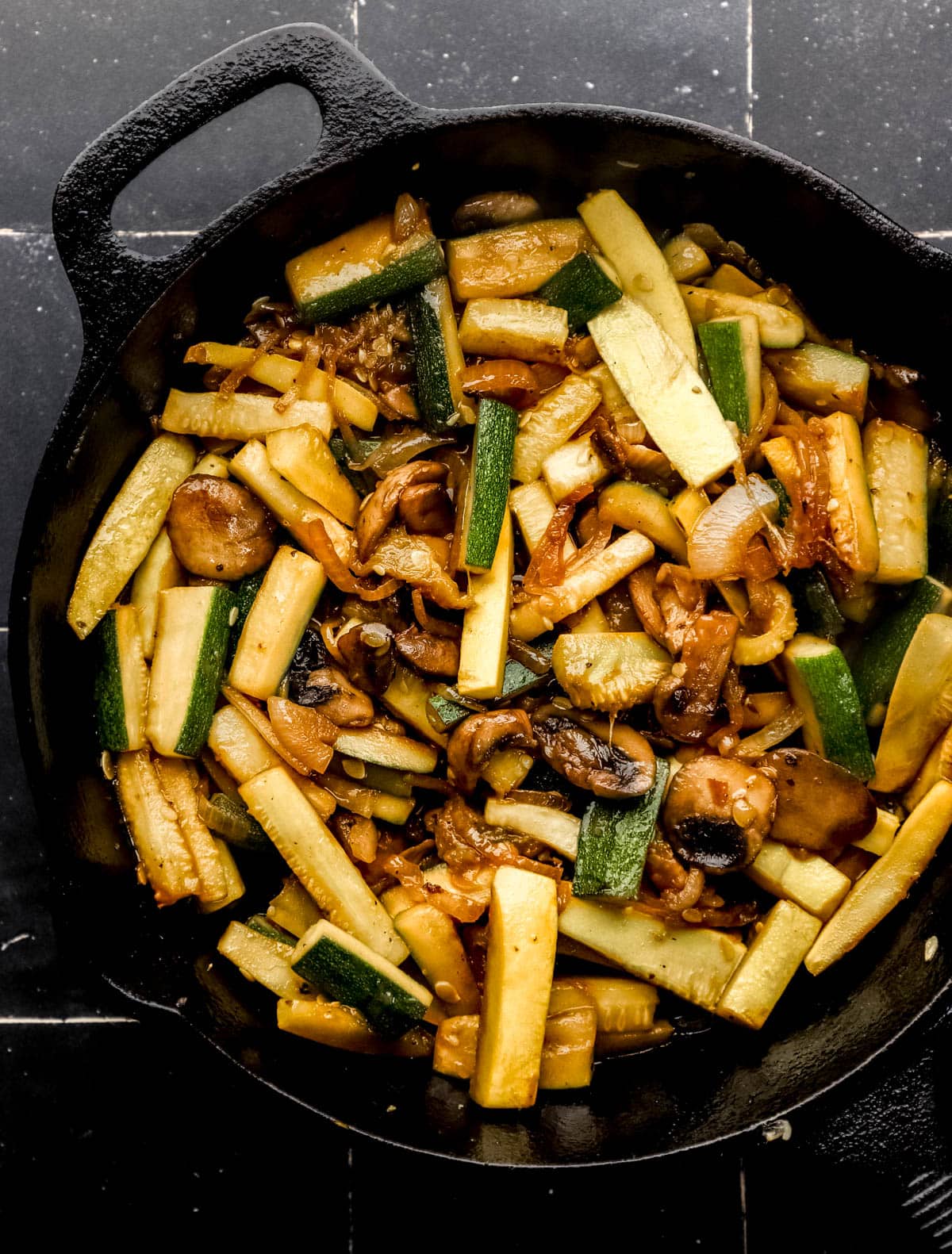
Step 5: Season and Finish
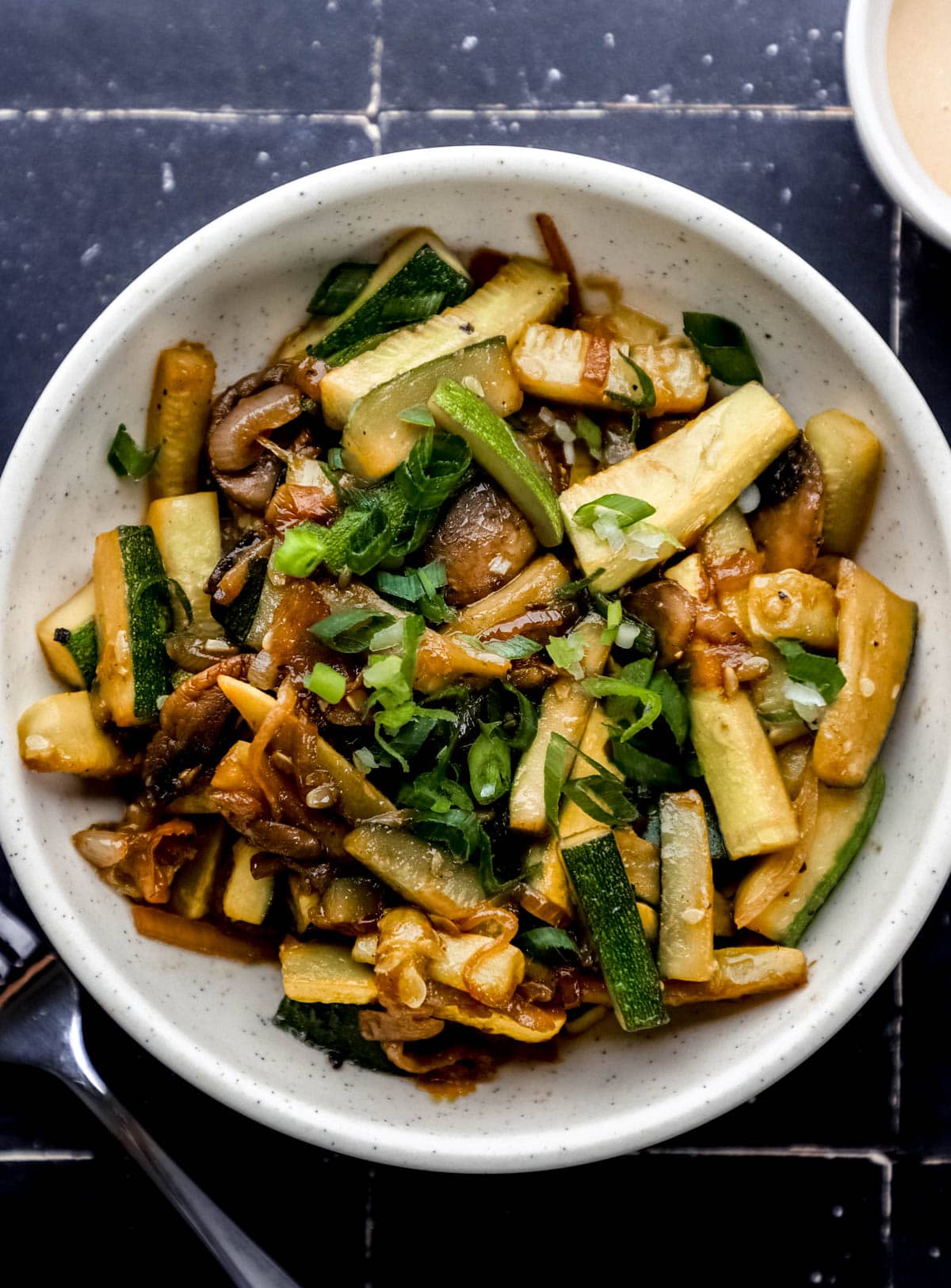
Add the soy sauce, salt, and pepper. Keep cooking and stirring for about ten minutes total, until the vegetables are tender with golden-brown edges and the liquid in the pan has cooked away. You want them tender-crisp, soft enough to give when you press one, firm enough to hold their shape on the plate. Finish with sesame seeds or sliced green onions.
lakita's Expert Tips
Here are my best tips for making this recipe turn out perfectly every time.
- Listen to the pan. A steady sizzle means you're searing. If the sound drops to a quiet bubble, the pan has lost heat. Turn it up and stop stirring for thirty seconds.
- Salt the mushrooms as soon as they go in, and hold off on the zucchini. Salt pulls water out of mushrooms early, which is exactly what you want. Zucchini salted too soon weeps and never gets a proper sear.
- A cast iron skillet beats nonstick here. Cast iron holds heat when cold vegetables hit it. Nonstick drops temperature and recovers slowly, and you'll taste the difference in the browning.
- Add the soy sauce near the end, not the beginning. Early soy sauce burns and turns bitter at these temperatures, and the extra liquid works against you while you're still trying to brown.
- Cook in two batches if your skillet is smaller than twelve inches. It feels like extra work, and it takes about four extra minutes, but crowding is what separates restaurant hibachi from sad steamed squash.
- Pat the vegetables dry after washing. Surface water is the enemy of browning, and it's the easiest thing to skip.
- Have your serving dish ready. These keep cooking in a hot pan, so move them out the moment they're right.
Variations & Substitutions
This recipe is flexible, here are some easy ways to make it your own.
- Add broccoli or carrots. Both are denser than squash, so give them a head start in the pan before the softer vegetables go in.
- Add bell peppers. Sliced thin, they bring sweetness and color and cook in about the same time as the zucchini.
- Make it vegan. Swap the butter for a plant-based butter or use all oil, and use coconut aminos in place of soy sauce.
- Make it gluten-free. Tamari or coconut aminos in place of soy sauce is the only change needed.
- Add a garlic butter. Mash minced garlic into softened butter and add it with the vegetables instead of plain butter.
- Turn it into a meal. Add sliced chicken, shrimp, or steak to the same pan once the vegetables come out, then combine.
- Bring the heat. A pinch of crushed red pepper or a spoonful of chili crisp at the end.
Make-Ahead & Storage
Make-Ahead
You can slice all the vegetables up to two days ahead and keep them in an airtight container in the refrigerator. This turns the recipe into a twelve-minute side dish on a busy night. Store the mushrooms separately from the squash and zucchini so they don't share moisture. Pat everything dry before it goes in the pan. I don't recommend cooking these ahead. They're at their best within a few minutes of leaving the skillet.
Storage & Reheating
Let leftovers cool to room temperature, then store them in an airtight container in the refrigerator for up to three days. They'll soften as they sit, that's normal.
To reheat, use a skillet over medium-high heat with a small amount of oil and warm them for two to three minutes, stirring occasionally. The stovetop is the only method I recommend. The microwave releases more water and turns them limp.
What to Serve with Hibachi Vegetables
Here are some of my favorite ways to serve this dish.
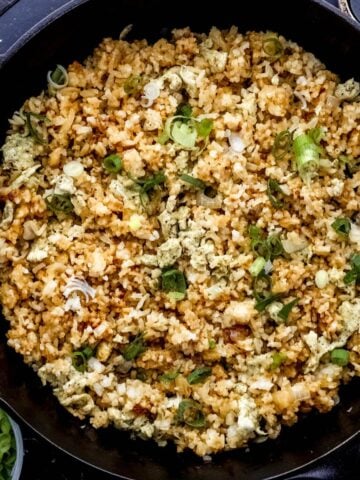
- As part of a full hibachi dinner - pair with Hibachi Fried Rice and a drizzle of Yum Yum Sauce for the complete steakhouse spread.
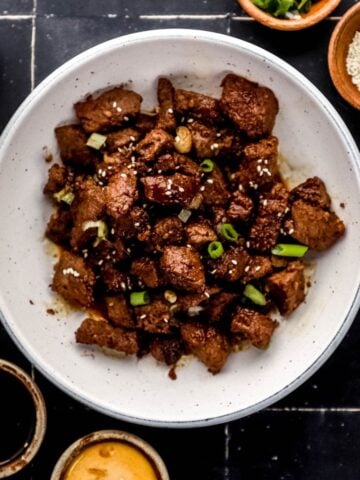
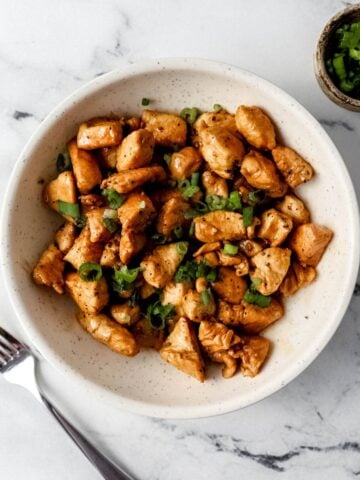
- Alongside a protein - Hibachi Chicken is the classic, though Hibachi Steak and Hibachi Shrimp are just as good.
- With noodles instead of rice - Hibachi Noodles make this feel like a bigger meal.
- Starting with soup and salad - Hibachi Soup and a salad with Hibachi Ginger Dressing is exactly how the restaurant opens the meal.
- On their own with a dipping sauce - a small bowl of Easy Teriyaki Sauce turns these into an easy appetizer.
Frequently asked questions
The classic Japanese steakhouse combination is zucchini, onion, and mushrooms, and many restaurants add yellow squash. That's the mix in this recipe. Beyond that, it varies by restaurant. Broccoli, carrots, bell peppers, bean sprouts, and water chestnuts all show up somewhere. If you're aiming for what you'd actually be served at a hibachi table, zucchini, onion, squash, and mushrooms will get you there.
Trim both ends, cut the zucchini in half lengthwise, then cut each half in half lengthwise again so you have four long quarters. Slice those into pieces about two inches long. You're aiming for sturdy strips roughly the thickness of your finger. Thin enough to cook quickly, thick enough to hold their shape. Leave the peel on, it holds the pieces together and gives you the color you see at the restaurant. Cut the yellow squash the same way so everything finishes together.
Almost always one of three things. The pan wasn't hot enough when the vegetables went in, so they released water faster than it could evaporate. The pan was crowded, which does the same thing. Or the vegetables were still wet from washing. Get the skillet hot enough that a drop of water skitters, cook in two batches if you need to, pat everything dry, and let the vegetables sit undisturbed for a moment before stirring.
No. A twelve-inch cast iron skillet works well for a home-sized batch. It holds heat the way a flat top does, which is the part that actually matters. A wok works too. If you do have a griddle, it gives you more surface area, which means less batching.
Restaurant hibachi is seasoned simply. Butter, soy sauce, salt, and pepper carry the whole dish. The butter and soy sauce together create the savory, slightly sweet flavor people are chasing. Add the soy sauce near the end of cooking rather than the start. At high heat it burns quickly and turns bitter, and the extra liquid works against browning.
Yes to all three. Broccoli and carrots are denser than zucchini and squash, so they need a head start in the pan before the softer vegetables go in. Bell peppers cook in about the same time as zucchini, so they can go in with everything else.
As written this recipe is vegetarian but not vegan, because of the butter. For a vegan version, use plant-based butter or all oil. For gluten-free, swap the soy sauce for tamari or coconut aminos. That's the only change needed, since everything else in the recipe is naturally gluten-free.
I haven't tested freezing these myself, so I can't tell you from experience how they hold up. My honest guess is that they'd freeze without any food-safety issue but lose texture on the way back. Zucchini and squash have a lot of water and tend to go soft after thawing. I'd stick to the three-day refrigerator window. If you try it, tell me how it goes in the comments and I'll update this answer.
In practice, very little. What Americans call hibachi, a chef cooking on a large flat griddle surrounded by seating is technically teppanyaki. A true hibachi is a small open charcoal grill. The names have blurred so completely at American Japanese steakhouses that both terms point to the same style of cooking and the same vegetables.
You can prep them ahead but not cook them ahead. Slice everything up to two days in advance and store it in the refrigerator, keeping the mushrooms separate from the squash and zucchini. Then it's a twelve-minute dish. Cooked hibachi vegetables lose their tender-crisp texture within about half an hour, so cook them last and serve them right away.
📖 Recipe
Hibachi Vegetables Recipe (Japanese Steakhouse Style)
Video
Equipment
- 1 Wok or Cast Iron Skillet
- 1 Chef's Knife
- 1 cutting board
Ingredients
- 1 tablespoon butter
- 2 tablespoons vegetable oil or olive oil
- 1 cup onion, quartered and thinly sliced
- 2 cups zucchini, cut into strips
- 2 cups yellow squash, cut into strips
- 1 cup mushrooms, sliced
- 2 teaspoons soy sauce
- ¼ teaspoon salt
- ¼ teaspoon ground black pepper
Instructions
- Begin the easy recipe by heating the wok or large skillet over medium-high heat. Add the 1 tablespoon butter and once it melts add in the 2 tablespoons oil.
- Add the 1 cup sliced onion and saute for 2 minutes until it begins to soften and become translucent.
- Add in the prepared 2 cups zucchini, 2 cups yellow squash, and 1 cup mushrooms.
- Next, add in the 2 teaspoons soy sauce, ¼ teaspoon salt, and ¼ teaspoon ground black pepper. Continue to cook, stirring frequently until the vegetables soften to your preference, about 10 minutes.
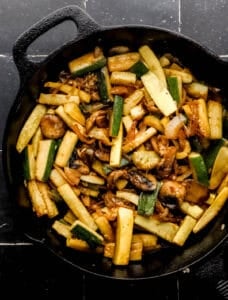
- Serve warm with hibachi style fried rice and yum yum sauce. Store any leftovers in the refrigerator in an airtight container up to 3 days.
Did You Make This Recipe?
There's something about pulling these off the stove and setting the pan on the table that makes an ordinary weeknight feel a little more like an occasion. I hope they bring the same thing to your kitchen that they've brought to mine. If you give this hibachi vegetables recipe a try, I'd love to know what you think! Leave a comment below, share a photo on Instagram and tag @SimplyLaKita, or save it on Pinterest for later. And if you've found a vegetable combination that works especially well, tell me about it in the comments, I read every one.
Ginnyhw says
The yum yum sauce is awesome
LaKita says
Awesome! Thank you so much!!
Rhyannon says
This was delicious. Any luck freezing it? I made too much and can't eat it all in 3 days and don't want it to go to waste!
LaKita says
Hi Rhyannon! I've never tried freezing because they don't last long in my house, but they should freeze without any problems. Just keep in mind the texture may change a bit, they may not be as crispy upon reheating. Hope this helps 🙂
Jill says
Made this last night, and it was amazing! Can't wait to try your fried rice next!
LaKita says
So happy to hear that you enjoyed this recipe Jill! It pairs really well with the fried rice and yum yum sauce!
Meagan says
I'm curious about the overall size of the squash and zucchini being used?
LaKita says
Hi Meagan! Both are small to medium in size, but for this recipe, it really does not matter.