
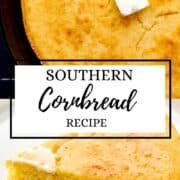
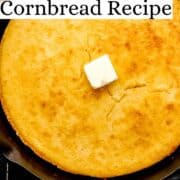
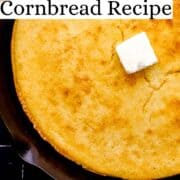
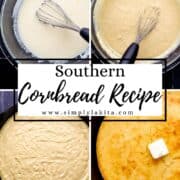
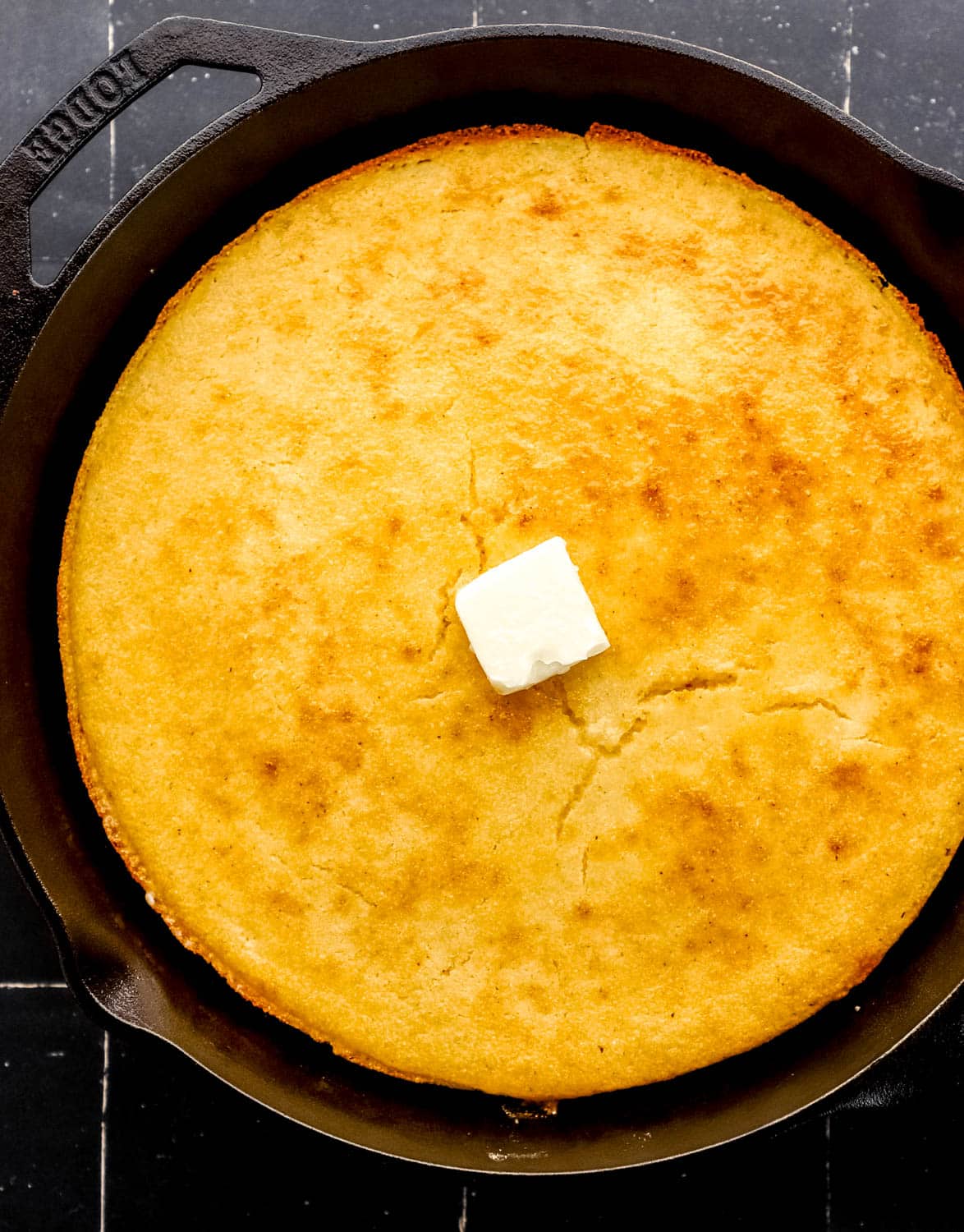
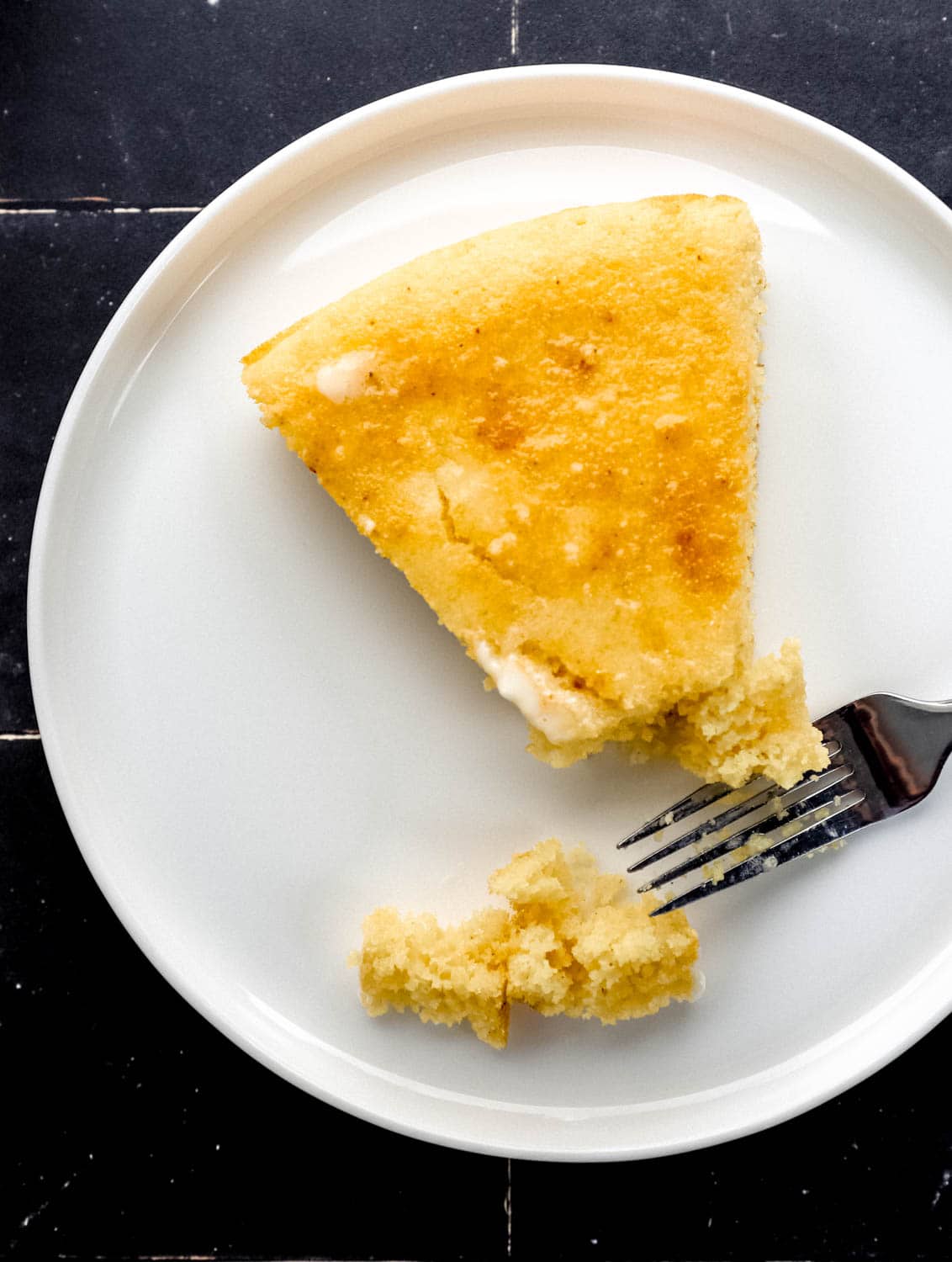
There's nothing quite like a warm slice of Southern cornbread, golden on the edges, tender in the middle, and baked in a trusty cast iron skillet. Made with cornmeal, buttermilk, and a touch of butter.
Updated August 8, 2026: I've refreshed this post with new tips, expanded FAQs, and helpful make-ahead instructions based on your questions and feedback. Same delicious recipe, even more helpful! Originally posted on November 16, 2018 and photos updated August 22, 2025.
Want To Save This Recipe?
Watch this quick video tutorial!
There's a cast iron skillet in my kitchen that has baked more pans of cornbread than I could ever count, and every single one started the same way. With the pan screaming hot before the batter ever touched it. Growing up in Florida, cornbread wasn't a side dish so much as a given. It showed up next to collard greens on Sunday, got crumbled into buttermilk at my grandmother's table, and turned into dressing every Thanksgiving. This is that cornbread: golden, crispy-edged, tender in the middle, and made the old-school Southern way, no sugar, no flour, just five simple ingredients.
I've been developing and photographing Southern recipes here at Simply LaKita since 2013, and this cornbread has been on the site since 2018. Tested, tweaked, and baked in my own kitchen more times than any other recipe I share. When readers write to tell me it tastes like their grandmother's, that's exactly the point.
If you've only ever had sweet, cakey cornbread from a box, get ready to meet the real thing. Let's get started!
Jump to:
Why You'll Love This Southern Cornbread
- Just 5 ingredients - self-rising cornmeal, buttermilk, egg, oil, and butter. No flour, no sugar, no box mix, and you probably have everything in your kitchen right now.
- That cast iron crust - pouring the batter into a preheated, oiled skillet gives you deeply golden, crispy edges you simply can't get any other way.
- True old-school flavor - this is savory Southern cornbread the way it's been made for generations, with real corn flavor front and center instead of sugar.
- Ready in 35 minutes - one bowl, one whisk, one skillet, and it comes out of the oven in time for whatever pot of greens, beans, or chili is already on the stove.
Ingredients You'll Need
Here's everything you'll need to make this recipe.
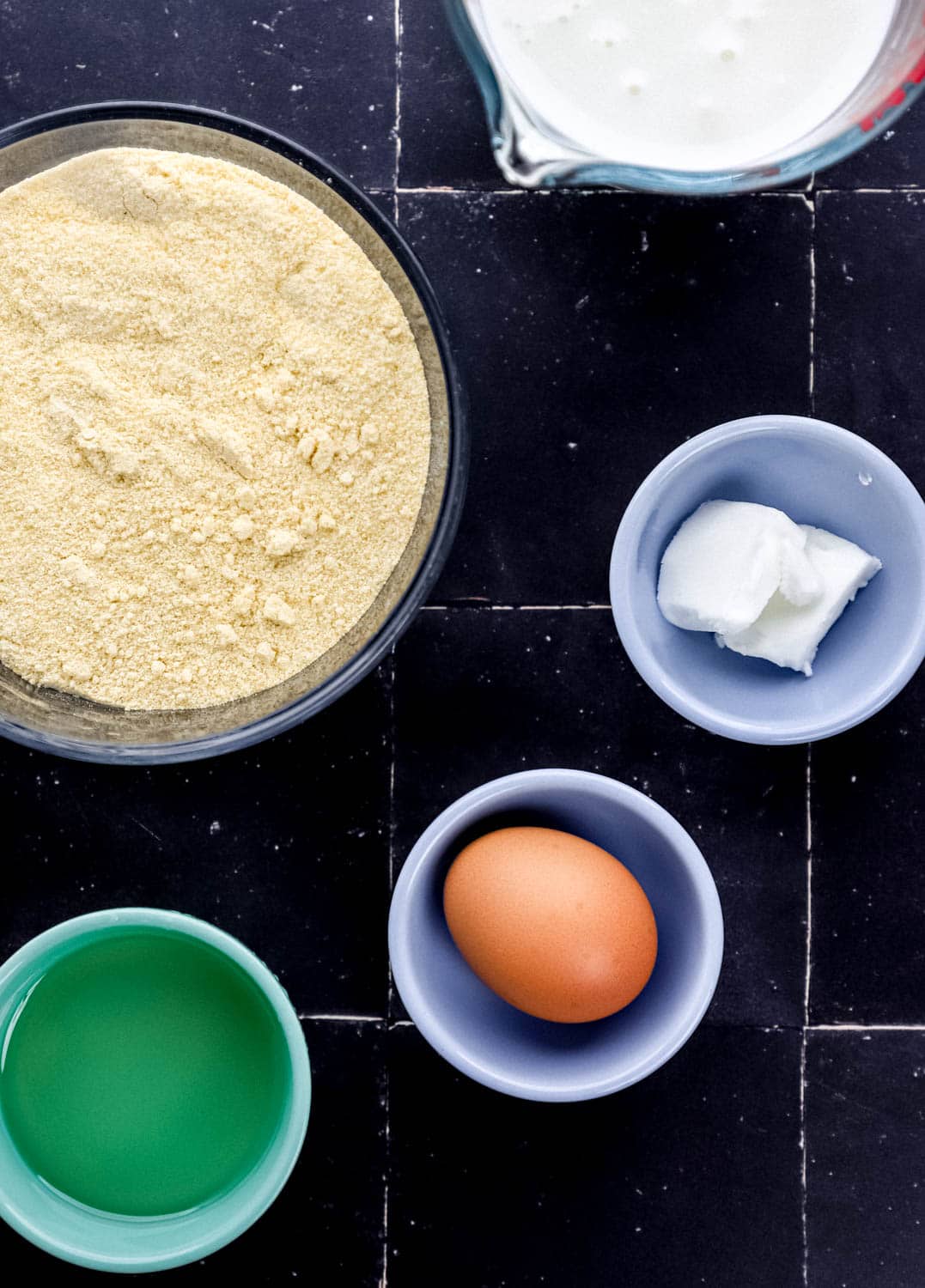
- Self-rising cornmeal (yellow or white) - the heart and soul of this cornbread. Self-rising cornmeal already has the leavening and salt blended in, which is why this recipe needs so few ingredients. Yellow gives you a slightly sweeter corn flavor and that classic golden color. White is traditional in many Southern kitchens and tastes a touch more delicate. Either works beautifully.
- Buttermilk - the tang and tenderness. Real buttermilk reacts with the leavening in the cornmeal to give the crumb its lift, and its acidity balances the richness of the fat. This isn't the place to swap in plain milk without adjusting (see the FAQ for the fix).
- Egg - one large egg binds the batter so your slices hold together instead of crumbling apart.
- Vegetable oil - keeps the crumb moist without weighing it down. A spoonful of shortening (or bacon drippings, if you want to bake like my grandmother did) also goes into the hot skillet to crisp the crust.
- Butter - brushed over the top the moment the cornbread comes out of the oven, so it melts down into every crack. Keep extra for serving, because y'all know one pat is never enough.
👉🏾 See the recipe card below for exact quantities and full instructions.
How to Make Southern Cornbread
Here's a quick overview of the process. Full step-by-step instructions are in the recipe card below.
Step 1: Get That Skillet Hot
Put your cast iron skillet in the oven with the shortening while it preheats to 425°F. This is the step that separates Southern cornbread from every other kind. When the batter hits the hot fat, it instantly starts frying the edges. A cold pan gives you pale, soft edges. A hot pan gives you that crackly, golden crust.
Step 2: Whisk the Wet Ingredients
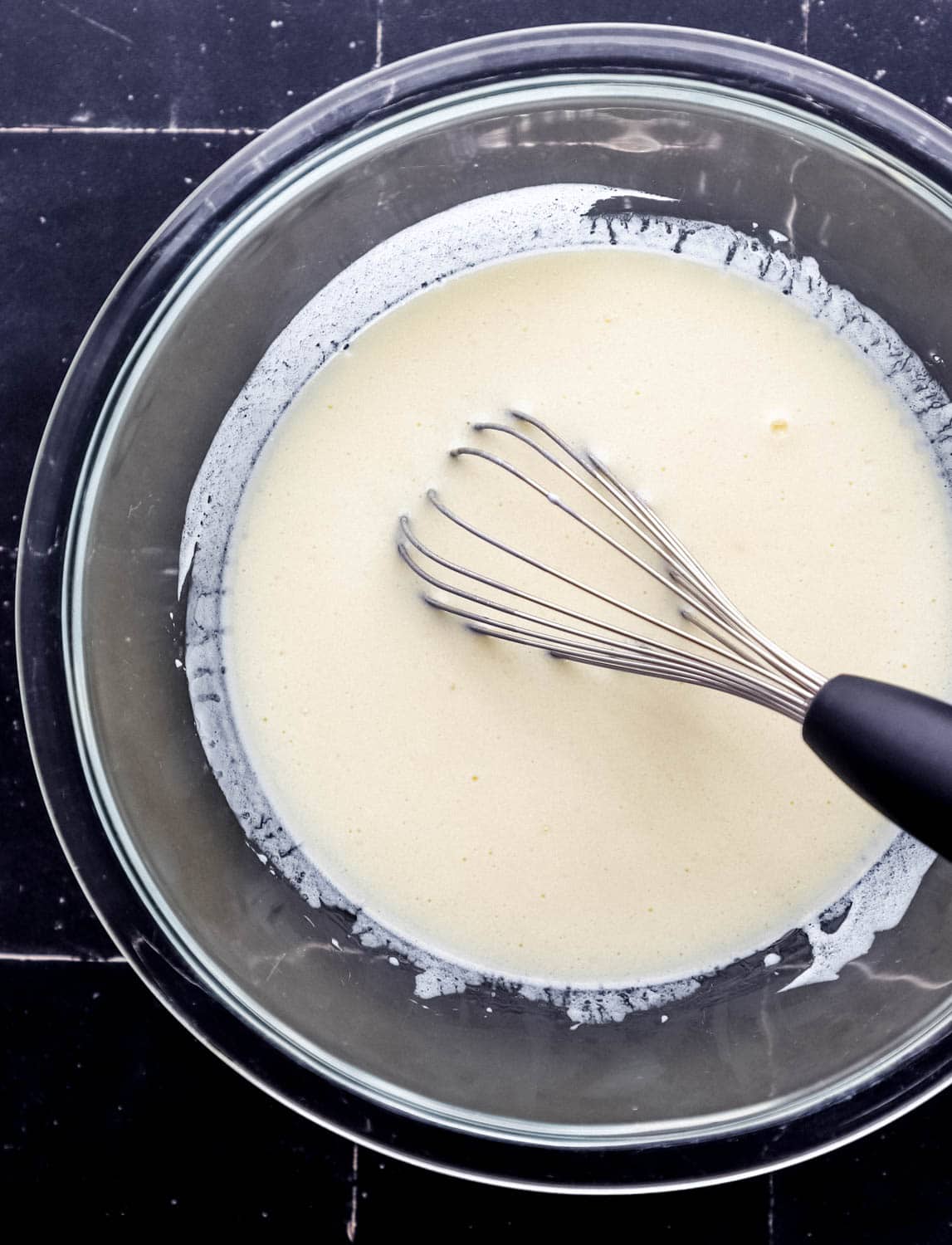
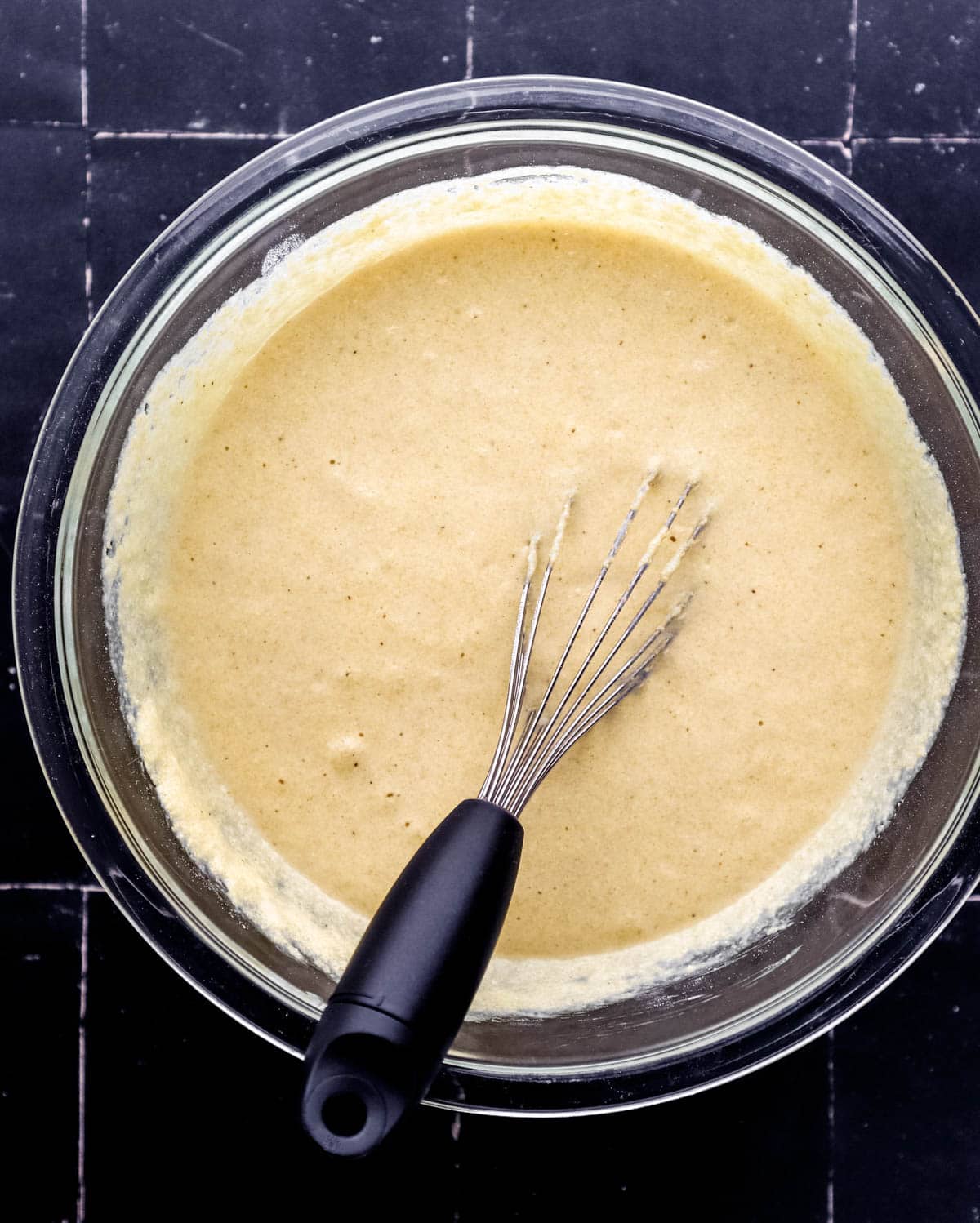
In a large bowl, whisk the buttermilk, egg, and oil until fully combined. Getting the wet ingredients smooth first means you'll barely have to stir once the cornmeal goes in, and less stirring is exactly what you want.
Step 3: Add the Cornmeal, Then Stop
Whisk in the self-rising cornmeal just until no dry streaks remain. The batter should look slightly lumpy, and that's correct. Overmixing develops a tough, dense crumb, a light hand keeps it tender.
Step 4: Pour Into the Hot Skillet
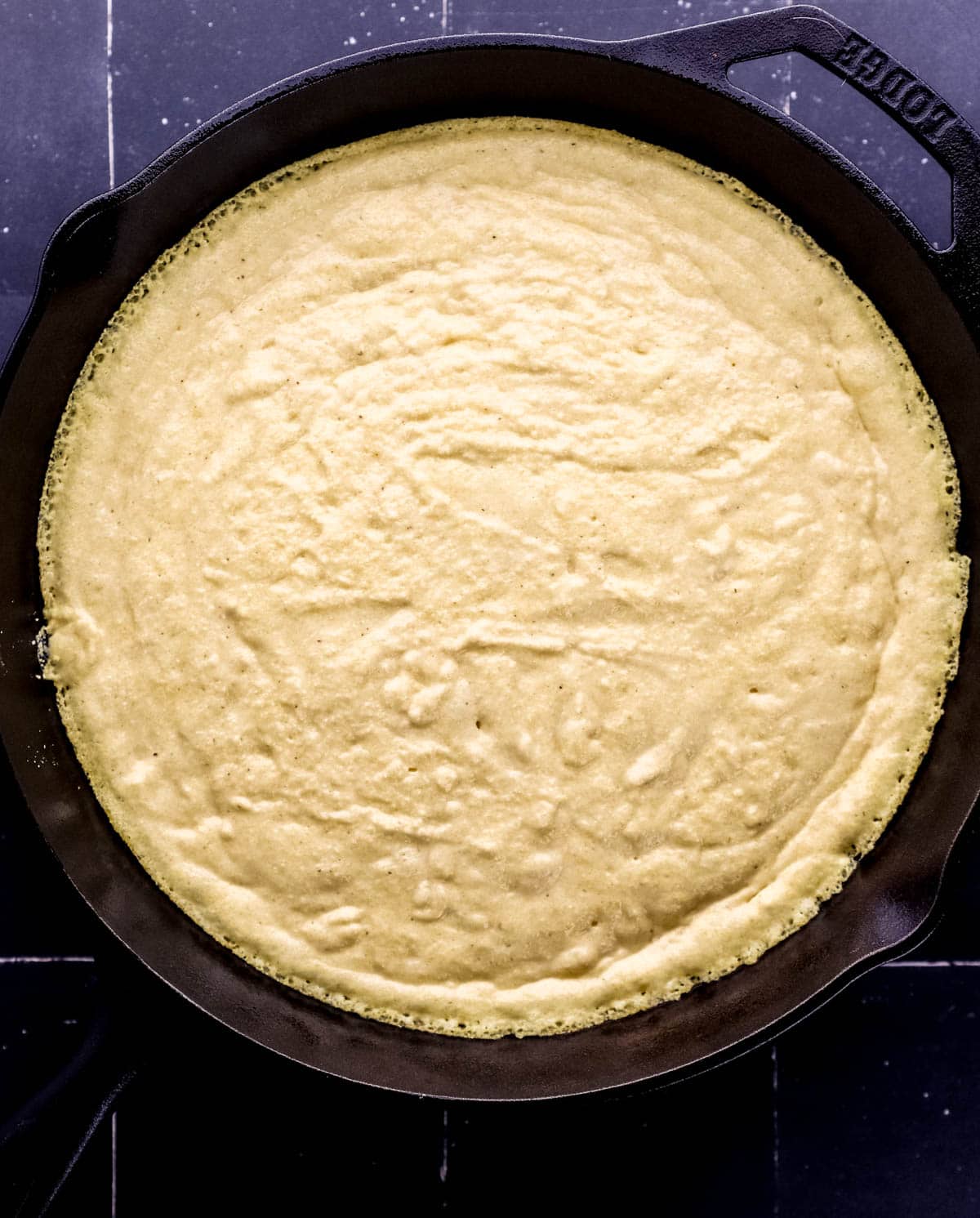
Carefully pull the screaming-hot skillet from the oven and pour the batter right into the sizzling fat. You should hear it sizzle on contact, that sound is your crust forming. Spread the batter evenly and get it back in the oven quickly so the pan doesn't lose heat.
Step 5: Bake, Butter, and Rest
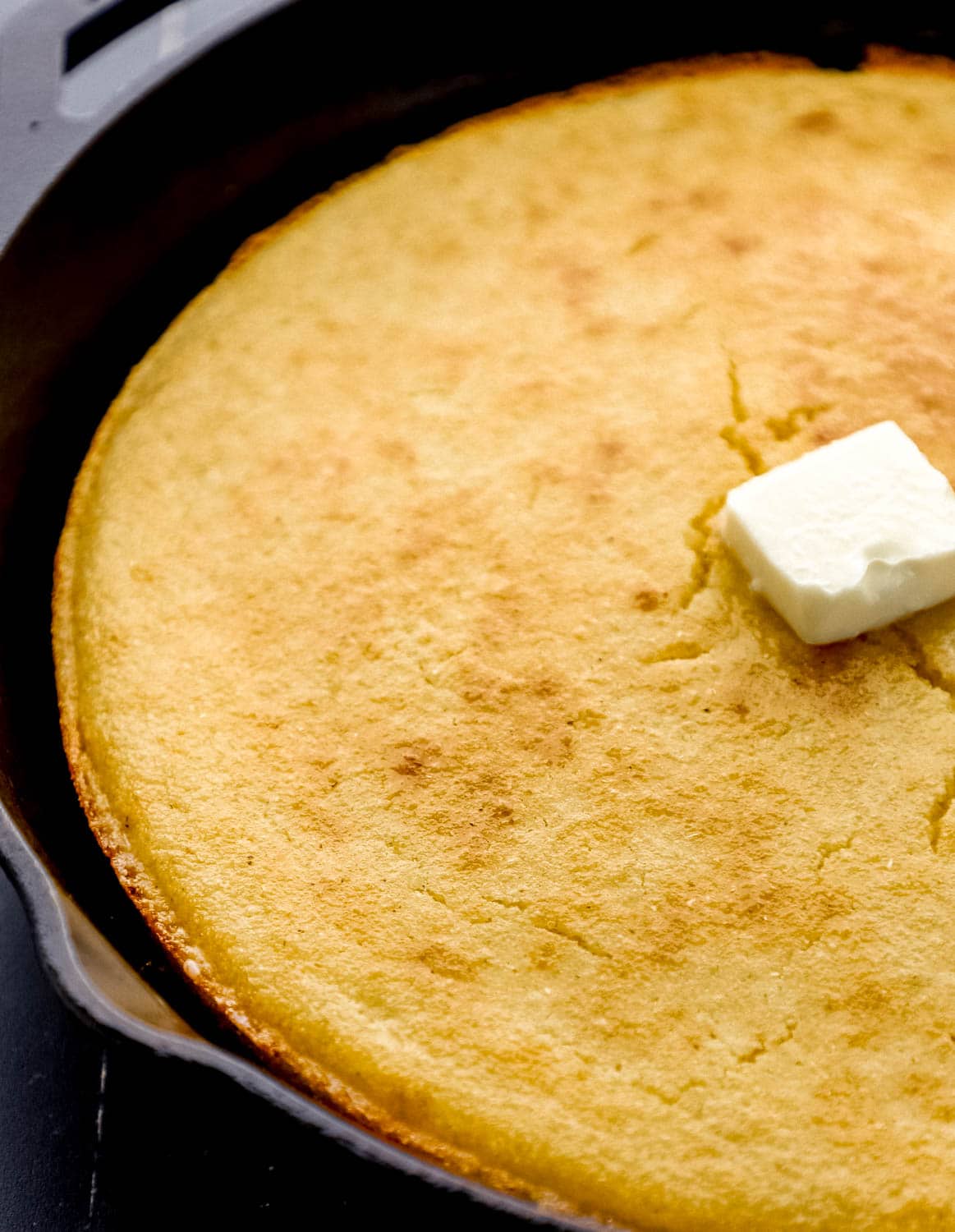
Bake 20-25 minutes until the top is golden and a toothpick in the center comes out clean. Spread the butter over the top while the cornbread is still hot so it melts in, then let it rest 5 minutes before slicing. That short rest lets the crumb set so your first slice comes out clean instead of crumbly.
LaKita's Expert Tips
Here are my best tips for making this recipe turn out perfectly every time.
- Listen for the sizzle. If the batter doesn't audibly sizzle when it hits the skillet, the pan wasn't hot enough. Next time, give it the full preheat with the oven, not just a few minutes.
- Check your cornmeal's freshness. Cornmeal contains natural oils that fade over time, and the leavening in self-rising cornmeal weakens after the best-by date. Flat, bland cornbread is almost always old cornmeal.
- Use the right size skillet. A 10-inch skillet gives you the ideal thickness. Go smaller and the center may underbake before the edges brown. Go bigger and you'll get a thin pan (which some folks love, see Variations).
- Don't open the oven early. Cornbread rises fast in the first 15 minutes, and a blast of cool air can make the center dip.
- Bacon drippings are the flavor upgrade. Swap the shortening in the skillet for bacon drippings and you'll taste the difference in every edge piece. This is how generations of Southern cooks did it.
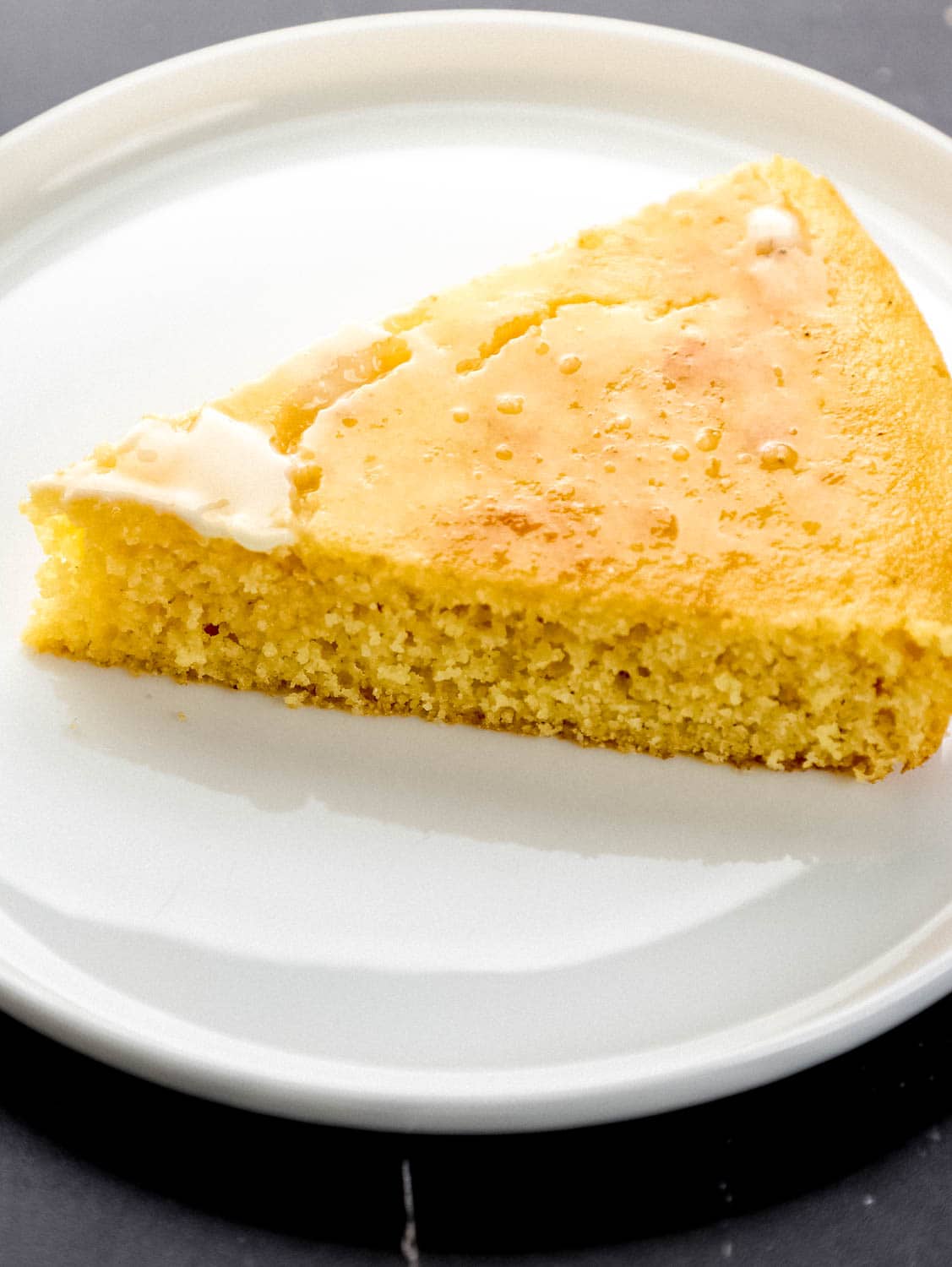
- Serve it upside down for looks. Flipping the cornbread out of the skillet shows off the deeply browned bottom crust, it's the prettiest side.
- Save your stale slices. Day-old cornbread isn't a loss, it's the starting point for Easy Cornbread Dressing. I keep a bag in the freezer building up for Thanksgiving.
Variations & Substitutions
This recipe is flexible, here are some easy ways to make it your own.
- Cornbread muffins - divide the batter into a greased muffin pan and bake at 400°F for about 15 minutes for crispy-edged individual portions.
- Jalapeño cheddar - fold in a diced jalapeño and a handful of shredded sharp cheddar for a smoky-spicy version that's incredible with Easy Chili Recipe.
- Fresh corn - stir in a half cup of fresh or thawed frozen corn kernels in the summer for pops of sweetness (from corn, not sugar!).
- Thin and extra-crispy - cut the recipe in half, or bake the full batch in a 9x13 dish or rimmed sheet pan, for the thin, nearly-all-crust cornbread some families swear by.
- Cracklin style - fold in crispy pork cracklins for the old-time favorite. I have a whole separate recipe for Cracklin Cornbread.
- Gluten-free - this recipe contains no flour, so it's naturally easy to make gluten-free: just confirm your self-rising cornmeal is labeled gluten-free, since some blends include wheat flour.
Make-Ahead & Storage
Make-Ahead
Cornbread is best baked fresh, but you can get ahead two ways. Measure your dry cornmeal into a container up to a week in advance so it's a dump-and-whisk job at dinnertime. You can also bake the whole pan earlier in the day and rewarm it. I don't recommend mixing the batter ahead, because self-rising cornmeal starts activating the moment it meets buttermilk, and you'd lose your rise.
Storage & Reheating
Storage: Once fully cooled, wrap leftovers tightly in foil or store in an airtight container at room temperature for up to 3 days. For longer storage, wrap slices individually and freeze for up to 2 months.
Reheating: The oven is your best friend here. Wrap slices in foil and warm at 350°F for about 10 minutes to bring back the texture without drying it out. A hot buttered skillet works beautifully for single slices (and re-crisps the edges). The microwave works in a pinch, 15-20 seconds per slice, but the crust goes soft.
What to Serve with Southern Cornbread
Here are some of my favorite ways to serve this dish.
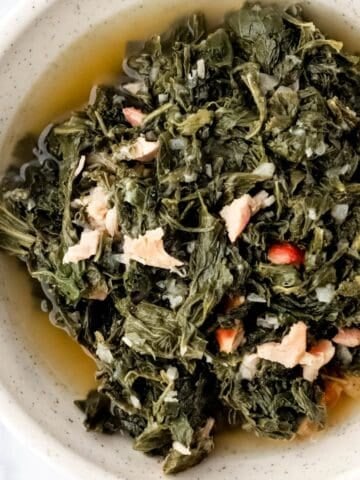
- With a pot of greens - cornbread and pot likker are a match made in heaven. Try it with Southern Collard Greens Recipe with Ham Hocks.
- Alongside chili or beans - a wedge of cornbread is built for dunking into Easy Chili Recipe or Southern Baked Beans.
- On the barbecue plate - serve it with Soul Food Oven Ribs and Southern Mac and Cheese for a full Sunday spread.
- Crumbled in buttermilk - the old-timers' treat: crumble a slice into a cold glass of buttermilk and eat it with a spoon. Don't knock it until you've tried it.
- As Thanksgiving dressing - let a pan go stale on purpose and use it as the base for Easy Cornbread Dressing.
Frequently Asked Questions
This is the great cornbread divide! Traditional Southern cornbread is savory, the sweetness comes from the corn itself, not added sugar. Sweeter, cakier cornbread (often made with more flour and sugar) is generally considered the Northern style. Neither is wrong, but if you grew up in the South, this savory skillet version is likely the one that tastes like home. If you prefer a touch of sweetness, you can add a tablespoon or two of sugar without hurting the recipe, I just won't tell my grandmother.
Yes. For the 1⅓ cups this recipe needs, stir 4 teaspoons of white vinegar or lemon juice into 1⅓ cups of regular milk and let it sit for 5 minutes before using. It won't be quite as rich as true buttermilk, but the acidity does the important work of activating the leavening and tenderizing the crumb.
You can, but you'll need to add the leavening yourself: for every cup of plain cornmeal, whisk in 1½ teaspoons of baking powder and ½ teaspoon of salt. Self-rising cornmeal keeps this a 5-ingredient recipe, which is why I always keep a bag on hand.
All-cornmeal cornbread is the old-school way, and it gives you the deepest corn flavor and that classic slightly-crumbly Southern texture. Many modern recipes add flour for a softer, more cake-like crumb. If that's your preference, you can replace up to a half cup of the cornmeal with all-purpose flour. I keep mine all cornmeal.
You'll get the best crust from cast iron because it holds heat like nothing else, but a metal baking pan or oven-safe skillet will work. Preheat it with the fat the same way. A glass baking dish works too (don't preheat glass empty), but the edges will be softer and more cake-like.
A little crumble is the nature of all-cornmeal cornbread, but if it's falling apart, the usual culprits are old cornmeal, skipping the egg, overbaking, or cutting it too soon. Let it rest a full 5 minutes before slicing, and make sure your cornmeal is fresh.
The pan either wasn't hot enough or didn't have enough fat when the batter went in. The preheated shortening essentially fries the bottom crust, which is what releases it cleanly. A well-seasoned cast iron skillet plus hot fat should give you a slice that lifts right out.
It can be! There's no flour in the recipe, so the only thing to check is your self-rising cornmeal, some brands blend in wheat flour. Choose a self-rising cornmeal labeled gluten-free (or use plain gluten-free cornmeal plus the leavening from the FAQ above) and you're set.
Yes, bake it in two 10-inch skillets, or use a 9x13 pan for a single thicker batch and add a few minutes to the bake time. I don't recommend crowding a double batch into one skillet. The center will struggle to cook before the edges over-brown.
This one! Savory, sturdy, and unsweetened, which is exactly what Thanksgiving dressing needs (sweet cornbread makes sweet dressing, and that's a controversy I stay out of). Bake it a day or two ahead, let it dry out, then crumble it into Easy Cornbread Dressing.
📖 Recipe
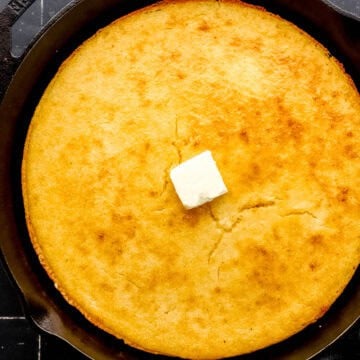
Southern Cornbread Recipe
Video
Equipment
- 1 large mixing bowl
- 1 10-inch cast iron skillet
Ingredients
- 1 tablespoon shortening or vegetable oil
- 1 ⅓ cups buttermilk
- 1 large egg, lightly beaten
- ¼ cup vegetable oil
- 2 cups self-rising cornmeal (yellow or white)
- 1 tablespoon butter plus extra for serving
Instructions
- Preheat oven to 425°F. Place a 10-inch cast iron skillet inside with 1 tablespoon shortening in it while it preheats.
- In a large bowl, whisk together 1 ⅓ cups buttermilk, 1 egg, and ¼ cup oil.

- Add 2 cups cornmeal and whisk until combined.

- Carefully remove hot skillet from the oven, pour in the batter, and spread evenly.

- Bake 20-25 minutes, until golden brown and a toothpick inserted in the center comes out clean.
- Immediately spread 1 tablespoon butter over the top while the cornbread is still hot.

- Let cool 5 minutes before slicing. Serve warm.
Did You Make This Recipe?
If you give this Southern cornbread a try, I'd love to know what you think! Leave a comment below, share a photo on Instagram and tag @SimplyLaKita, or save it on Pinterest for later. Star ratings truly help other home cooks find this recipe, so if it earned a spot at your table, I'd be so grateful if you left one. And if your family falls on the sweet side of the great cornbread debate, tell me in the comments. I love hearing how y'all make it at home.
Tracy says
If I want to make my cornbread thin how much difference of ingredients would I use ?
LaKita says
Hi Tracy! You can cut the recipe in half or cook it in a 9x13-inch baking dish or rimmed sheet pan for a thinner cornbread.
Bob says
Love your recipe!
LaKita says
Thank you, happy to hear it Bob!
carol says
This is same recipe I use~ Love it! I live in Gulf Shores, so we are neighbors. 🙂
LaKita says
Hi Carol, thank you! Hope you're save in Gulf Shores 🙂
Amanda says
Turned out almost quiche like.
LaKita says
I'm sorry the recipe didn't work for you Amanda! I've been making it this way for years and never had it turn out anything like quiche.
Akaleistar says
I love cornbread!
LaKita says
Thank you! So do I 🙂