
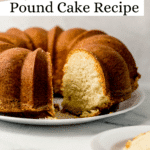
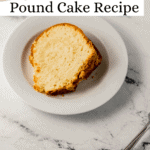
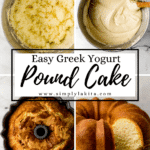
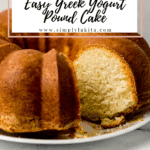
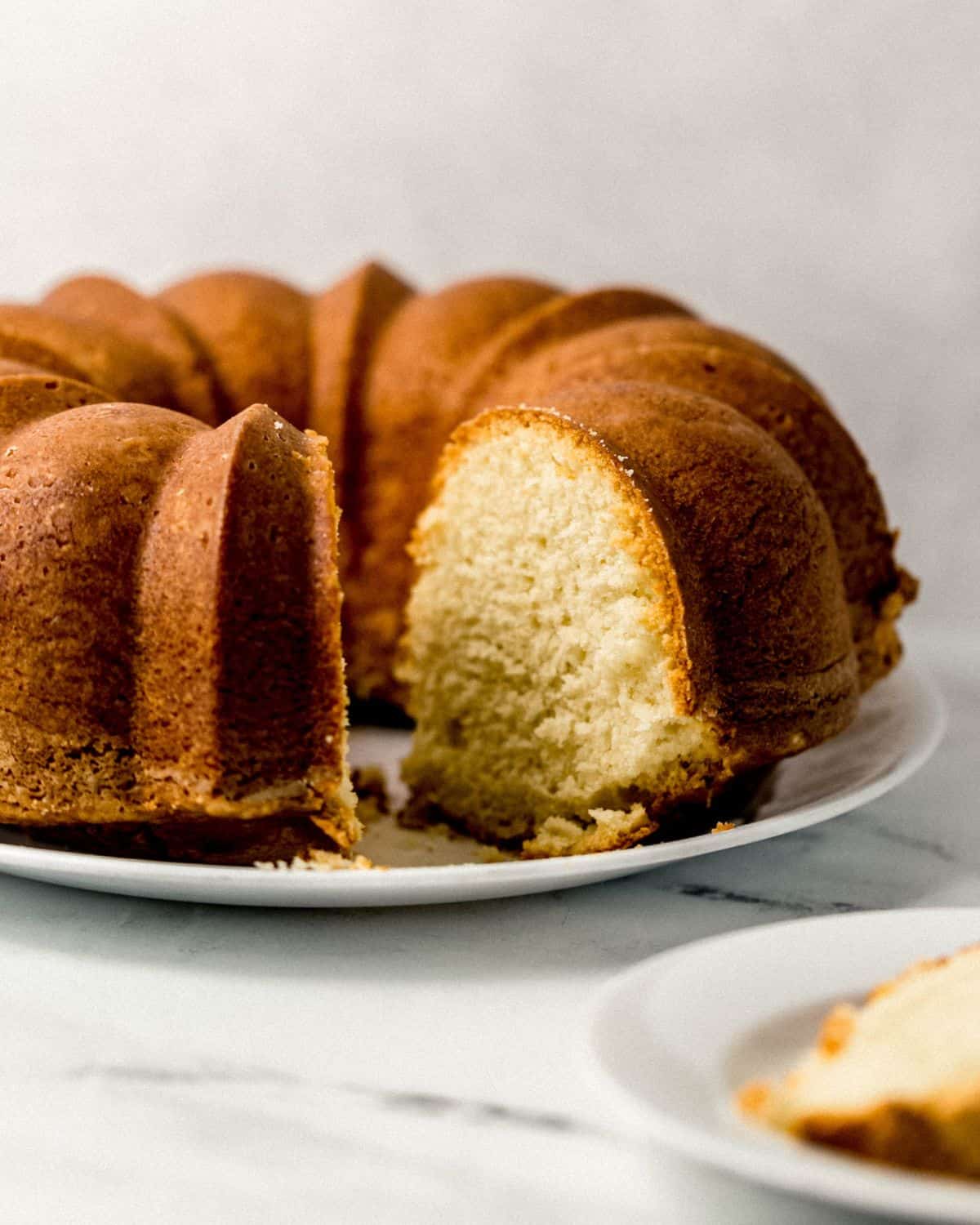
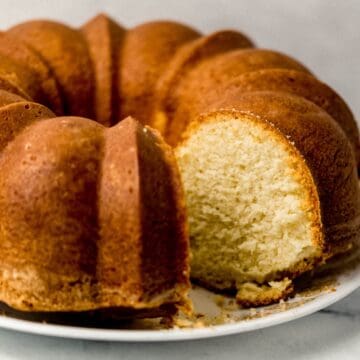
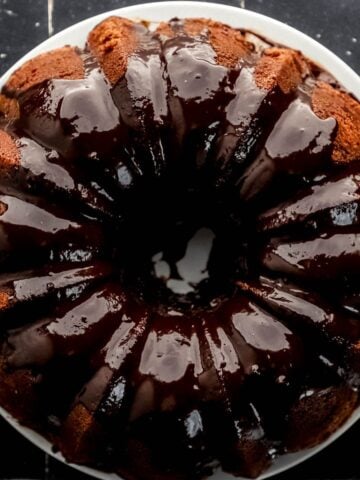
This Greek Yogurt Pound Cake recipe is buttery, rich, and tender with a soft crumb and a subtle tang from full-fat Greek yogurt. It's an easy twist on the classic Southern pound cake using just seven basic ingredients. Perfect for holidays, potlucks, or just a cozy afternoon treat.
Updated August 25, 2026: I've refreshed this post with new tips, expanded FAQs, and helpful make-ahead instructions based on your questions and feedback. Same delicious recipe, even more helpful! Originally posted on November 30, 2016, and photos updated on April 9, 2025.
Want To Save This Recipe?
Watch this quick video tutorial!
Growing up, pound cake was the cake. It showed up at every church function, every family gathering, every Sunday dinner where somebody's aunt walked in holding a bundt pan wrapped in a dish towel. My mom made hers with sour cream, and for years I did too. Until one afternoon when I reached for the sour cream and found a container of plain Greek yogurt instead. I baked it anyway, and that accident became the pound cake I've made ever since.
I've been baking and sharing Southern comfort food here since 2013, and this recipe has been on the blog in one form or another since 2016. Retested, rephotographed, and refined every time. I've baked it in a bundt pan, a tube pan, and for a birthday with strawberries piled on top. One reader told me she now makes it regularly, which is the highest compliment a pound cake can get.
Seven ingredients, one bowl for the batter, and a cake that stays tender for days. Let's get started!
Why You'll Love This Greek Yogurt Pound Cake
- Just 7 ingredients - Butter, sugar, eggs, Greek yogurt, flour, baking soda, and vanilla. Everything is probably in your kitchen right now.
- Tender crumb, tangy edge - Full-fat Greek yogurt keeps the cake moist and adds a subtle tang that keeps all that butter and sugar from tasting flat.
- Made for a crowd - Sixteen generous slices from one pan, which is exactly what a potluck, a holiday table, or a church function calls for.
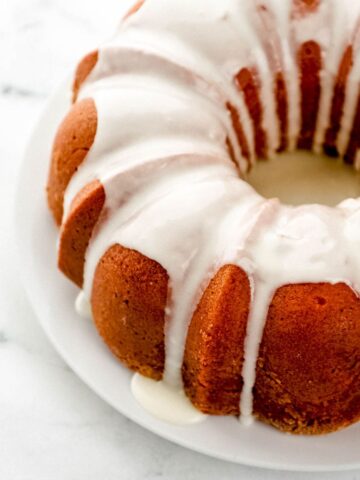
- A blank canvas - Serve it plain with coffee, dusted with powdered sugar, or piled with berries and whipped cream for a birthday. It goes wherever you need it to go.
Ingredients You'll Need
Here's everything you'll need to make this recipe.
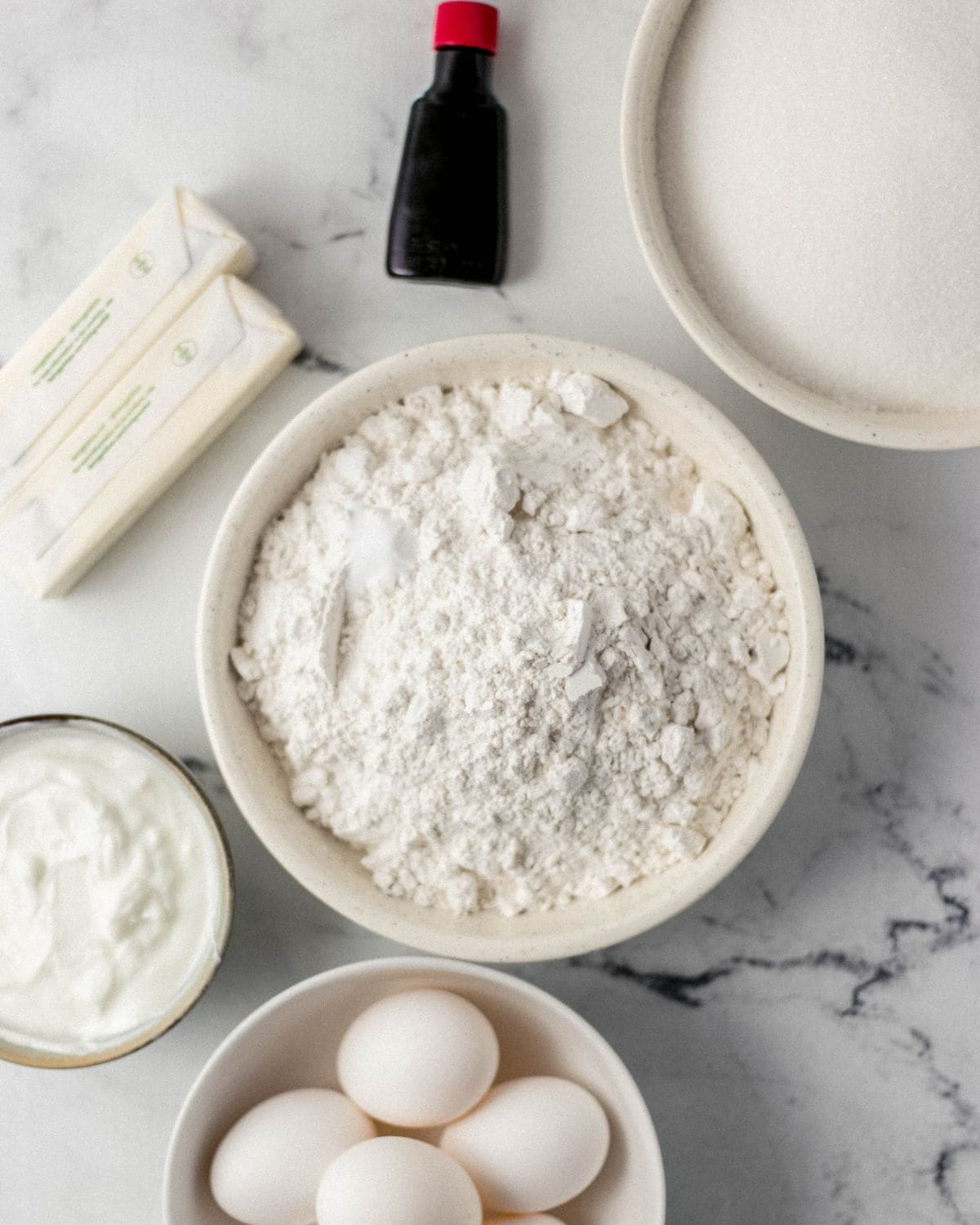
- Butter. Use unsalted butter and let it soften on the counter until it gives easily when you press it, around 65°F. Butter that's too cold won't cream properly, and butter that's melting will collapse the structure you're building. This is the ingredient most worth being patient with.
- Granulated sugar. Three cups sounds like a lot, and it is. It's also doing structural work, not just sweetening: creaming it into the butter is what whips air into the batter and gives a pound cake its close, even crumb. Don't reduce it.
- Eggs. Room temperature, added one at a time. Cold eggs hitting creamed butter will seize it into a curdled-looking mess. If yours are straight from the fridge, sit them in a bowl of warm water for ten minutes.
- Greek yogurt. Plain, full-fat, room temperature. The fat is what makes this work as a sour cream replacement. It brings both moisture and richness, and the acidity reacts with the baking soda for lift. If the yogurt looks watery on top, stir that liquid back in before measuring rather than pouring it off. Sour cream substitutes 1:1 if that's what you have my Homemade Sour Cream Pound Cake is the version I grew up on.
- All-purpose flour. Whisk or sift it before measuring so it isn't packed down. Spoon it into the cup and level it off. Scooping straight from the bag can add an extra ounce or more, which is the difference between tender and dry.
- Baking soda. Only a quarter teaspoon, and it's there to react with the yogurt's acidity rather than to leaven the cake outright. Check the date on the box. Soda that's been open for two years does nothing, and a dense, squat cake is usually the result.
- Vanilla extract. Pure vanilla or vanilla bean paste. The cake tastes primarily of butter and vanilla, so this is not the place for imitation. A quarter teaspoon of lemon extract alongside it is optional and brightens the whole thing without making it taste lemony.
👉🏾 See the recipe card below for exact quantities and full instructions.
How to Make Greek Yogurt Pound Cake
Here's a quick overview of the process. Full step-by-step instructions are in the recipe card below.
Step 1: Prepare the pan properly
Grease a bundt or tube pan with shortening applied in a thin, even layer, then dust the whole thing with flour and tap out the excess. Get into every groove and up the center tube. This is where pound cakes go wrong more often than anywhere else. A cake that sticks is almost never the recipe's fault, it's a missed spot in the pan. Baking spray with flour in it works too and is faster.
Step 2: Cream the butter and sugar until it changes color
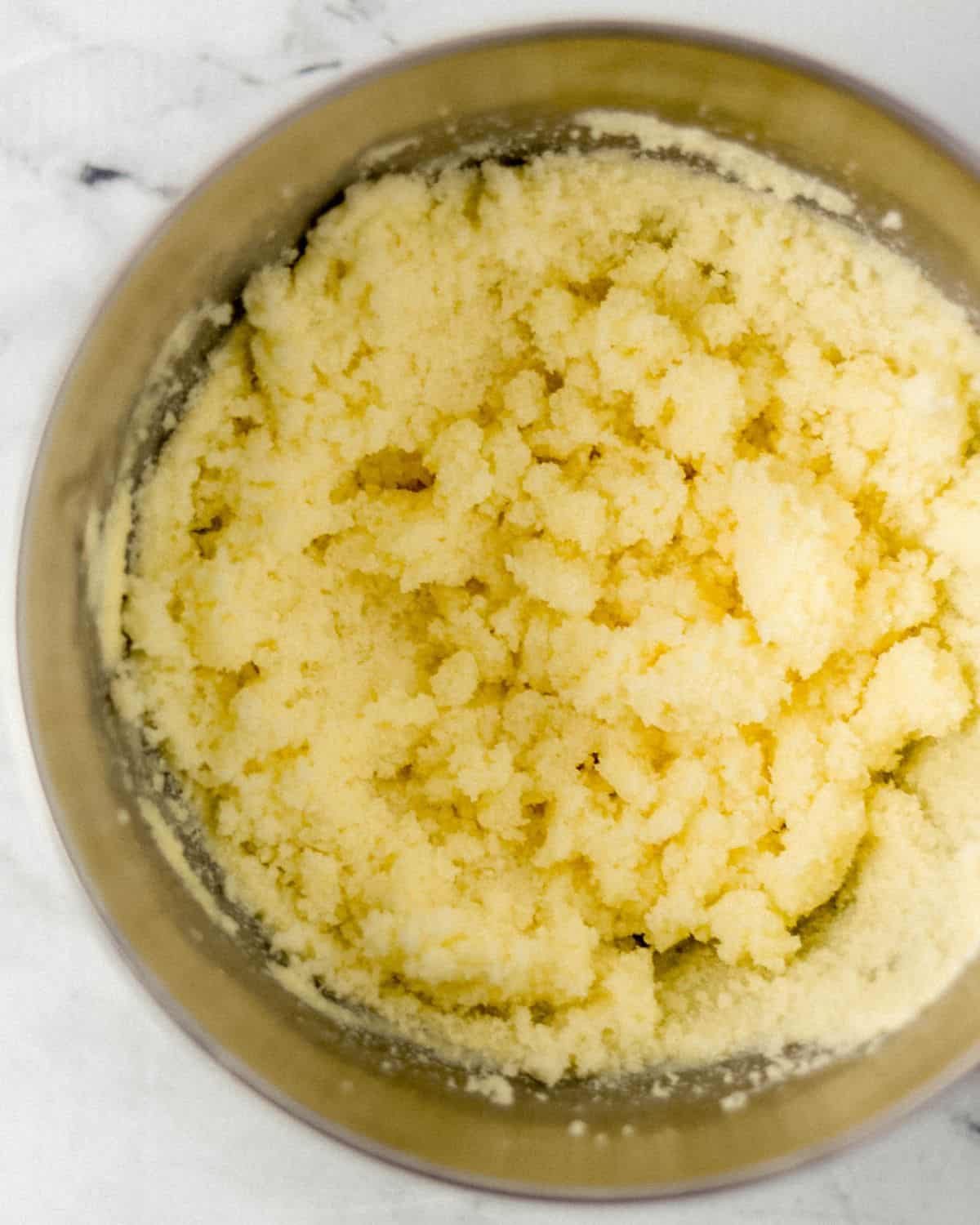
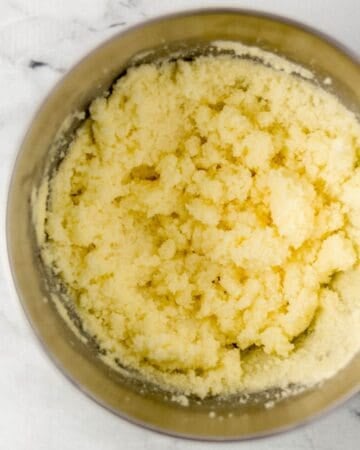
Beat the softened butter and sugar on medium-high until the mixture turns pale yellow and looks fluffy rather than grainy. Give it a full four to five minutes and scrape the bowl once partway through. You are not just combining these. You're forcing air into the fat, and that trapped air is most of the rise this cake gets.
Step 3: Add the eggs, then the yogurt
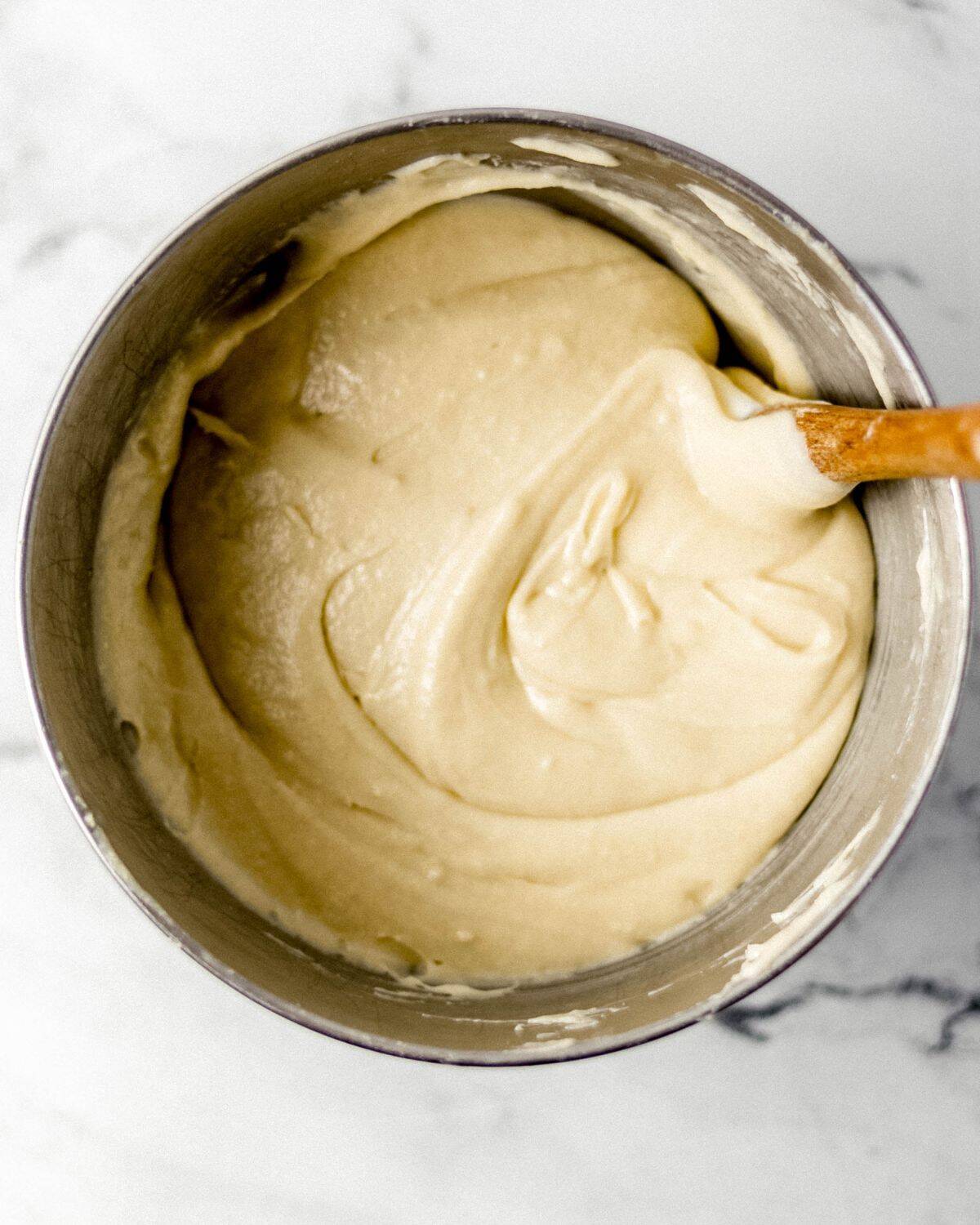
Drop the eggs in one at a time on medium-low, letting each disappear before the next goes in. Then add the yogurt and mix until smooth. If the batter looks slightly split at this point, it usually pulls back together once the flour goes in. Don't panic and don't overbeat trying to fix it.
Step 4: Add the flour gently, and stop early
Whisk the flour and baking soda together in a separate bowl first, then add it to the batter a little at a time on low speed. Stop the moment you no longer see dry streaks. Every extra turn of the mixer develops gluten, and gluten in a pound cake means a tough, rubbery crumb. Finish by folding in the vanilla by hand if you want to be safe.
Step 5: Bake low and check early
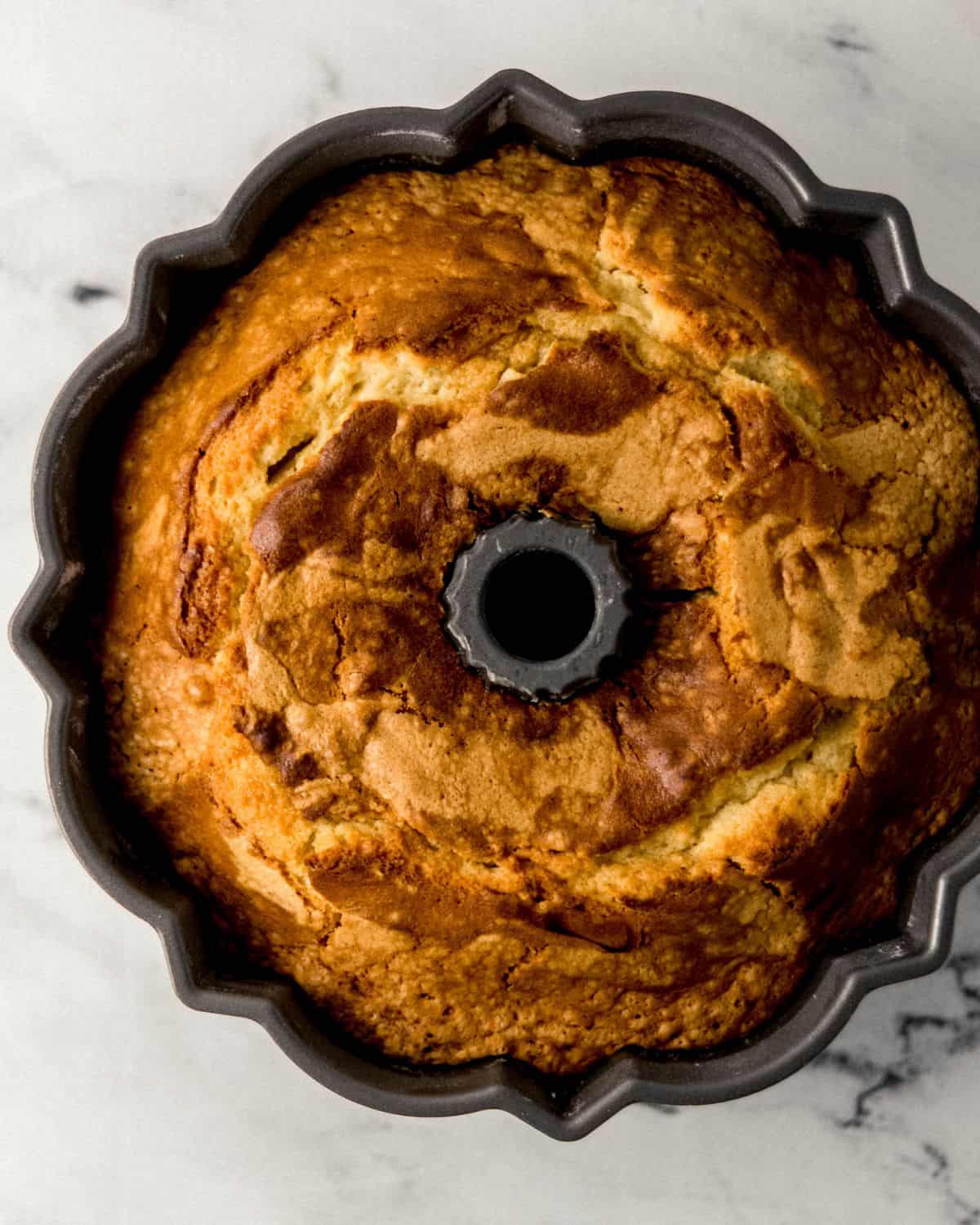
Bake at 325°F and start testing at the 50-minute mark, even if the recipe says an hour. A cake tester should come out clean or with a crumb or two. Wet batter means keep going, and a completely dry tester with cracked, pulling-away edges means you've gone slightly too far. Ovens vary more than recipes admit.
Step 6: Cool in the pan, then turn out
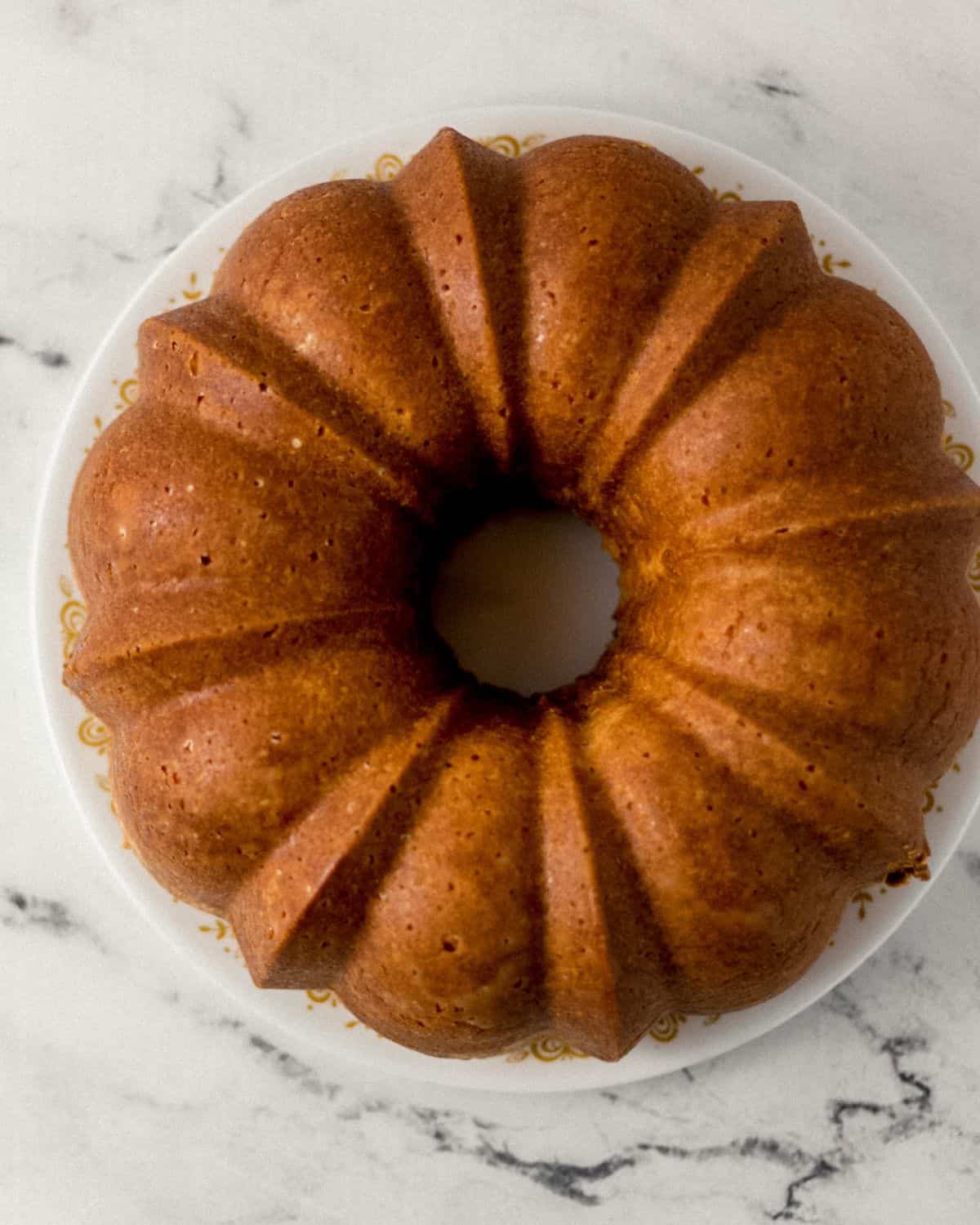
Let the cake rest in the pan on a rack for 15 to 20 minutes. This is not optional. Turn it out too early and the still-setting crumb tears. Leave it too long and the steam trapped underneath makes it stick. Run a thin knife around the edge and the center tube, set a plate on top, and flip with both hands.
LaKita's Expert Tips
Here are my best tips for making this recipe turn out perfectly every time.
- Weigh your flour if you own a scale. Three cups should come to about 360 grams. Flour is the single most commonly mismeasured ingredient in baking, and a pound cake has nowhere to hide the error.
- Let everything sit out together. Pull the butter, eggs, and yogurt out at the same time and give them a full hour. When all three are at the same temperature, the batter comes together smooth on the first try.
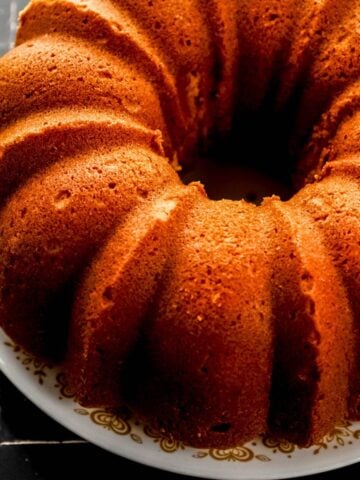
- A crack down the top is correct. Pound cakes split as they rise because the outside sets before the inside finishes expanding. If yours cracks, you did it right.
- Rotate the pan halfway if your oven runs hot on one side. Do it quickly around the 30-minute mark, before the structure has set.
- Tent with foil if the top browns too fast. Loosely, around minute 40. The cake still needs the full bake time to cook through, and you'd rather protect the crust than pull it early.
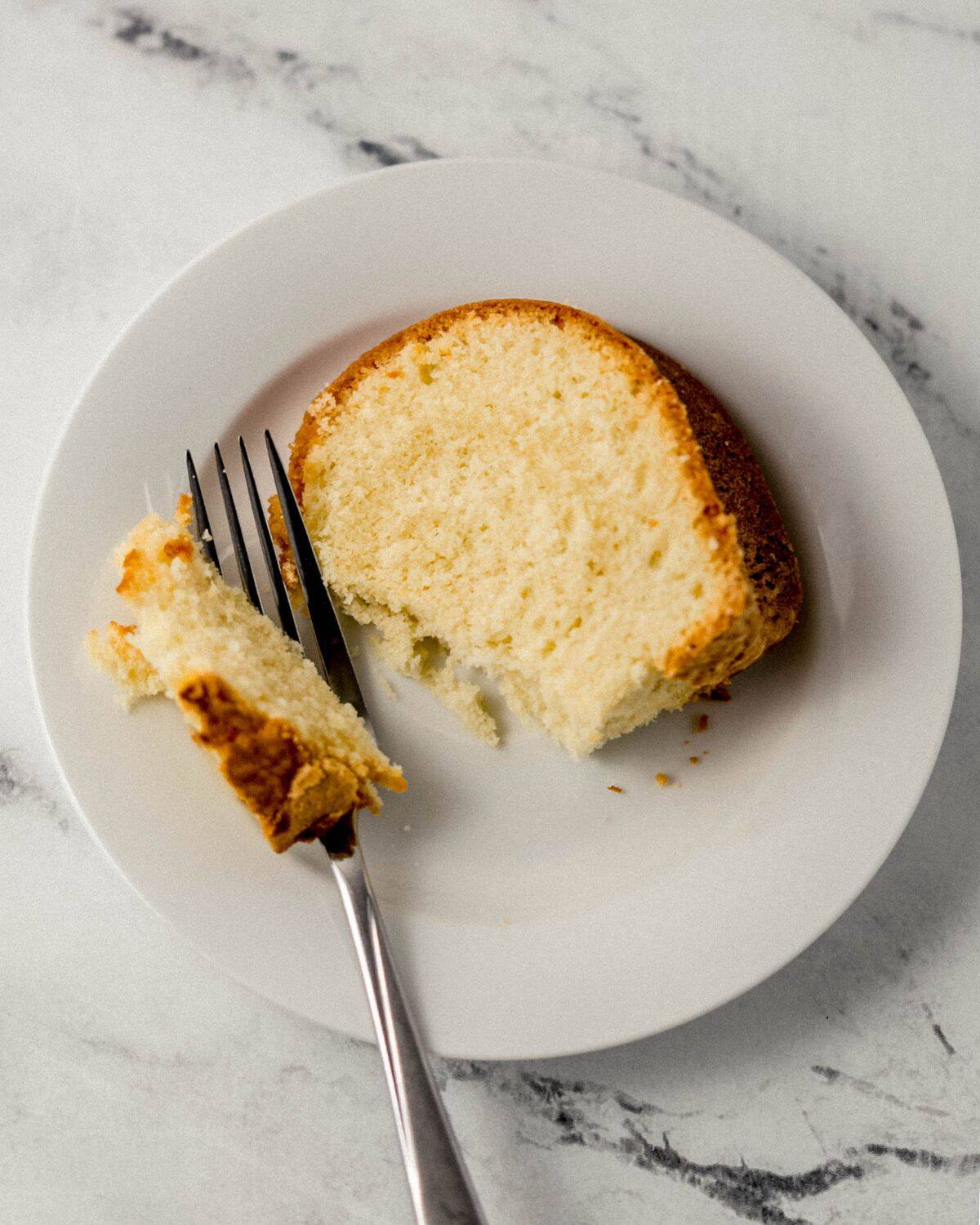
- Slice with a long serrated knife. Use a sawing motion and wipe the blade between cuts. Pressing straight down through a dense crumb compresses it.
- This cake is better on day two. The crumb settles and the flavor deepens overnight. If you're baking for an event, bake the day before on purpose.
Variations & Substitutions
This recipe is flexible, here are some easy ways to make it your own.
- Loaf pans - Divide the batter between two 8×4-inch loaf pans and bake 45-55 minutes, testing early.
- Lemon Greek yogurt pound cake - Add the zest of one lemon with the sugar and use the optional lemon extract.
- Almond - Replace part of the vanilla with almond extract for a bakery-style flavor.
- Chocolate chip - Fold mini chocolate chips in at the very end, tossed in a spoonful of the measured flour so they don't sink.
- Birthday cake - Serve slices topped with macerated strawberries and fresh whipped cream. One reader made it exactly this way for her husband's birthday, and it's become one of my favorite ways to serve it.
- Small batch - When a full bundt is too much cake, my Mini Pound Cake for Two scales the whole idea down.
- Lighter version - Lower-fat Greek yogurt can be used, with some loss of richness.
Make-Ahead & Storage
Make-Ahead
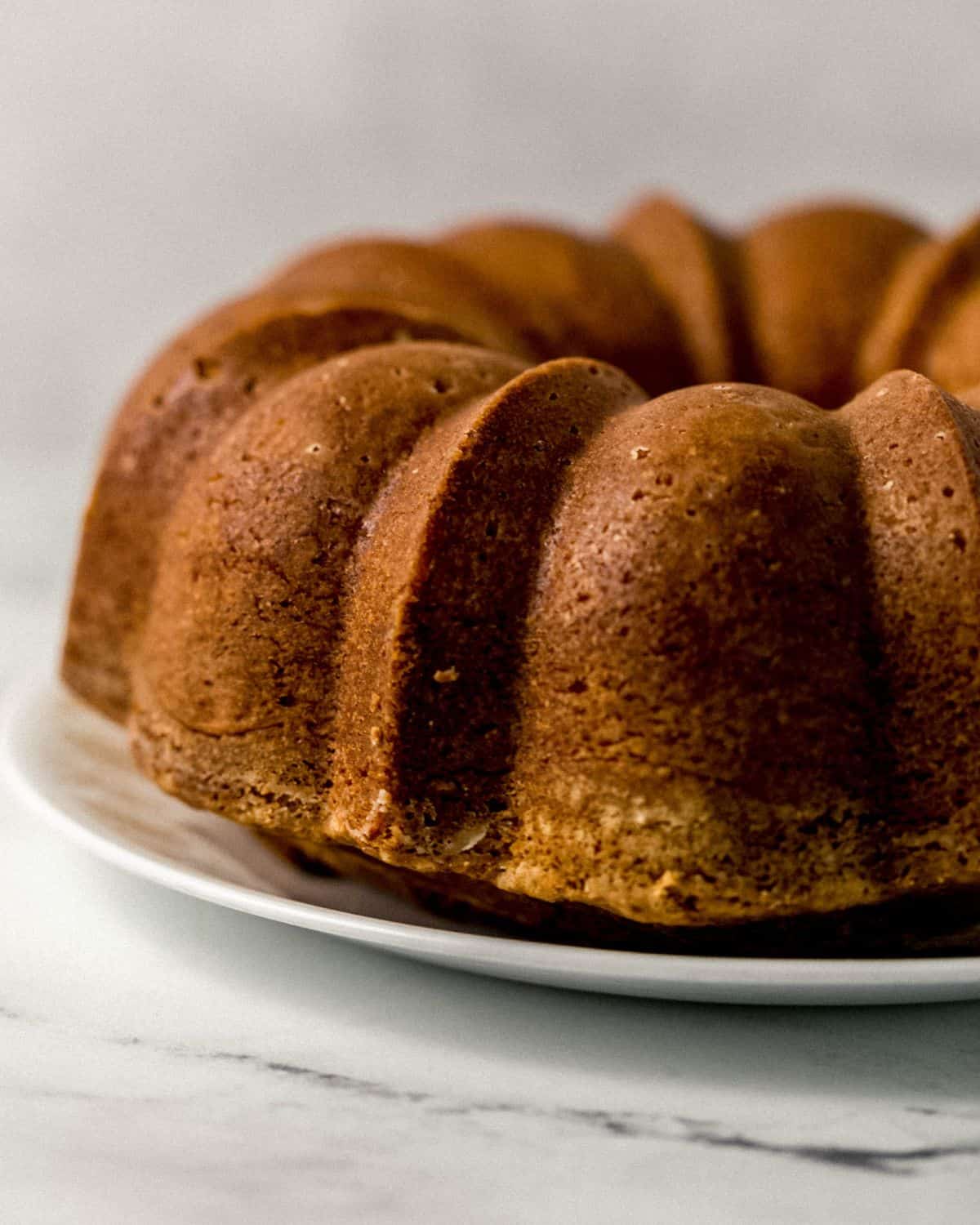
Bake this cake a full day before you need it, the crumb settles, and the flavor improves overnight. Cool it completely, then wrap the whole cake in plastic wrap and leave it at room temperature. You can also measure the dry ingredients into a bowl the night before and set the butter, eggs, and yogurt on the counter, which turns baking day into about fifteen minutes of actual work. You can't make the batter ahead. The baking soda begins reacting with the yogurt immediately, so it goes into the oven right away.
Storage & Reheating
Room temperature: Store in an airtight container or wrapped tightly in plastic for up to 5 days. A cake dome works beautifully if you have one.
Refrigerator: Up to 1 week in an airtight container. Let slices come back to room temperature before serving. Cold butter in a cold crumb tastes dry even when it isn't.
Freezer: Wrap slices or the whole cake in plastic, then foil, and freeze. Thaw overnight in the fridge, then bring to room temperature.
Reheating: Warm individual slices in a 300°F oven on a sheet pan for 5 to 7 minutes, or microwave a slice for 10 to 15 seconds. Ten seconds is usually enough. A warm slice should be soft, not steaming.
What to Serve with Greek Yogurt Pound Cake
Here are some of my favorite ways to serve this dish.
- Warm with a scoop of vanilla - A slice barely warmed with No Churn Vanilla Ice Cream melting over the edge is the simplest dessert I make.
- Macerated berries and whipped cream - Toss sliced strawberries with a spoonful of sugar and let them sit twenty minutes. This is the birthday-cake version.
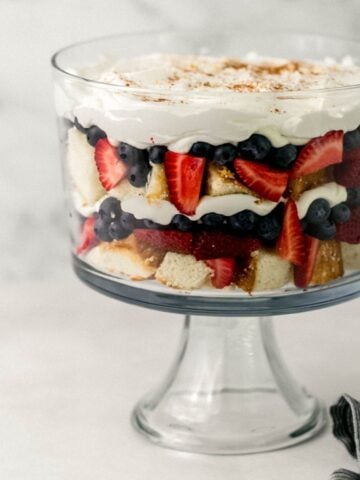
- Layered into a trifle - Day-old slices are perfect for Pound Cake Trifle with Berries, which is where mine goes when there's more cake than appetite.
- Alongside a Southern dessert table - Set it next to Easy Peach Cobbler and let people take a little of both. Nobody has ever complained.
- Plain, with coffee - Honestly the way I eat most of it, standing at the counter.
Frequently asked questions
Yes, 1:1, and the cake will be excellent. Sour cream is the traditional choice and what my mom used. The texture comes out slightly richer and a little less tangy. If sour cream is your preference, my Homemade Sour Cream Pound Cake is written specifically for it.
Yes, divide the batter between two 8×4-inch loaf pans and start checking at 45 minutes. Loaves bake faster than a bundt because the batter is shallower. Don't try to fit the whole recipe into one loaf pan, it will overflow.
Almost always one of three things. The oven door was opened before the structure set, so check through the window instead for the first 40 minutes. Or the cake came out slightly underbaked and collapsed as it cooled. A tester with wet batter means keep going. Or the butter and sugar weren't creamed long enough to hold the air that supports the center.
Overmixing after the flour goes in is the usual culprit. Stop the mixer the second the dry streaks disappear. Cold ingredients and expired baking soda cause the same problem, and over-scooped flour makes it worse.
A bundt or tube pan is ideal because the center opening lets heat reach the middle of a very dense batter, so it bakes evenly. Any 10 to 12-cup version works. Solid-center pans take longer and risk a raw middle with an over-browned edge.
Shortening and flour, applied thoroughly, beats every shortcut I've tried. Spread the shortening in a thin layer with a pastry brush or your fingers, getting into every groove and up the tube, then dust with flour and tap out the excess. Then let the baked cake rest 15 to 20 minutes before turning out, not less, not much more.
Yes, and I'd encourage it. Bake it the day before, cool completely, and wrap it well at room temperature. The crumb settles overnight and the flavor is better for it. It's a cake that rewards planning, which makes it a good choice for a table where everything else needs to come out of the oven at the last minute.
Start testing at 50 minutes with a wooden skewer or cake tester inserted into the thickest part. Clean, or with a crumb or two clinging to it, means done. Wet batter means give it another 5 to 10 minutes and test again. The top should be domed and cracked and spring back lightly when pressed.
Cakes at altitude generally need small adjustments. A slightly hotter oven, a little less sugar, and a bit more flour are the usual directions. I bake at low elevation in Florida, so I'd rather point you toward your local extension service's baking guidance than guess at numbers I haven't tested.
📖 Recipe
Greek Yogurt Pound Cake Recipe
Video
Equipment
- 1 Tube (Angel Food Cake) or Bundt Pan
- 1 stand mixer or hand mixer
Ingredients
- 1 cup butter
- 3 cups granulated sugar
- 6 large eggs
- 1 cup plain Greek yogurt
- 3 cups all-purpose flour
- ¼ teaspoon baking soda
- 1 teaspoon vanilla extract
- ¼ teaspoon lemon extract (optional)
Instructions
- Begin the recipe by preheating the oven to 325 degrees F.
- Prepare a bundt pan or tube pan using shortening to lightly grease the entire pan in a thin layer. Lightly dust the whole pan with a small amount of all-purpose flour, making sure to remove any excess flour. Baking spray can also be used as a quicker option.
- Use a stand mixer or hand mixer with a large mixing bowl. Add 1 cup butter and 3 cups granulated sugar. Mix on medium-high speed until the mixture is light yellow in color and fluffy.
- Adjust the mixer to medium-low speed and add in 6 large eggs. Add in the 1 cup Greek yogurt and continue mixing until combined.
- In a separate medium-sized bowl, whisk together the 3 cups all-purpose flour and ¼ teaspoon baking soda until combined before slowly adding in a little at a time to the cake mixture.
- Add in the 1 teaspoon vanilla extract and ¼ teaspoon lemon extract and mix until combined. Pour the cake mixture into the prepared cake pan.
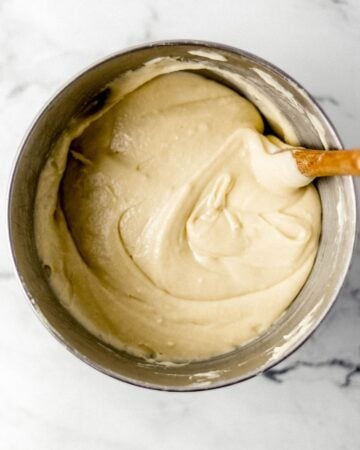
- Be sure to spread the cake mixture around or tap the bottom of the pan to make sure it's spread evenly in the cake pan.
- Place the cake into the oven to bake for about 50 minutes to 1 hour, or until a cake tester comes out clean.
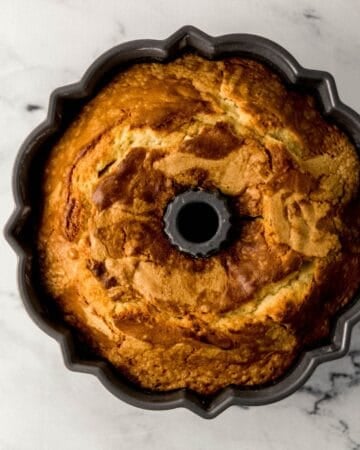
- Carefully remove it from the oven and allow it to cool in the pan on a baking rack for 15 to 20 minutes before removing completely.
- Trace a knife around the edge of the cake pan to help you to remove the cake.
- Place a plate on top of the baking pan and using both hands, flip the cake pan upside down placing the plate on the countertop.
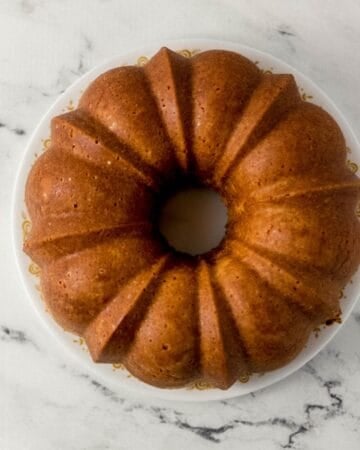
- Slowly remove the baking pan. Slice the cake and serve. Enjoy!
Notes
- Take your time to prepare the cake pan! Use shortening to lightly grease the pan in a thin layer and then dust it lightly with a small layer of flour. Make sure the entire pan is covered, this will ensure that your cake doesn't stick and comes out of the pan easily.
- Allow the butter and eggs time to come to room temperature before using them for best results. Try to avoid using them straight from the refrigerator.
- Do not overmix/overwork the cake mixture, especially after adding the flour. Mix the ingredients just enough to come together and stop.
- Be sure to check the pound cake while it's baking to ensure it doesn't overbake. Place a cake tester (toothpick) into the cake, and once it comes out with little to no crumbs or moisture, then it's time to remove it from the oven.
- Allow the yogurt pound cake to cool before removing it from the bundt or tube (angel food cake) pan.
Did You Make This Recipe?
If you give this Greek yogurt pound cake a try, I'd love to know what you think! Leave a comment below, share a photo on Instagram and tag @SimplyLaKita, or save it on Pinterest for later. Star ratings genuinely help other home cooks decide whether a recipe is worth their afternoon, so if this one earned a spot in your rotation, that little row of stars means a lot to me. And if you have a question or your own twist on it, drop it in the comments. I happily read every one.
Gail J Thompson says
Easy to make. Buttery and tender. I make this regularly.
LaKita says
So happy to hear it’s become a regular for you! Love that you’re enjoying how easy and tender it is, thank you for coming back to it! 🍰💛
Kristina Zalzal says
This was a simple pound cake without any fussy ingredients. It came together nicely. Mine turned out perfectly, with that dense, moist texture that sets pound cakes apart from any other cake. I made this to top by the slice with fresh strawberries and whipped cream as a birthday cake for my husband. This cake is so delicious just by itself that I enjoyed it the next day without any topping at all. It;s truly the perfect pound cake! Thank you, Ms. Lakita!
LaKita says
Thank you so much for sharing Kristina! I happy to hear that you enjoyed the pound cake recipe 🙂
LaKita says
Whoops, it was a mistake. 6 eggs. Thank you!
Akaleistar says
I love how simple and comforting pound cake is!
admin says
It IS sooo comforting 🙂