
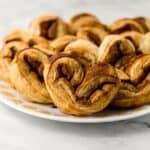
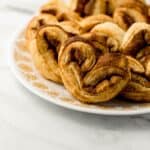
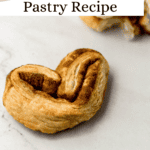


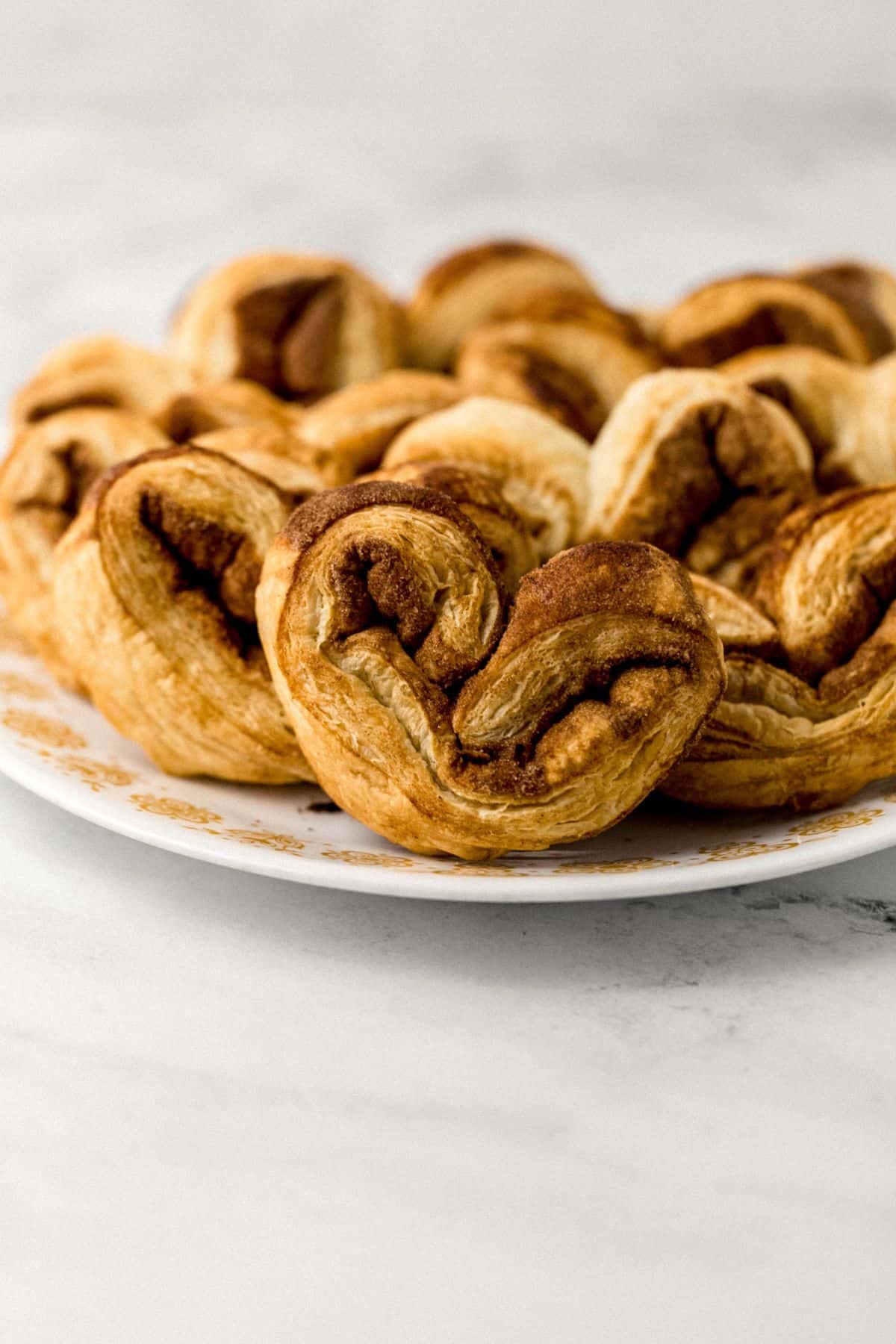
Elephant Ear Pastries are an easy sweet pastry recipe made with just a few simple ingredients for a crisp, flaky, and lightly sweet treat. Perfect for dessert, brunch, or serving with coffee, they're a simple homemade version of a classic bakery favorite.
Updated April 2026: I've refreshed this post with new tips, expanded FAQs, make-ahead instructions, and variation ideas based on your questions. Originally posted on May 25, 2016, and updated on April 11, 2022, and May 4, 2023.
Want To Save This Recipe?
Growing up in my grandmother's kitchen, I learned early on that the most impressive-looking things are often the simplest to make. Elephant ears are proof of that. My grandmother had this beautiful way of transforming the most basic ingredients into something that felt special, and these flaky, golden pastries are exactly that kind of magic.
I've been making this elephant ear pastry recipe for years, and it never gets old. There's something deeply satisfying about watching that puff pastry unfold in the oven into those gorgeous caramelized layers. I tested this recipe more times than I can count to get the folding technique just right, and my family has been more than happy to be my taste testers along the way.
If you've never made palmiers before, I promise you're going to love how easy they are. Three ingredients, 30 minutes, and you'll have a batch of pastries that look like you ordered them from a French bakery. Let's get started!
Jump to:
Why You'll Love This Elephant Ear Pastry Recipe
- Only 3 ingredients - Puff pastry, cinnamon, and sugar are all you need. No mixer, no special equipment, and no complicated technique.
- Ready in 30 minutes - From pulling the puff pastry out of the fridge to plating these beauties, you're looking at half an hour flat.
- Looks fancy, tastes incredible - These buttery, caramelized pastries look like something from a bakery window, but they come together right in your own kitchen.
- Endlessly flexible - Once you know the base technique, you can riff on flavors all year long. Think chocolate, savory herbs, or a drizzle of glaze for the holidays.
Ingredients You'll Need
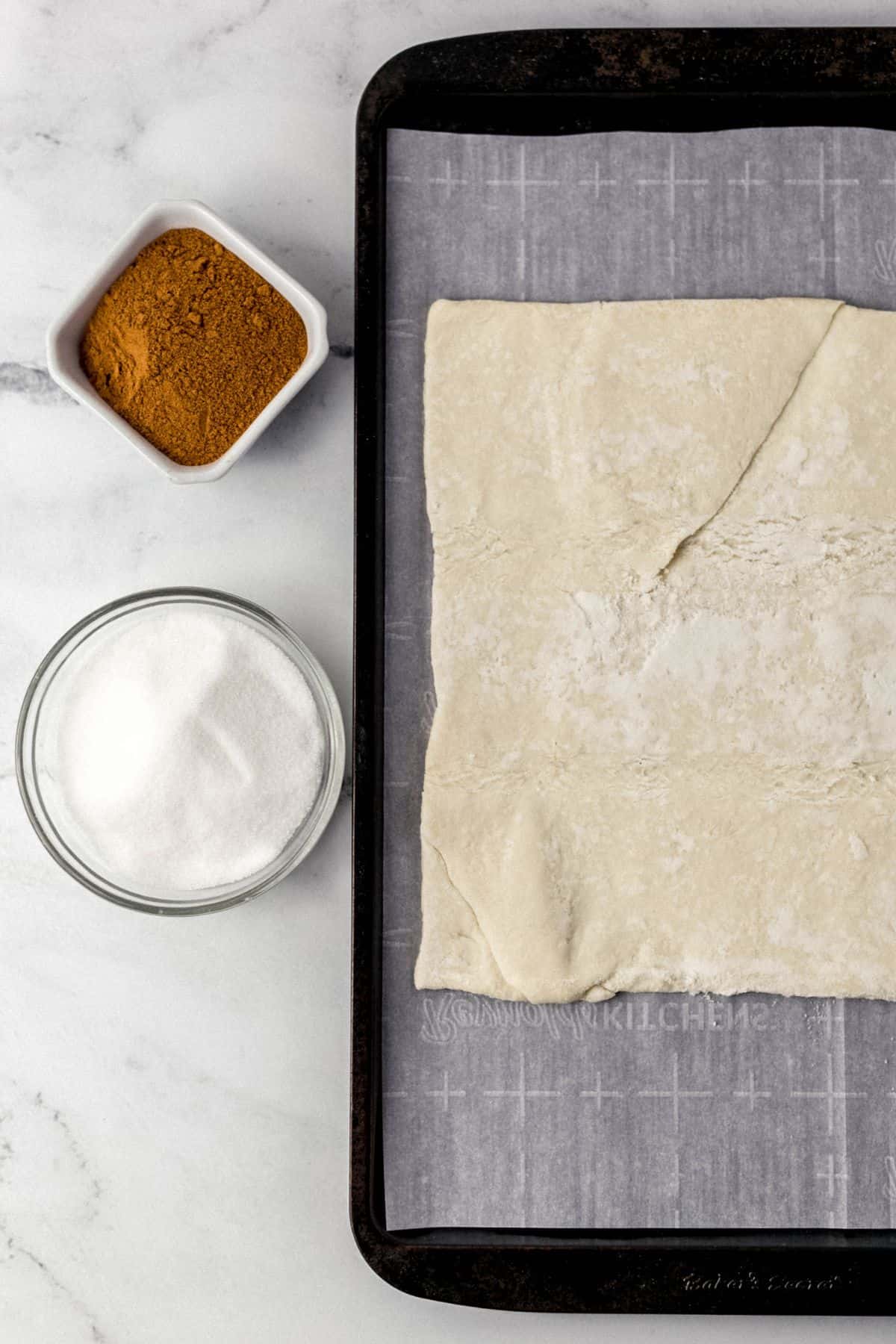
- Puff Pastry is the star ingredient here, and buying it frozen from the grocery store is perfectly fine, that's exactly what I do. Look for it in the freezer section near the pie crust and frozen pies. The most important thing: buy puff pastry made with real butter, not shortening or oil. Brands like Pepperidge Farm work well for holding the heart shape cleanly; Trader Joe's butter puff pastry is another excellent option with a shorter ingredient list. Allow the pastry to thaw in the refrigerator (not on the counter) so it stays cold and pliable, Warm puff pastry gets sticky and hard to work with.
- Ground Cinnamon brings warmth and spice to every layer. It pairs with the sugar to create that signature cinnamon-sugar combination that makes these taste like a bakery treat. Make sure your cinnamon is fresh and fragrant, a fresh jar makes a real difference in flavor.
- Granulated Sugar does double duty here. It flavors the pastry and caramelizes in the oven to create that glossy, slightly crunchy exterior that makes elephant ears so irresistible. You can use regular granulated sugar or coarse cane sugar, both work beautifully. Brown sugar can be substituted in the same amount for a deeper, molasses-tinged flavor.
👉🏾 See the recipe card below for exact quantities and full instructions.
How to Make Elephant Ear Pastry
Step 1: Mix Your Cinnamon Sugar
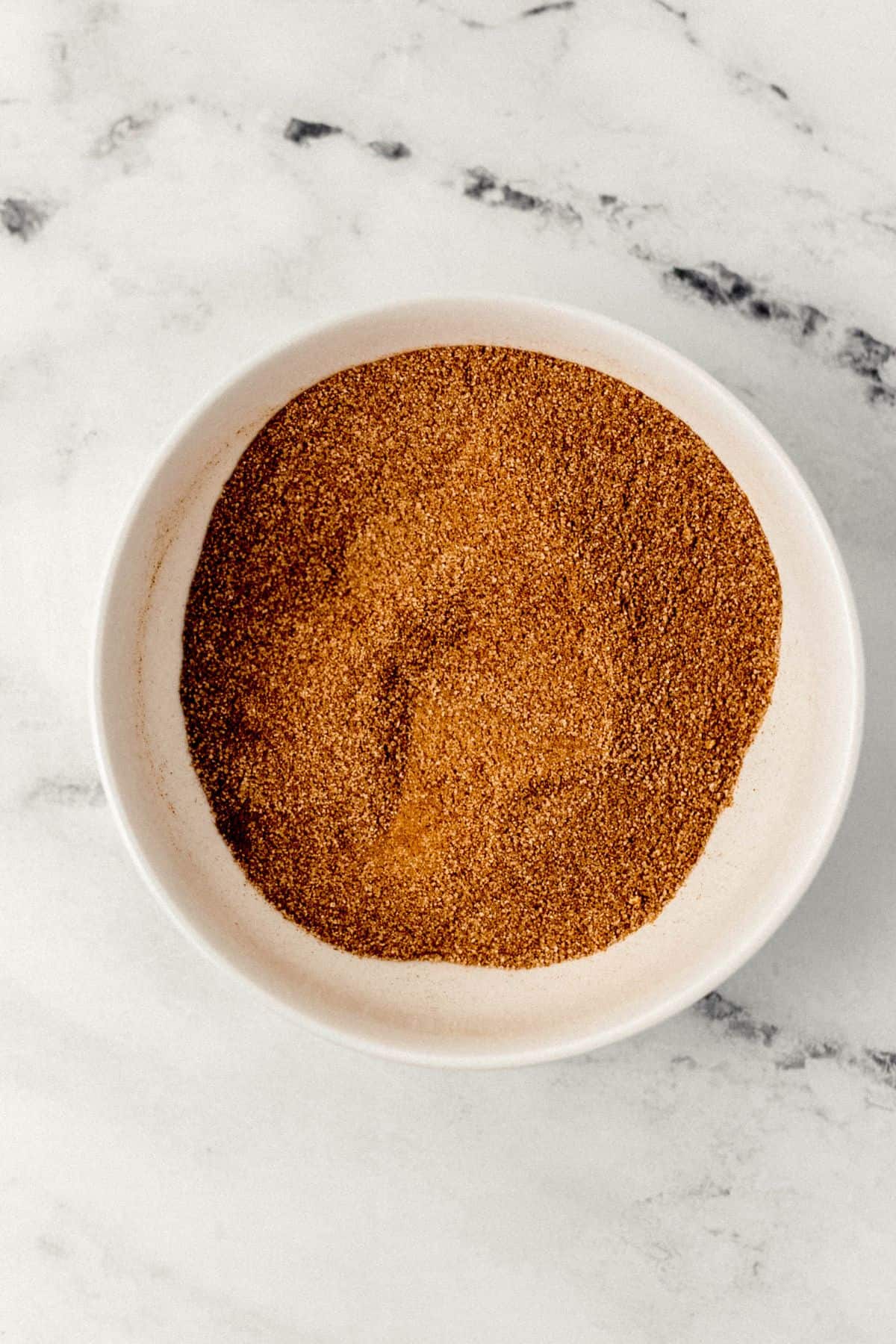
In a small bowl, stir together the ground cinnamon and sugar until fully combined. You want an even mixture so every layer gets the same flavor throughout. Set aside while you prep the pastry. This step takes about 30 seconds and gets everything organized before the real fun begins.
Step 2: Prep and Season the Pastry
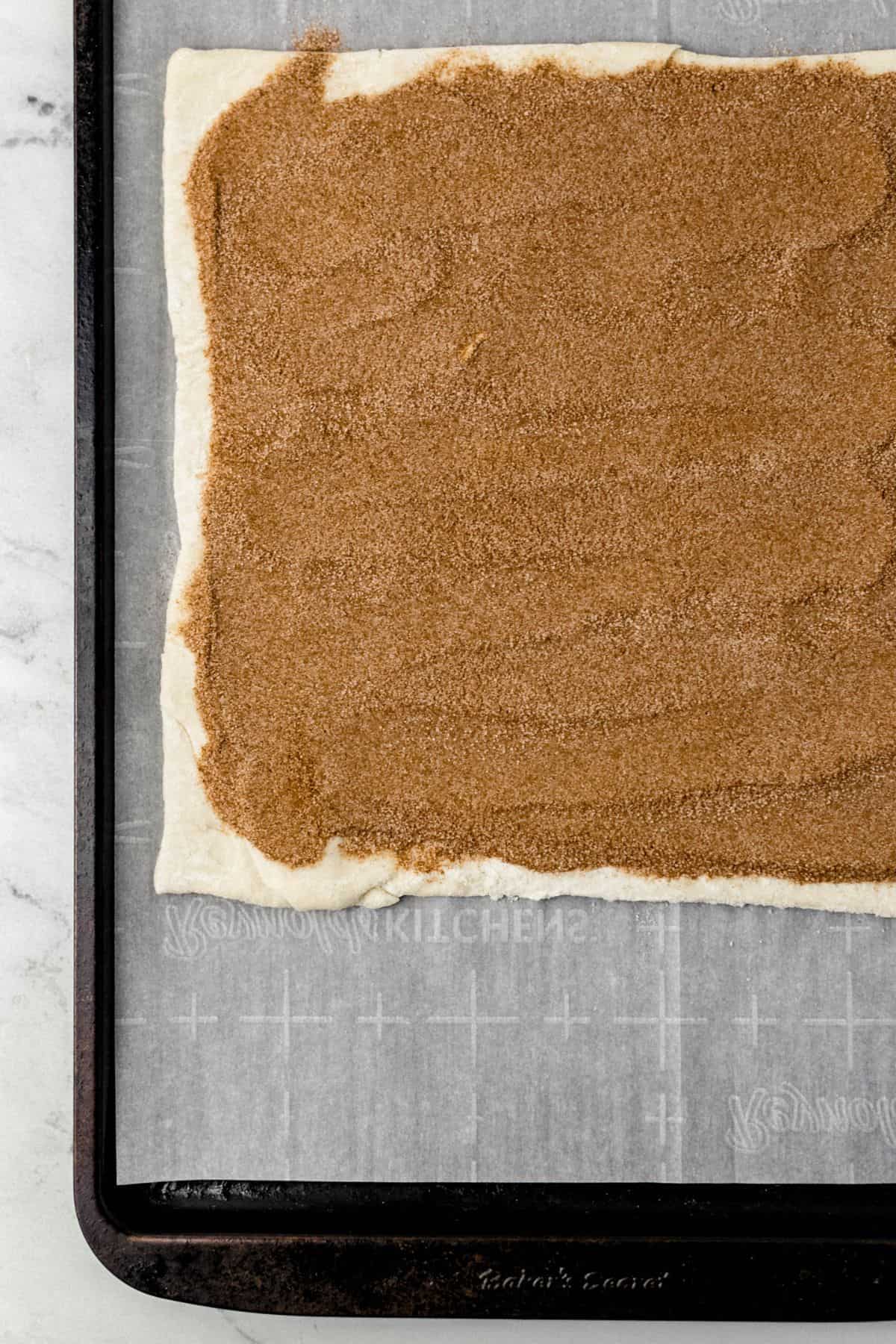
Gently unfold your thawed puff pastry sheet on a lightly floured surface (or on a sheet of parchment paper, which I prefer). Sprinkle half of the cinnamon-sugar mixture evenly across the entire surface. Don't skip the edges, those outer layers caramelize beautifully and you want full coverage. Pressing the sugar lightly into the dough with your palm helps it adhere and stay put during folding.
Step 3: Fold Into a Log
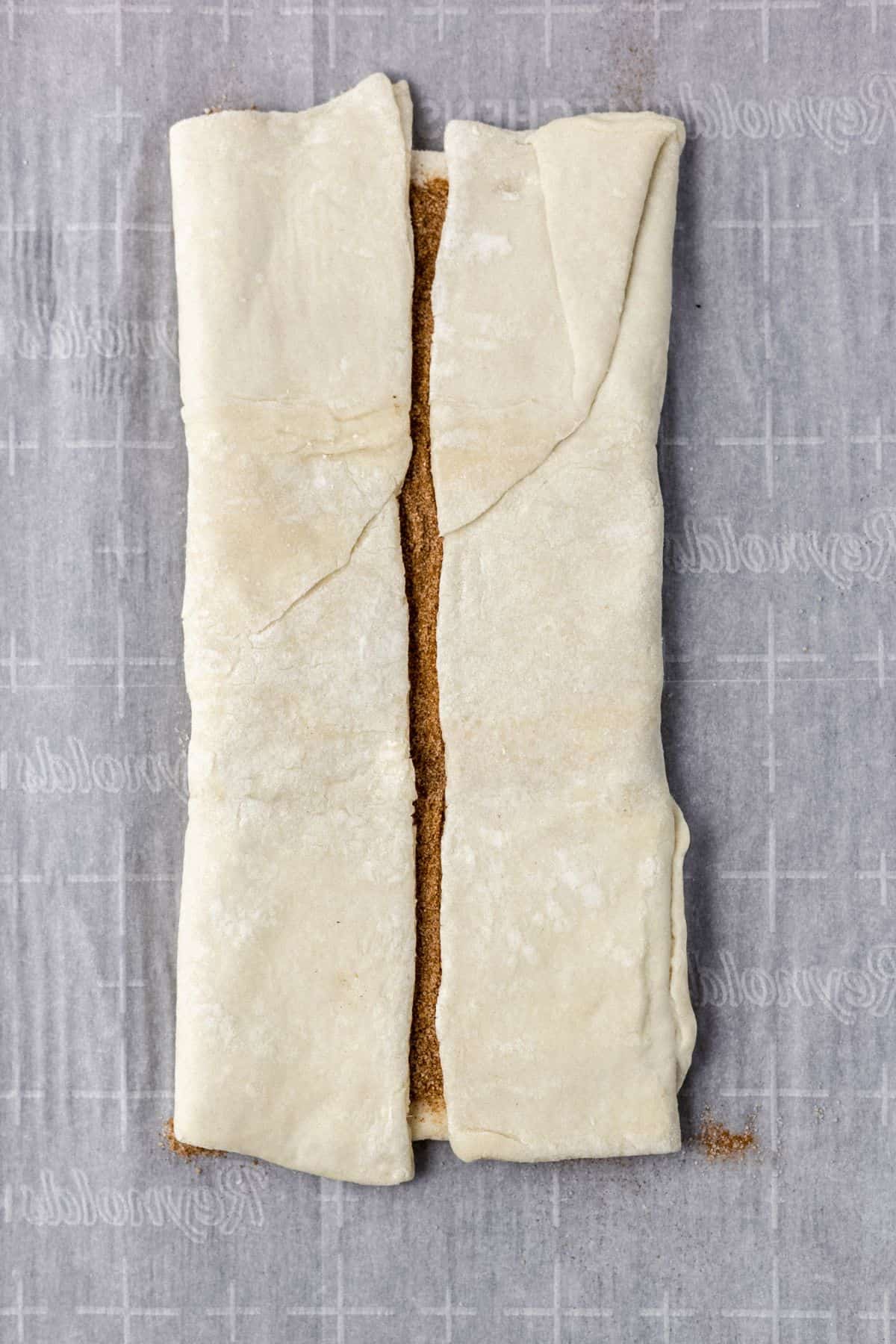
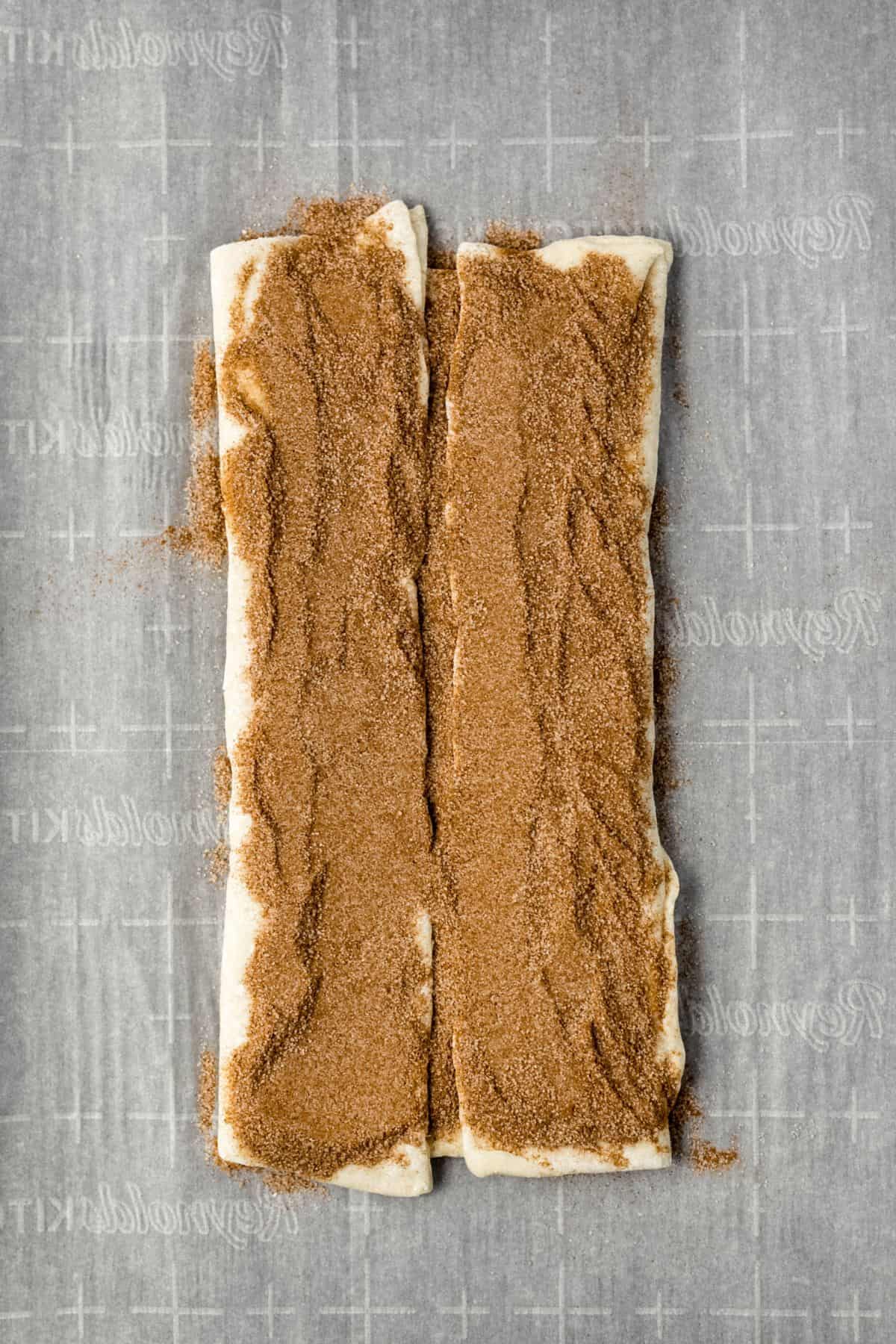
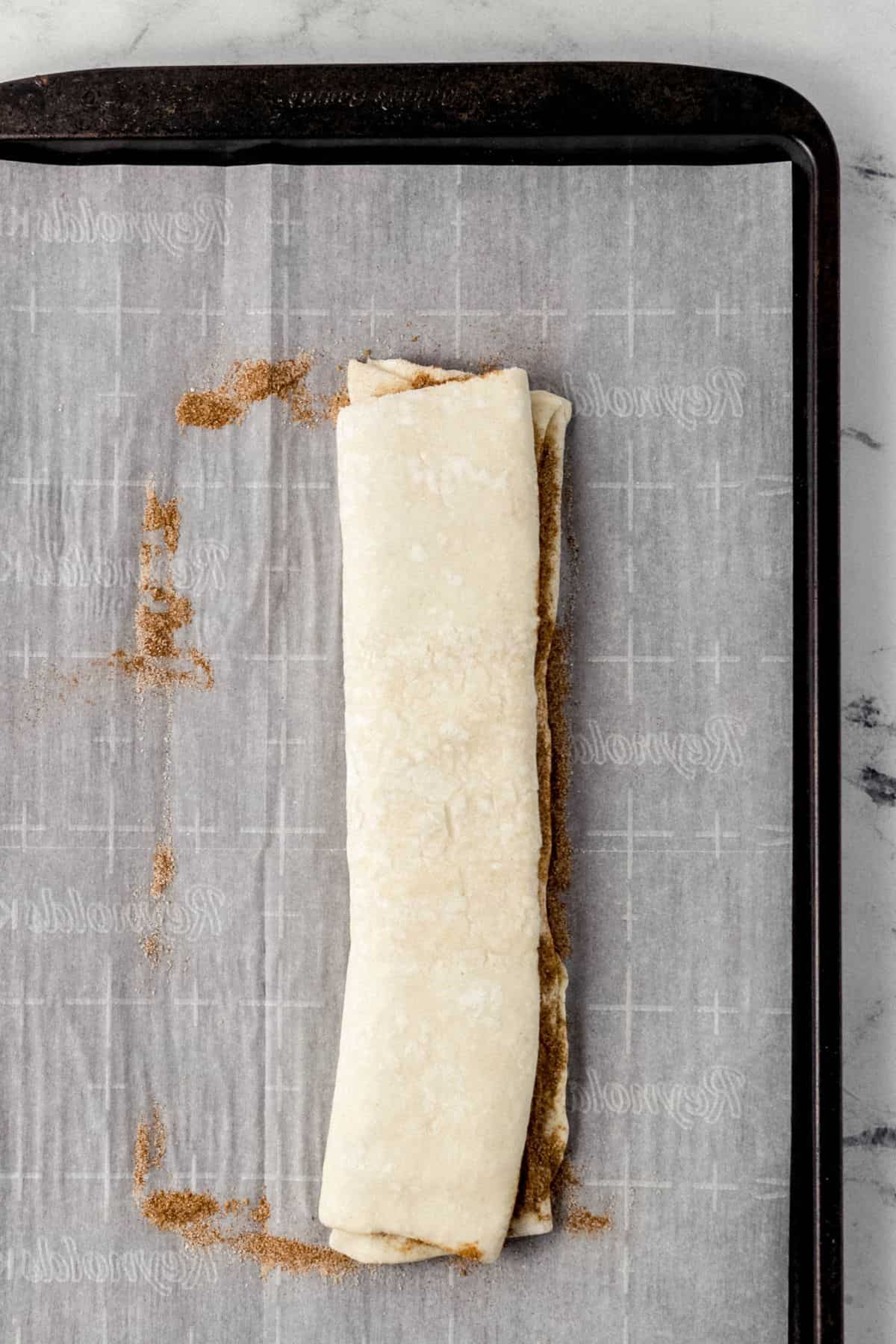
Starting at the longest side, fold both outer edges toward the center, leaving a small gap in the middle. This is the classic palmier fold. Sprinkle the remaining cinnamon-sugar over the top of the folded dough, then fold the left side over the right to create a layered rectangle. You should now have 6 distinct layers of dough. This is where the magic happens: those layers are what create the flaky, pull-apart texture in the finished pastry. Keep the log as tight and even as possible.
Step 4: Chill the Dough
This step is key and one that many recipes skip: wrap the folded log in plastic wrap or parchment and refrigerate it for 15-20 minutes before slicing. Cold dough cuts cleanly without squishing the layers, and keeping the butter cold ensures maximum puff in the oven. Don't skip this step, it's the difference between beautifully defined layers and a flat, spread-out pastry.
Step 5: Slice and Bake
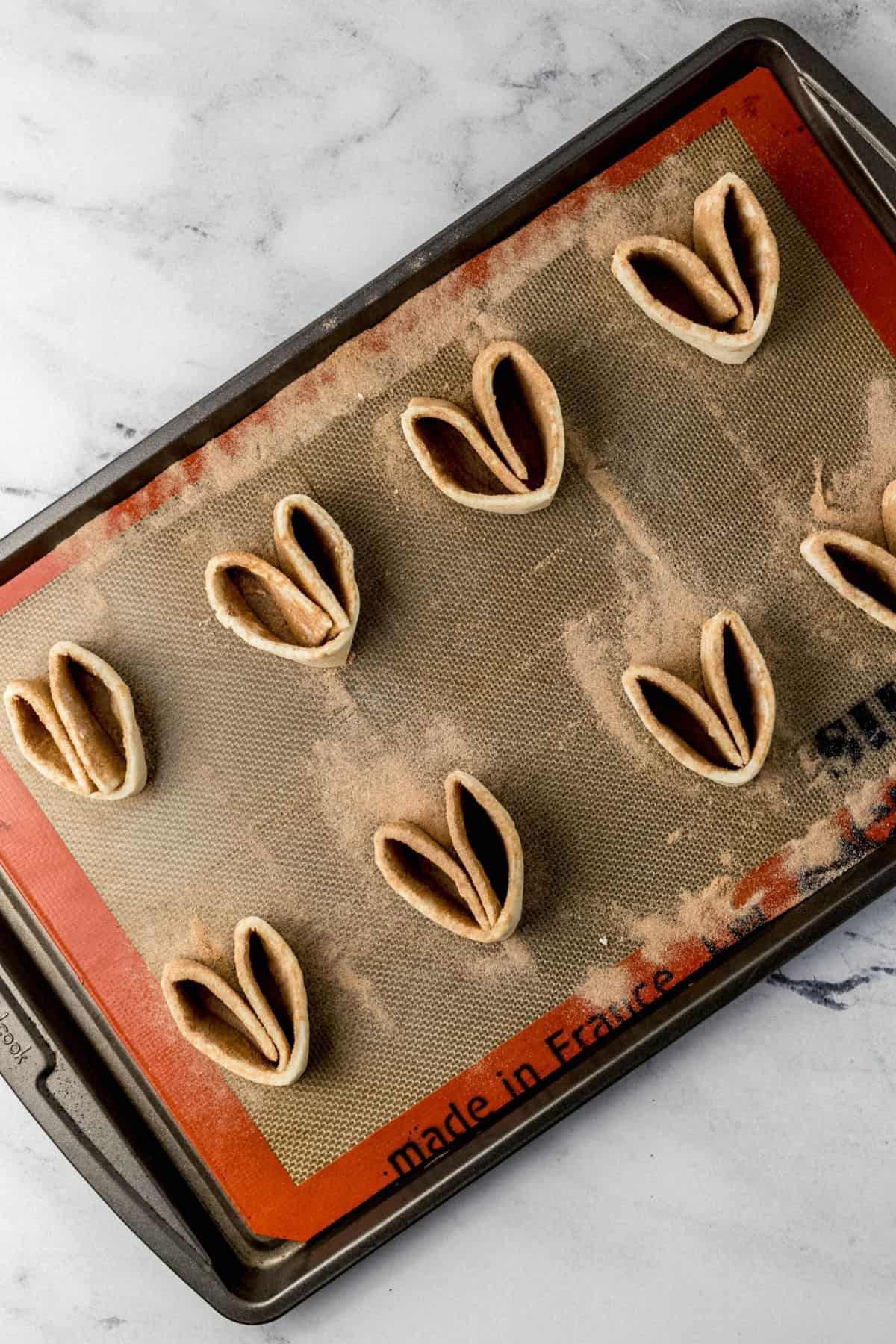
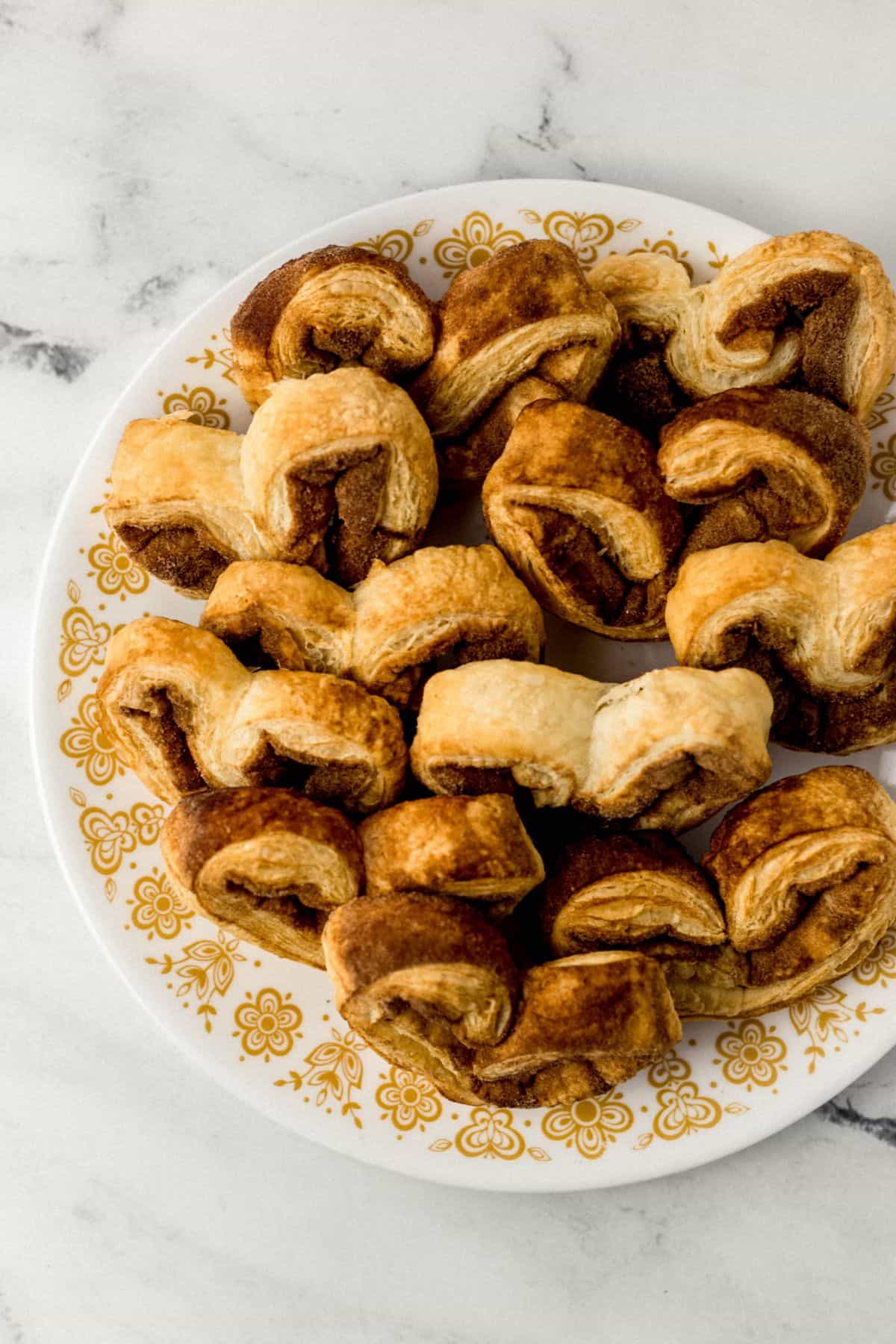
Using a sharp knife, cut the log into slices about ½ inch thick. You'll get 10-12 pieces from one sheet. Lay each piece cut-side down on a parchment-lined baking sheet, spacing them 1-2 inches apart. They'll puff and spread in the oven, so give them room. Bake at 400°F until puffed and deep golden brown, about 15-20 minutes. Halfway through baking, use an offset spatula (never your fingers, the caramelized sugar is extremely hot) to flip each pastry so both sides caramelize evenly.
LaKita's Expert Tips
- Keep the dough cold throughout - If your kitchen is warm and the dough starts feeling soft or sticky, pop it back in the fridge for 10 minutes before continuing. Cold butter in puff pastry is what creates the flaky layers.
- Use a sharp knife for slicing - A dull knife compresses the layers as it cuts, which flattens the pastry before it even hits the oven. A sharp chef's knife or serrated knife makes clean cuts that protect the layered structure.
- Don't underbake - You want deep golden brown, not pale golden. The sugar needs time to fully caramelize and set into that crispy, shatteringly thin coating. Pale elephant ears will be soft and chewy instead of crisp.
- Use a light-colored baking sheet - Dark baking sheets absorb more heat, which causes the sugar to overbrown on the bottom before the pastry fully puffs. A lighter aluminum sheet gives more even results.
- Flip halfway through - This is non-negotiable for even caramelization. Both sides should be equally golden. Use an offset spatula and work carefully, that liquid sugar is searingly hot.
- Don't crowd the pan - These pastries expand significantly in the oven. Give each one at least an inch of space on all sides, or they'll bake together.
- Let them cool on the pan briefly - Give them about 5 minutes on the baking sheet before transferring to a cooling rack. The caramel needs a moment to set, and moving them too soon can cause them to stick or break.
Variations & Substitutions
- Classic sugar-only palmiers - Skip the cinnamon entirely and use just granulated sugar for the traditional French palmier. The sugar caramelizes into a beautiful amber glaze with a pure buttery flavor.
- Chocolate elephant ears - Spread a thin layer of Nutella or chocolate hazelnut spread over the pastry before adding the cinnamon sugar, then fold as usual. The chocolate melts into the layers for a rich, indulgent version.
- Brown sugar palmiers - Substitute brown sugar for granulated sugar for a deeper, caramel-forward flavor with faint molasses notes. This is especially good in the fall.
- Orange zest variation - Add 1 teaspoon of fresh orange zest to your cinnamon-sugar mixture. The citrus brightens the whole pastry and makes it feel elegant enough for a party dessert tray.
- Savory palmiers - Skip the sugar entirely and use grated Parmesan, fresh rosemary, and a pinch of black pepper. These are incredible as an appetizer or alongside soup.
- Gluten-free - Most grocery stores now carry gluten-free puff pastry (Schar is a commonly available brand). It works beautifully in this recipe with no other adjustments needed.
Make-Ahead & Storage
Make-Ahead
You can prep these elephant ears up to 24 hours in advance. After folding the dough into the log, wrap it tightly in plastic wrap and refrigerate overnight. When you're ready to bake, simply slice and bake directly from the refrigerator. No need to bring the dough to room temperature first. You can also freeze the unsliced log for up to 1 month, thaw overnight in the refrigerator before slicing and baking.
Storage & Reheating
Store any leftover elephant ears in an airtight container at room temperature for up to 3 days. They are best within the first 24 hours when the caramelization is still crisp. Avoid storing them in the refrigerator, the humidity softens the pastry significantly.
To reheat: place them on a baking sheet in a 350°F oven for 4-5 minutes to restore crispness. An air fryer works beautifully too, 2-3 minutes at 325°F will bring back the snap without overbrowning them. Avoid microwaving, which makes the pastry soggy.
What to Serve with Elephant Ears
- With coffee or tea - These are the perfect accompaniment to a morning cup of coffee or an afternoon tea. The buttery, caramelized pastry pairs beautifully with a rich dark roast.
- As part of a dessert tray - Add these alongside Blackberry Macarons and Chess Squares for a beautiful holiday or party dessert spread.
- With vanilla ice cream - Serve two or three warm elephant ears alongside a scoop of vanilla ice cream for an easy, impressive dessert. The warm caramel and cold cream are a perfect contrast.
- Alongside sticky buns or cinnamon rolls - If you're doing a breakfast pastry spread, Small Batch Cinnamon Rolls and elephant ears are a natural pairing, both are cinnamon-forward and pair beautifully together.
- Gift them - Stack them in a cellophane bag or a simple tin for a homemade edible gift that looks like it came from a bakery. Sticky Buns and elephant ears together make a beautiful baked goods gift set.
Frequently Asked Questions
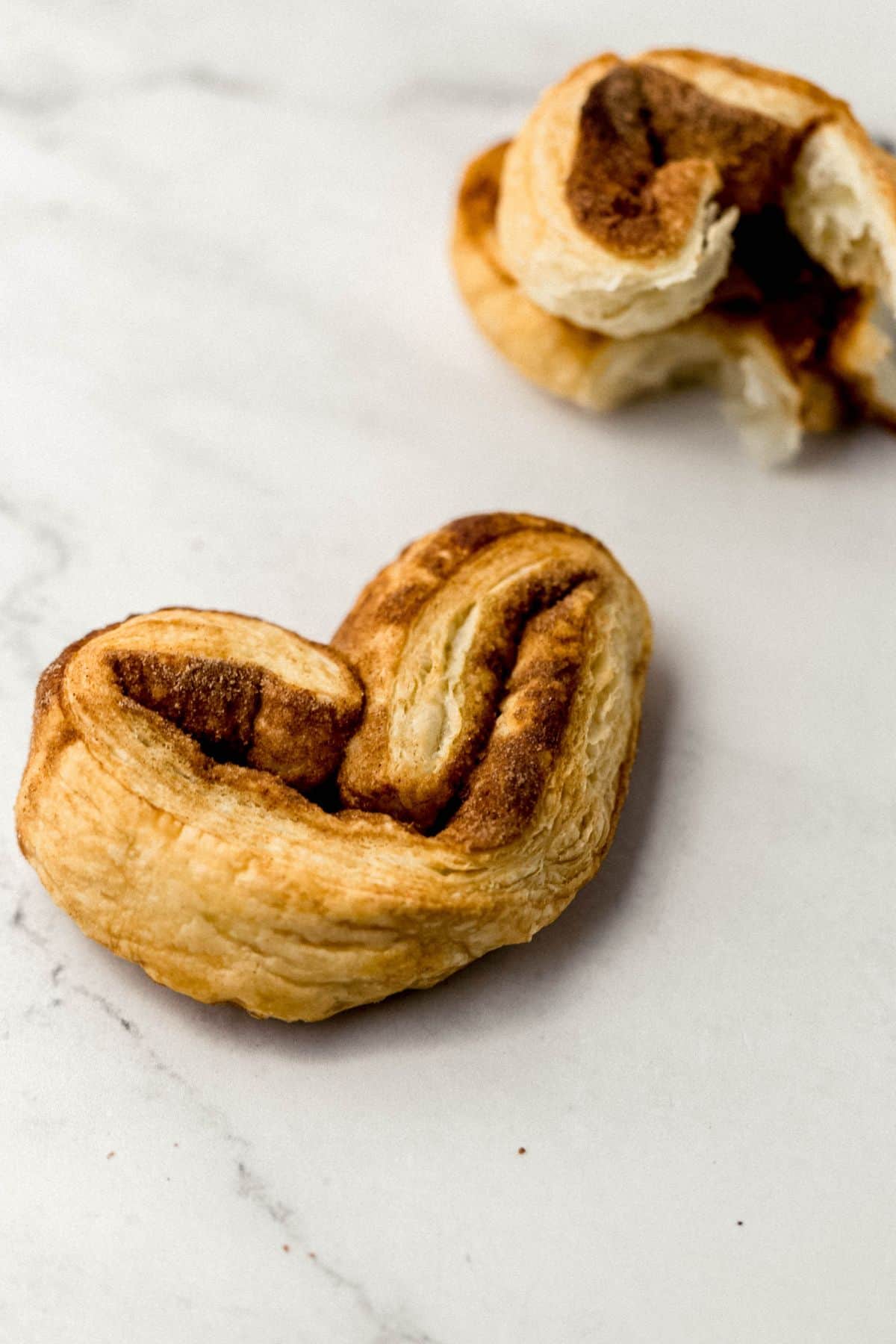
Elephant ear pastry is the American name for palmiers, a classic French pastry made by folding sugar (and sometimes cinnamon) into sheets of puff pastry, then slicing and baking until the layers puff up and the sugar caramelizes. They get their name from their shape, which resembles a large, rounded ear. They're also sometimes called palm cookies, pig's ears, or French hearts, depending on how they're shaped.
They are the same thing, just different names. "Palmier" is the French name (it means "palm tree," referring to the shape), while "elephant ear" is the common American name. Both terms refer to the same puff pastry cookie made with folded layers of sugar-coated dough.
Absolutely, and that's exactly what I recommend. Frozen puff pastry from the grocery store (Pepperidge Farm or Trader Joe's butter puff pastry are both excellent) works perfectly and makes this recipe achievable in under 30 minutes. Just make sure to buy puff pastry made with real butter for the best flavor and maximum puff.
Yes, but with a caveat, the texture is best fresh or within 1-2 days. If you do freeze them, place cooled elephant ears in a single layer in a zip-lock bag and freeze for up to 2 months. Reheat directly from frozen in a 350°F oven for 6-8 minutes to restore crispness. They won't be quite as perfectly crispy as fresh-baked, but they're still delicious.
A few things cause flat elephant ears: (1) the dough was too warm when you sliced it, always chill the rolled log before slicing. (2) The oven wasn't hot enough, 400°F is the minimum. (3) They were underbaked, pull them when they're a deep golden brown, not just golden. Also, make sure you're using real puff pastry, not phyllo dough, which doesn't puff the same way.
I strongly recommend it. Flipping the elephant ears halfway through baking allows both sides to caramelize evenly. If you skip the flip, the bottom will be deep golden and caramelized while the top stays pale, and you lose that gorgeous symmetrical look. Use an offset spatula, not your fingers, the melted sugar is extremely hot.
Yes! Traditional French palmiers are made with just sugar and no cinnamon at all. The sugar alone caramelizes into a beautiful, glossy coating with a pure buttery sweetness. Cinnamon is my favorite addition, but it's completely optional. You can also try adding orange zest, a pinch of cardamom, or even a smear of Nutella before folding.
Both Pepperidge Farm and Trader Joe's butter puff pastry work well. Pepperidge Farm tends to hold the heart/ear shape a bit more cleanly and bakes slightly faster. Trader Joe's has a shorter ingredient list and a wonderful buttery flavor. Either will give you great results, just avoid any brand made with shortening or oil instead of butter.
Look for a deep amber-gold color across both sides, and the caramelized sugar should have set into a glassy, slightly shiny coating. If you pull them out when they're light golden, they'll be soft instead of crisp. The caramelization is what creates the crunch, so don't be afraid to let them go until they're genuinely deep golden brown.
Yes, and they're wonderful! For a savory version, skip the cinnamon and sugar entirely. Instead, brush the pastry with a little olive oil and sprinkle with grated Parmesan, fresh rosemary, and black pepper. Fold and bake the same way. Savory palmiers make an incredible appetizer or a side alongside a bowl of soup.
📖 Recipe
Elephant Ear Pastry Recipe
Equipment
- 1 large sheet pan or baking sheet
- 1 Parchment paper or silicone baking mat
- 1 small mixing bowl
Ingredients
- 4 tablespoons ground cinnamon
- ½ cup granulated sugar
- 1 sheet puff pastry, thawed but still chilled
Instructions
- Begin the recipe by preheating the oven to 400 degrees F. and line a large baking sheet with parchment paper. In a small bowl, stir together the 4 tablespoons of ground cinnamon and ½ cup granulated sugar until combined. Set aside.
- Next, gently unfold the 1 sheet of puff pastry all the way and sprinkle the top with half of the cinnamon and sugar mixture.
- Starting at the longest side, fold both sides of the puff pastry toward the center (closing the tri-fold into a bi-fold) and be sure to leave a space in the middle.
- Sprinkle the rest of the cinnamon and sugar mixture on the top and fold the left side over the right side to form a layered rectangle.
- Cut the rectangle into about 10 to 12 even slices and place them cut side down onto the prepared parchment-lined baking sheet. Spacing 2 inches apart because these will rise while baking.
- Bake until puffy and golden brown, about 15 to 20 minutes. Carefully remove them from the oven and allow them to cool for about 5 minutes on the baking sheet before transferring them to a rack to cool completely. Enjoy!
Did You Make This Recipe?
If you give this Elephant Ear Pastry recipe a try, I'd love to know what you think! Leave a comment below, share a photo on Instagram and tag @SimplyLaKita, or save it on Pinterest for later. And if you have questions about the folding technique or any of the tips above, just ask in the comments, I'm happy to help!
Sonya says
These sound extremely simple to make 🙂 It's wonderful that you learned how to bake with your grandmother. I started baking in jr. high after taking Home Ec. But like you I didn't really start cooking until after I was living on my own. Which is when I got interested in cookbooks too.
admin says
They are so easy to make! That is so cool. I remember taking home ec. in High School and being bored...needless to say it was an easy class for me 😉