


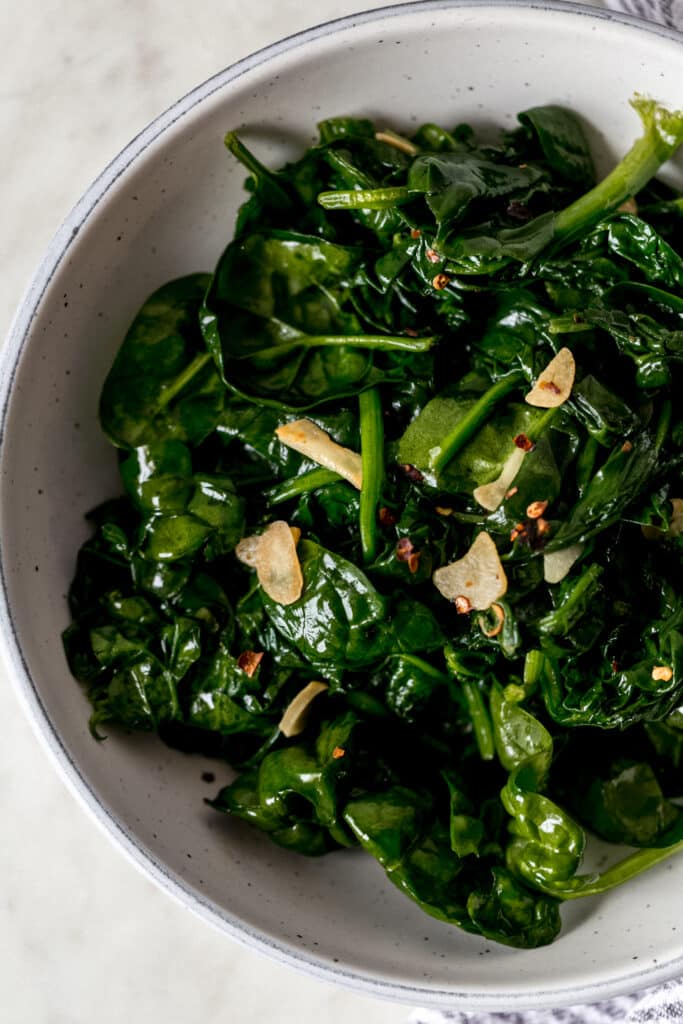
Sautéed Garlic Spinach is an easy side dish made with fresh spinach, garlic, and red pepper for a simple recipe full of flavor. Ready in minutes, it's a quick vegetable side to serve with lunch or dinner.
Updated April 2026: I've refreshed this post with new tips, an expanded FAQ, make-ahead instructions, and my favorite ways to serve this dish, all based on your questions and comments. Originally posted on January 10, 2020.
Want To Save This Recipe?
I have always kept a big bag of fresh spinach in my refrigerator. It is just one of those things that I reach for without even thinking. Tossing a handful into soups, folding it into eggs in the morning, or piling it into a smoothie when I am trying to get more greens in without really tasting them. But sometimes I want to actually taste it, you know? Like, really let spinach be the thing on the plate. And when that happens, this sauteed garlic spinach is exactly where I turn.
I have been making this recipe for years, and I love it because it is honest cooking. No special equipment, no long ingredient list, no technique you have not already done a hundred times. You are heating some oil, getting some garlic golden and fragrant, and letting fresh spinach do its thing in about ten minutes flat. The red pepper flakes at the end? That tiny bit of heat is what makes this feel like something from a restaurant rather than something you threw together on a Tuesday.
If you are looking for a go-to vegetable side dish that pairs with just about anything. Grilled steak, shrimp, roasted chicken, or even a bowl of grits, this is it. Let's get started!
Jump to:
Why You'll Love This Recipe
- Ready in 10 minutes - From cold pan to serving bowl in one of the fastest side dishes you will ever make, with no prep beyond slicing a couple of garlic cloves.
- Only 5 ingredients - Fresh spinach, olive oil, garlic, red pepper flakes, and salt. That is it. Nothing you do not already have in your kitchen.
- Pairs with absolutely everything - Serve it next to steak, chicken, shrimp, fish, or even scrambled eggs. This recipe fits any meal, any night of the week.
- Genuinely good for you - Spinach is packed with iron, vitamin A, vitamin C, and fiber, and sautéing it lightly keeps those nutrients intact better than other cooking methods.
Ingredients You'll Need
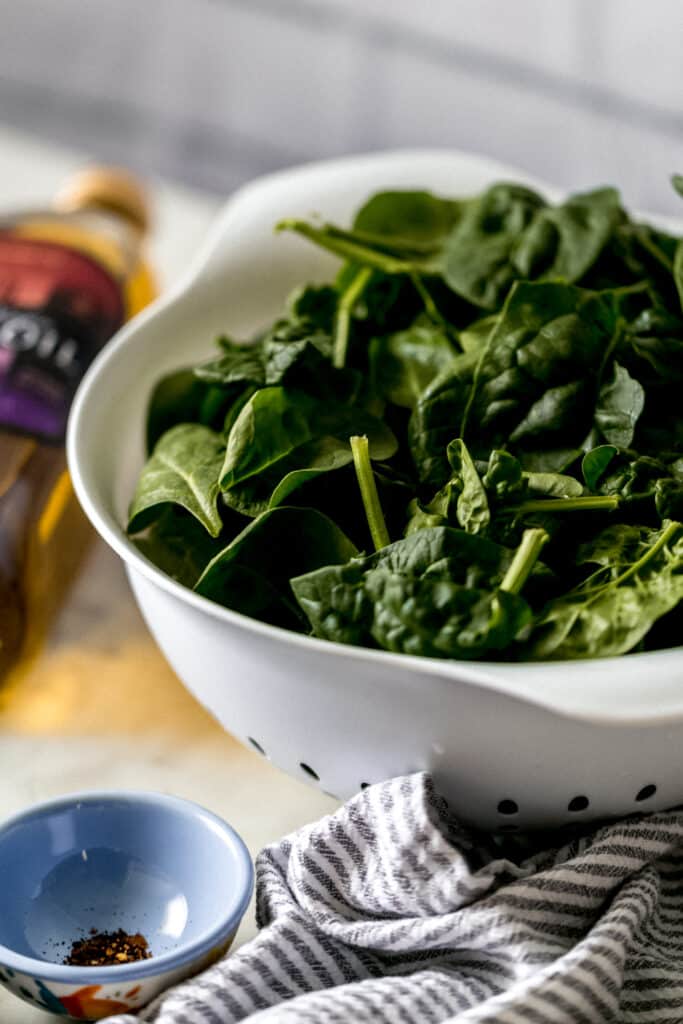
- Fresh baby spinach is the star here, and fresh really does matter. Frozen spinach has been chopped and has a much softer, sometimes watery texture that does not give you those beautiful wilted leaves. Baby spinach has a milder, more delicate flavor than mature spinach, which makes it ideal for a simple preparation like this. Either will technically work, but baby spinach is my recommendation every time.
- Olive oil is your cooking fat and also part of the flavor profile. Use a good-quality extra virgin olive oil if you have it. You will taste the difference in a recipe this simple. Two tablespoons is enough to coat the spinach without making it greasy.
- Garlic gets thinly sliced rather than minced here, and that is intentional. Thin slices cook evenly and infuse the oil with a golden, mellow garlic flavor without burning as quickly as finely minced garlic tends to. Watch this step closely, burnt garlic will make the whole dish taste bitter.
- Red pepper flakes add a gentle heat that keeps this recipe from tasting flat. A quarter teaspoon is enough to feel the warmth without overwhelming the spinach. If you prefer no spice at all, simply leave them out.
- Salt is the only other seasoning you need. Spinach is naturally mild, and a good pinch of salt brings out its flavor dramatically.
👉🏾 See the recipe card below for exact quantities and full instructions.
How to Make Sauteed Garlic Spinach
Step 1: Heat the Oil and Toast the Garlic
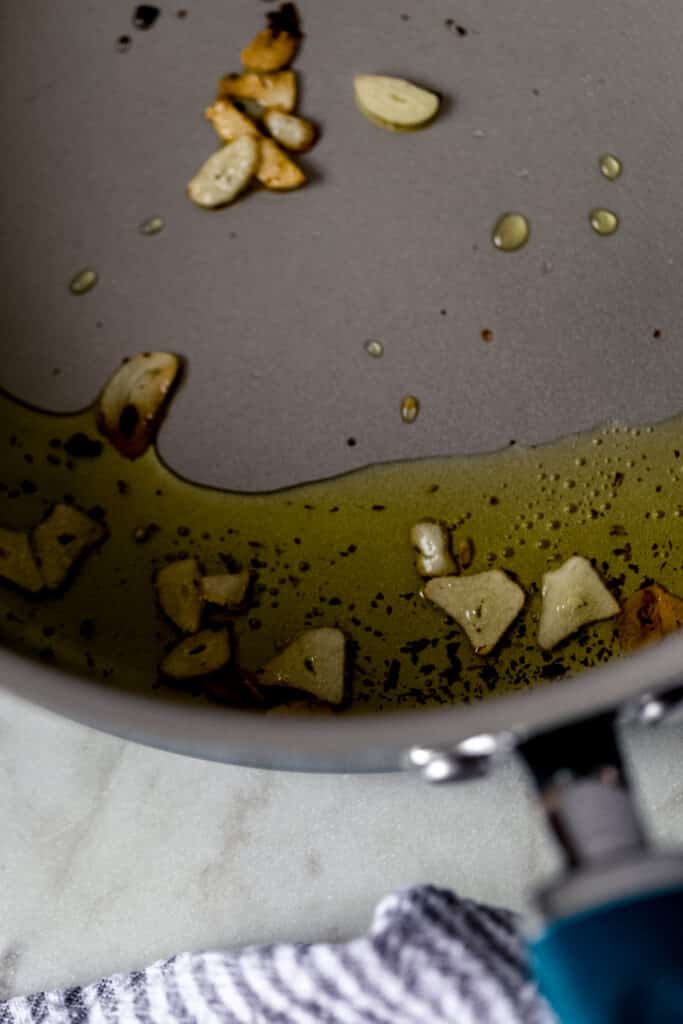
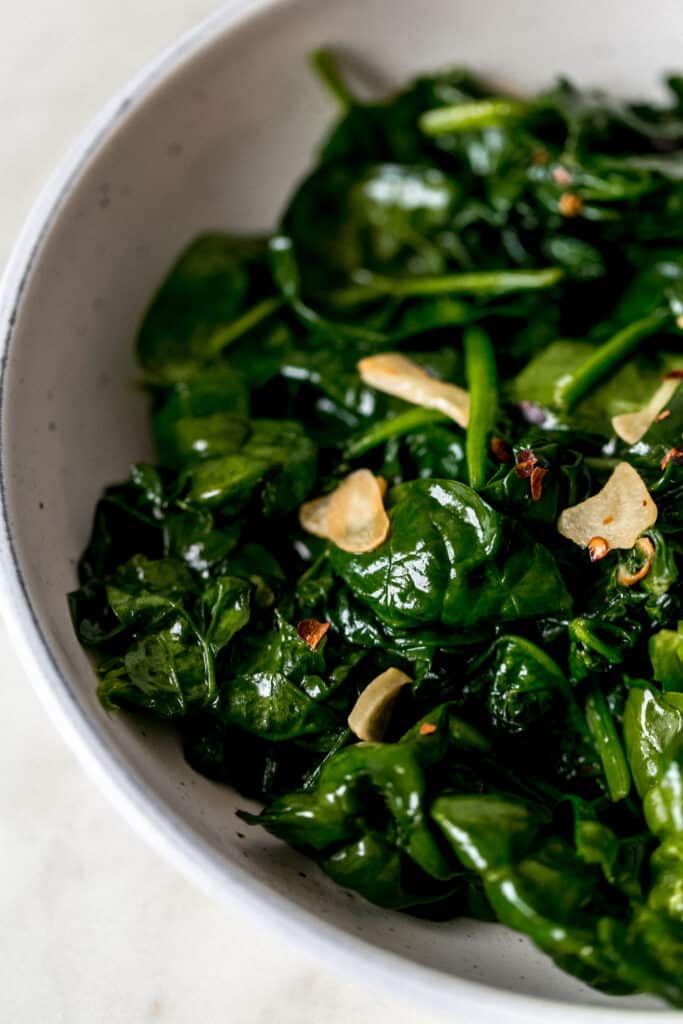
Add your olive oil to a large skillet over medium heat. Once the oil is warm and shimmery, add the sliced garlic and red pepper flakes. This is the most important step in the whole recipe. The garlic needs about 1 to 2 minutes to turn fragrant and light golden brown. Do not walk away. Garlic goes from perfectly golden to burnt very quickly, and burnt garlic cannot be saved. You will see it start to turn golden at the edges and smell incredible, that is your cue to move to the next step.
Step 2: Add the Spinach in Batches
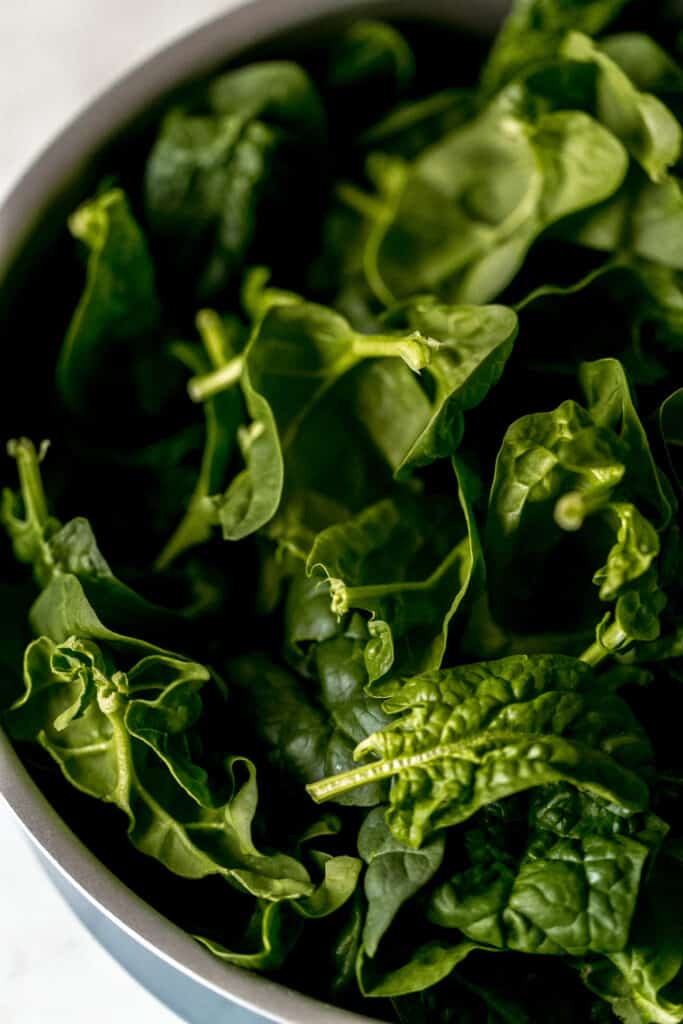
Add half of the fresh spinach to the skillet first. It will look like an enormous pile, and that is perfectly normal. Spinach wilts down to a fraction of its raw volume. Gently toss the spinach in the garlic oil with tongs. Once the first batch has begun to wilt and reduce in size, add the remaining spinach and toss again to coat everything in that fragrant oil.
Step 3: Wilt and Remove from Heat
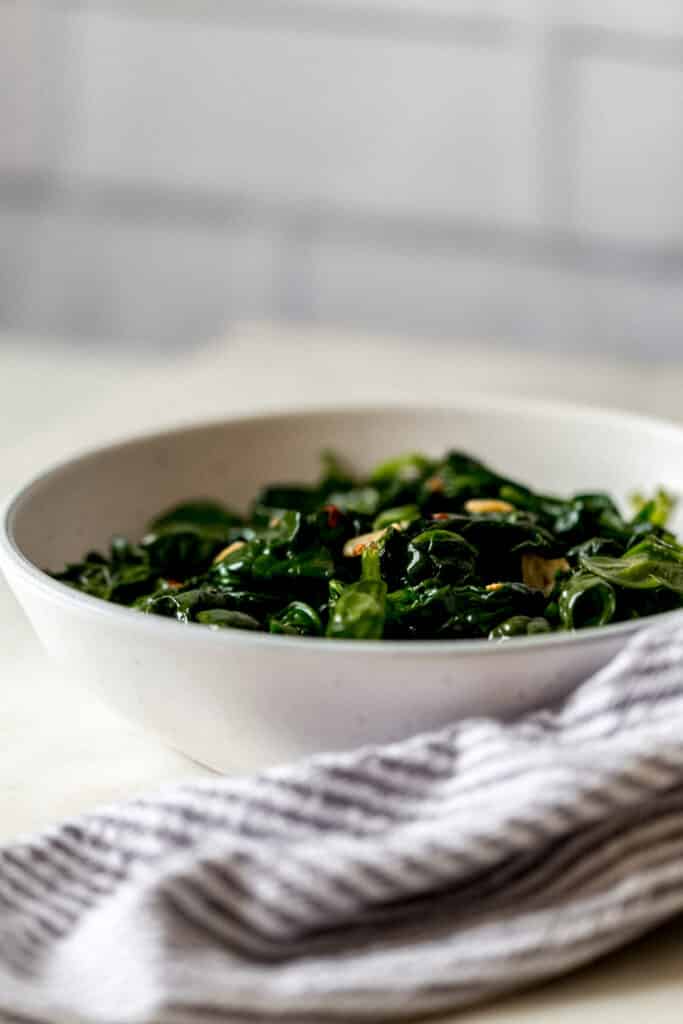
Continue stirring and tossing the spinach for 2 to 3 minutes total. You are looking for leaves that are tender and wilted but still bright green, not dark, limp, or waterlogged. As soon as you see only a few raw-looking leaves remaining, pull the pan from the heat. Residual heat will finish those last few leaves. Transfer the spinach immediately to a serving bowl or plate, and carefully drain any excess liquid left in the pan before serving.
LaKita's Expert Tips
- Use the largest skillet you have. A 12-inch skillet or larger gives the spinach room to wilt evenly. If your skillet is too small, the spinach will steam rather than sauté and end up waterlogged.
- Dry your spinach before it hits the pan. Excess water on the leaves causes splattering when they hit the hot oil and can make the final dish watery. If you rinse the spinach first, pat it dry or spin it in a salad spinner.
- Do not overcook. This is the number one mistake with sauteed spinach. The window between perfectly wilted and overcooked is about 30 seconds. Pull the pan from the heat while a few leaves still look slightly raw, they will finish cooking from the residual heat.
- Finish with a squeeze of lemon. This is optional, but it makes the dish taste brighter and more restaurant-quality. A small squeeze right before serving is all you need.
- Drain the oil before serving. Spinach releases liquid as it cooks, and the pooled oil and water in the bottom of the pan can make your finished dish soggy if you transfer it all together. Use tongs or a slotted spoon to lift the spinach out of the pan.
- Serve immediately. Sauteed spinach is best fresh and warm. It continues to wilt and release water as it sits, so plan to serve it right as everything else is coming off the stove.
Variations & Substitutions
- Add a squeeze of fresh lemon juice at the very end for a brighter, more vibrant flavor. This is how many Italian and Mediterranean versions finish the dish, and it really elevates it.
- Use butter instead of (or alongside) olive oil for a richer, more indulgent side dish. Half olive oil and half butter is a great combination.
- Add a splash of soy sauce at the end for an Asian-inspired twist. Just a teaspoon adds umami depth and works beautifully with the garlic.
- Finish with grated Parmesan for an Italian-style spinach that pairs wonderfully with pasta dishes or grilled chicken.
- Swap the red pepper flakes for a pinch of cayenne if you want more heat, or leave them out entirely for a kid-friendly version.
- Use mature spinach instead of baby spinach. Just remove any thick, tough stems before adding to the pan. The flavor is slightly more assertive but works the same way.
Make-Ahead & Storage
Make-Ahead
Sauteed garlic spinach is not a dish that benefits from being made too far in advance, since it continues to wilt and release liquid as it sits. That said, you can thinly slice the garlic and measure out all of your ingredients up to a day ahead and store them in the refrigerator, so the actual cooking takes only 5 minutes when it is time to eat.
Storage & Reheating
Store any leftover sauteed spinach in an airtight container in the refrigerator for up to 3 days. Reheat in a skillet over medium-low heat with just a tiny splash of olive oil, stirring gently for 1 to 2 minutes. Avoid the microwave if you can, it tends to make the spinach rubbery and releases even more liquid. Leftover sauteed spinach is also excellent stirred into scrambled eggs, folded into an omelet, added to soup, or tossed into a grain bowl the next day.
What to Serve with Sauteed Garlic Spinach
- With a classic steak - The bold garlic flavor makes this spinach the perfect companion to a seared Ribeye Steak. The two together feel like a steakhouse plate at home.
- Alongside garlic butter shrimp - Double the garlic? Absolutely. Serve this spinach as a bed underneath Garlic Butter Shrimp for a complete dinner that comes together in under 20 minutes.
- With Dr Pepper Pulled Pork - A scoop of this sauteed spinach alongside Dr Pepper Pulled Pork adds a fresh, garlicky green element to an otherwise rich, smoky plate.
- Under hibachi-style vegetables - Serve alongside Hibachi Vegetables for a full restaurant-inspired spread that is easy enough for any weeknight.
- With Southern Cheese Grits - For a true Southern plate, pair this spinach with a bowl of creamy Southern Cheese Grits Recipe. The simplicity of each dish makes them work beautifully together.
- Stirred into scrambled eggs or an omelet - Leftover sauteed spinach is one of the best things you can add to your next morning's eggs. It wilts right into the eggs and makes breakfast feel a little more complete.
Frequently Asked Questions
The key is to remove the spinach from the pan as soon as it wilts, using tongs or a slotted spoon rather than dumping the pan. As spinach cooks, it releases liquid that pools in the bottom of the pan, that liquid gets watery and will make your dish soggy if you transfer everything together. Drain the oil and liquid in the pan, and transfer just the cooked spinach to your serving bowl.
Yes, very easily. Spinach goes from perfectly wilted to overcooked in less than a minute. Overcooked spinach turns dark, loses its bright green color, and becomes limp and bitter-tasting. Pull the pan from the heat while there are still a few slightly raw-looking leaves, the residual heat will finish the job. If your spinach looks dark green and is releasing a lot of water, it has gone too long.
Yes, sauteing is actually one of the best cooking methods for spinach from a nutrition standpoint. Spinach is rich in vitamin A, vitamin C, iron, calcium, and fiber. A quick saute over medium heat preserves far more nutrients than boiling, and the olive oil actually helps your body absorb the fat-soluble vitamins (A and E) more effectively.
You can use frozen spinach in a pinch, but the result will be different. Frozen spinach has been blanched before freezing, so it is much softer and releases a significant amount of water as it cooks. If you use frozen, thaw it completely first and squeeze out as much water as possible before adding it to the pan. The finished texture will be less like wilted leaves and more like cooked greens. Fresh is strongly preferred for this recipe.
The bigger, the better. A 12-inch cast iron skillet or a large stainless steel pan gives the spinach room to wilt evenly without steaming. Cast iron retains heat beautifully and gives a nice even cook. I often reach for my Lodge Cast Iron skillet for this recipe. A nonstick skillet also works, but may not give you quite as good of a flavor from the garlic.
Either works, but baby spinach is the easier choice. It is typically pre-washed, has no tough stems to deal with, and has a milder flavor that suits a simple preparation like this. Mature spinach has a slightly earthier, more assertive flavor and thicker stems. If you use it, strip out any thick stems before adding to the pan.
Absolutely. Sliced mushrooms sauteed with the garlic before the spinach goes in are a classic pairing. You can also add a handful of cherry tomatoes (added at the very end so they don't get mushy), sliced shallots, or even a handful of sun-dried tomatoes for a more Mediterranean flavor.
A lot. A full 12-ounce bag of fresh spinach will cook down to roughly 1 to 1.5 cups of sauteed spinach. This surprises a lot of people when they first make this recipe, that enormous pile in the pan will be a very modest portion once wilted. For 4 servings, plan on at least 10 to 12 ounces of fresh spinach.
Sauteed spinach holds reasonably well for about 30 to 45 minutes if kept warm in a low oven (200°F) in a covered oven-safe dish. For a party, I recommend sauteing in two batches. One to serve first and a second batch you can quickly cook while guests are starting on the first. It really only takes 10 minutes, so it is one of the easiest dishes to cook fresh.
This recipe is intentionally simple, but it welcomes extra flavor. A squeeze of fresh lemon juice at the very end brightens everything. A grating of nutmeg (a very small pinch) is a classic Italian addition. A splash of soy sauce or a few drops of sesame oil gives it an Asian-inspired feel. A finishing sprinkle of grated Parmesan makes it feel Italian-steakhouse style. Start with the base recipe, then add from there.
📖 Recipe
Sauteed Garlic Spinach Recipe
Equipment
- 1 Large skillet
Ingredients
- 2 tablespoons olive oil
- 2 garlic cloves, thinly sliced
- ¼ teaspoon red pepper flakes
- ¾ pounds baby spinach
- ¼ teaspoon salt
Instructions
- In a large skillet, heat the 2 tablespoons of olive oil over medium heat.
- Add in the sliced garlic and red pepper flakes. Cook for 1 to 2 minutes until heated and the garlic is fragrant and light brown. Monitor closely as careful not to burn.
- Add in half of the spinach and salt and gently stir until the spinach begins to wilt.
- Add in the remaining spinach and continue tossing until only a few slightly raw spinach leaves remain.
- Transfer the garlic spinach to a plate to serve and carefully drain the remaining oil in the pan.
- Serve warm and store any leftovers in the refrigerator in an airtight container up to 3 days.
Did You Make This Recipe?
If you give this sauteed garlic spinach a try, I'd love to know what you think! Leave a comment below, share a photo on Instagram and tag @SimplyLaKita, or save it on Pinterest for later. This one has been in my regular rotation for years, and I hope it becomes one of yours too, questions are always welcome in the comments!




Leave a Reply