
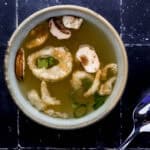
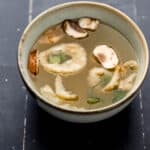




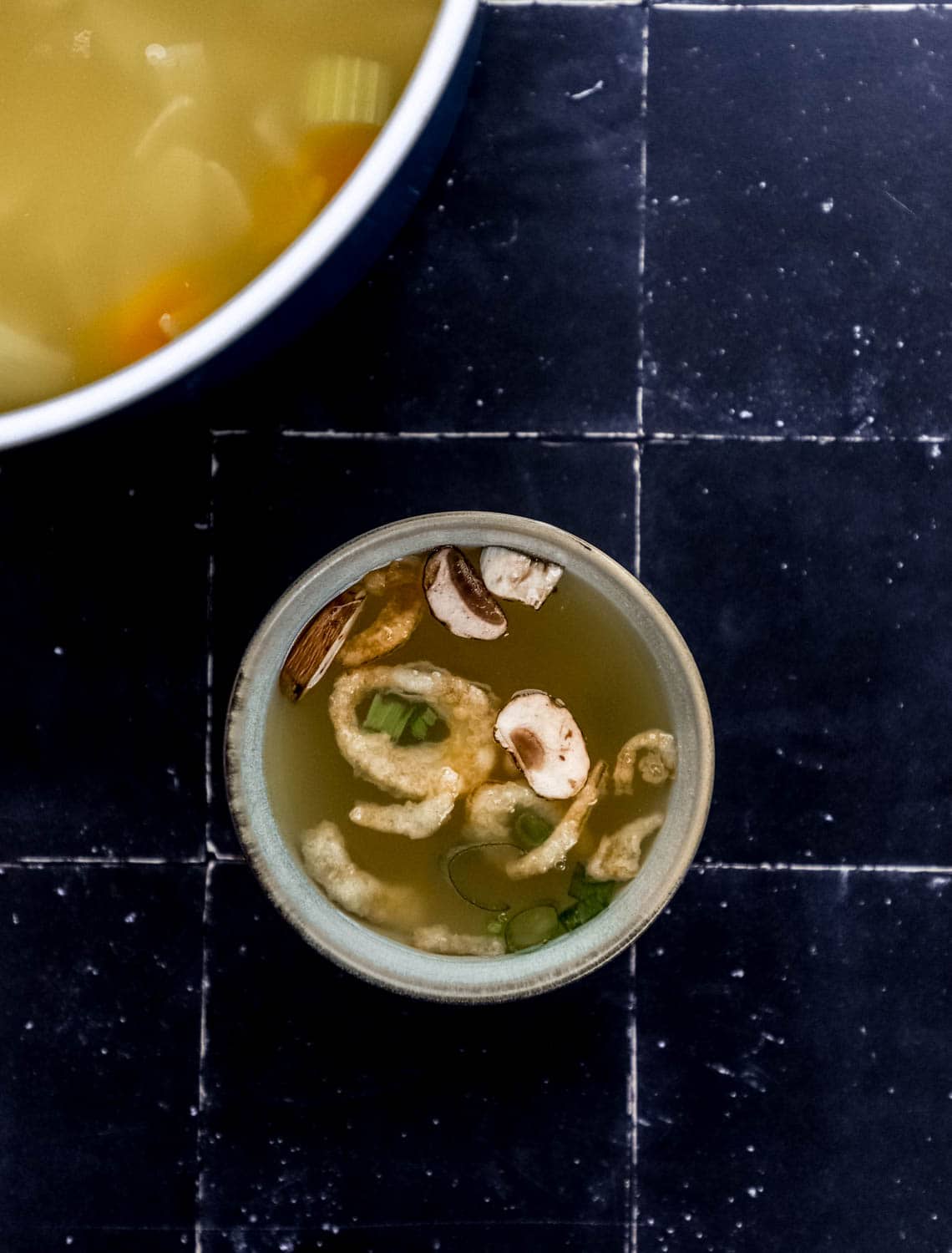
Hibachi Soup is an easy restaurant-style soup recipe made with flavorful broth, sliced mushrooms, and crispy fried onions. Light, savory, and simple to make, it's the perfect starter for a homemade hibachi dinner.
Updated April 2026: I've refreshed this post with new sections, an expanded FAQ, make-ahead tips, and ingredient variations based on all the questions you've been leaving in the comments. Originally posted on September 16, 2024.
Watch this quick video tutorial!
Every time I go to a hibachi restaurant, the soup is the part I look forward to most. Before the flames, before the shrimp toss, before even the fried rice. It's that little bowl of clear broth with mushrooms and crispy fried onions floating on top that gets me every single time. It's so simple, and yet somehow it tastes like a million dollars. I always find myself wondering how something made with so few ingredients can be so good.
I've been making this hibachi soup at home for years now, tweaking the broth base and the garnishes until it tasted as close to restaurant-style as I could get without spending half a day in the kitchen. My family has put this recipe through its paces, it's been served alongside everything from weeknight hibachi chicken nights to full holiday spreads, and it always disappears fast. Let's get started!
Jump to:
Why You'll Love This Hibachi Soup Recipe
- Ready in 30 minutes - This is a light, simple broth that comes together quickly on the stovetop with no fancy technique required.
- Just like the restaurant - The combination of a savory clear broth, thin mushroom slices, and crispy fried onions gives you that signature Japanese steakhouse experience at home.
- Easy to customize - Use chicken broth, beef broth, or a blend; make it vegan; add ginger; there are endless ways to make it your own.
- Perfect for entertaining - Serve it as a starter before hibachi chicken, fried rice, and vegetables for a full at-home hibachi night your whole family will love.
Ingredients You'll Need
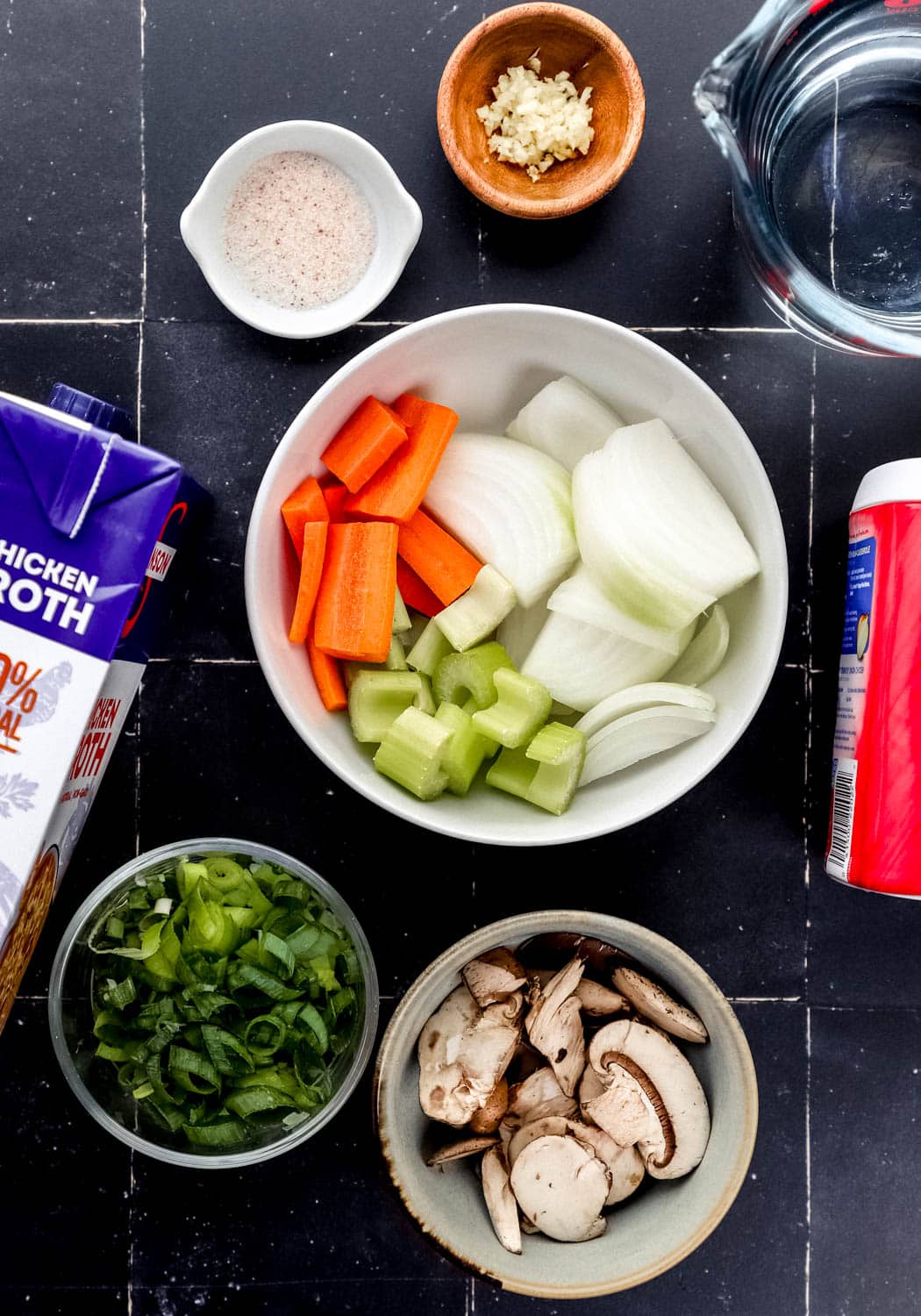
- Chicken Broth forms the base of the soup. I like chicken broth for its lighter color and clean flavor, but you can use beef broth for a deeper, richer taste, or a mix of both, which is my favorite for a weeknight version with more body.
- Water thins the broth just enough, so the soup doesn't feel heavy. It's part of what makes hibachi soup so light and easy to sip.
- Aromatics - onion, carrot, celery, and garlic simmer together to build the flavor of the broth. You don't need to chop them precisely. Large, rough chunks are fine because everything gets strained out before serving. The onion is the star here and is what gives this soup its signature flavor.
- Salt seasons the broth. Start with the amount listed and adjust to taste after straining. The flavor of the broth will concentrate as it simmers, so taste before adding more.
- Fried Onions are the garnish that makes this taste like the restaurant version. I use store-bought crispy fried onions (French's is great) and add them right before serving so they stay crispy on top of the broth.
- Mushrooms are sliced thin and added raw to each bowl. The hot broth softens them just enough as you eat. Button mushrooms or shiitake both work well, shiitake will give you more umami depth.
- Green Onions add a fresh, bright finish on top of each bowl. Freshly chopped is best here.
👉🏾 See the recipe card below for exact quantities and full instructions.
How to Make Hibachi Soup
Step 1: Build the Broth Base
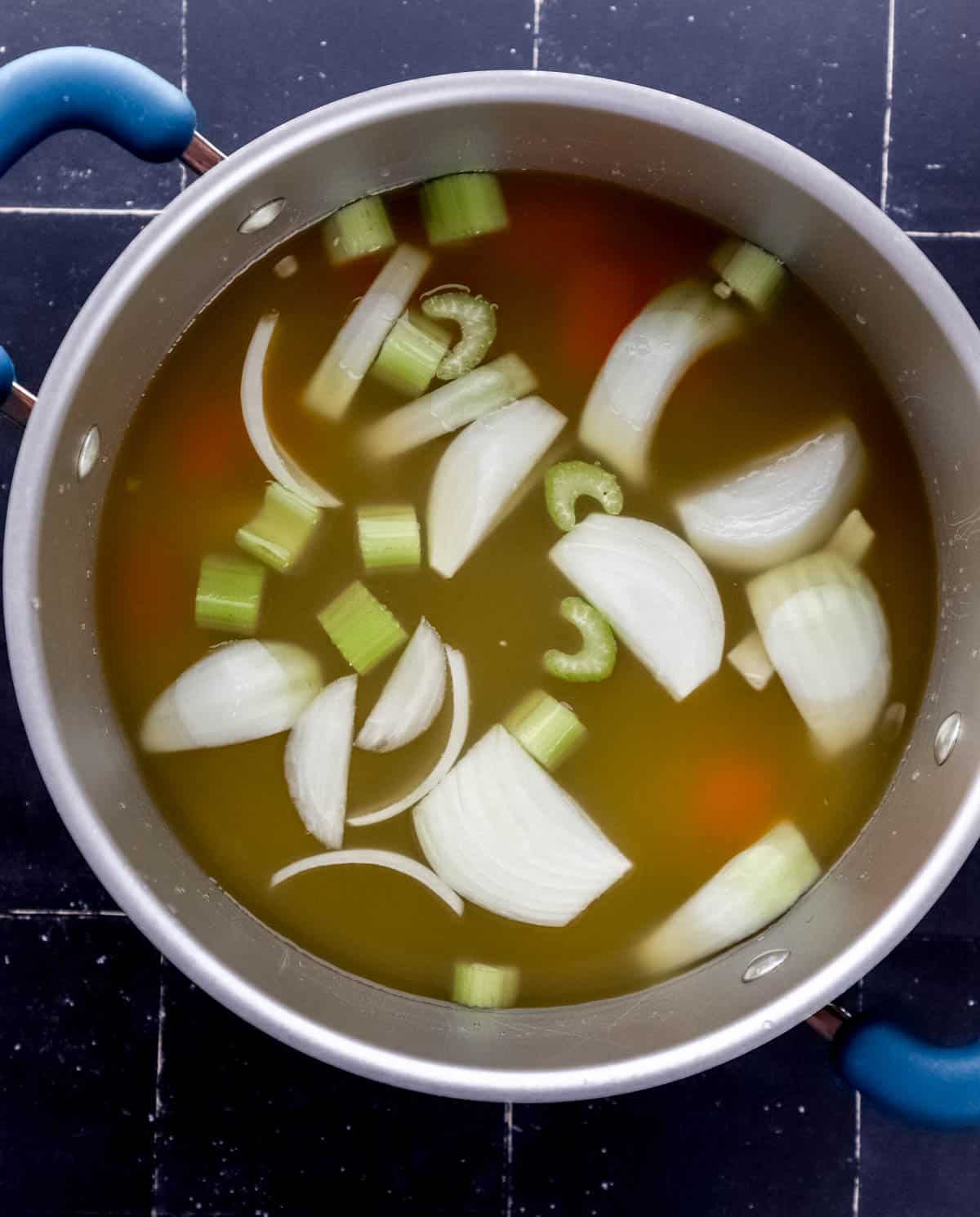
Combine chicken broth, water, roughly chopped onion, carrot, celery, garlic, and salt in a large pot over medium-high heat. Give everything a stir to combine. You don't need to worry about precise cuts here. The vegetables are just there to flavor the broth, and they'll be strained out later.
Step 2: Simmer Low and Slow
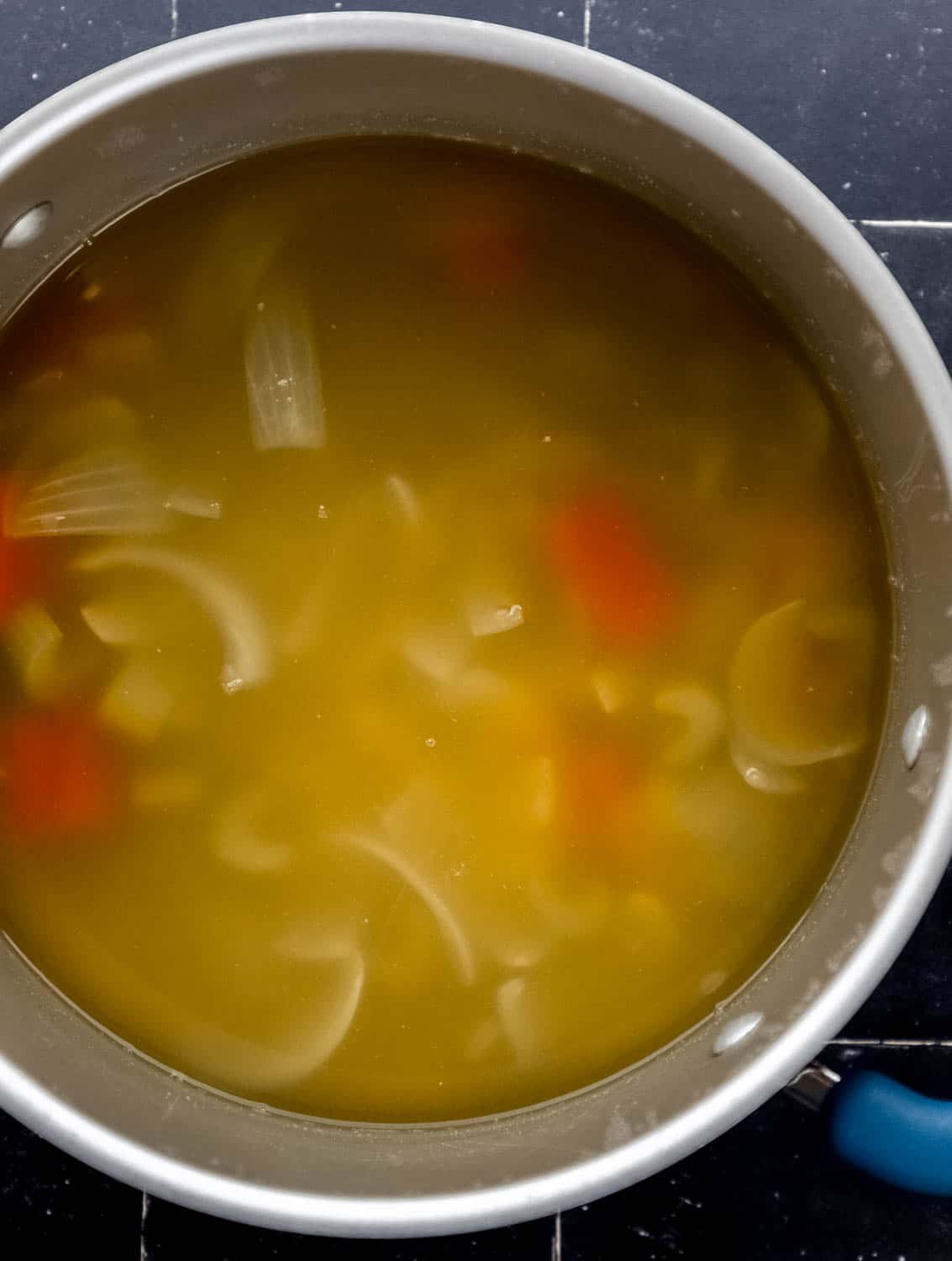
Bring the soup to a boil, then reduce the heat to low and let it simmer for 15 to 20 minutes. The onion should turn translucent and the broth should smell rich and fragrant. If you have more time, simmering for up to 45 minutes will deepen the flavor significantly. This is what gives restaurant hibachi soup its more intense taste.
Step 3: Strain the Broth
Using a fine-mesh strainer, carefully strain the vegetables out of the broth. Discard them (or compost they've done their job). The broth should look clear and golden. If you notice any small particles floating around, skim them off with a spoon.
Step 4: Garnish and Serve
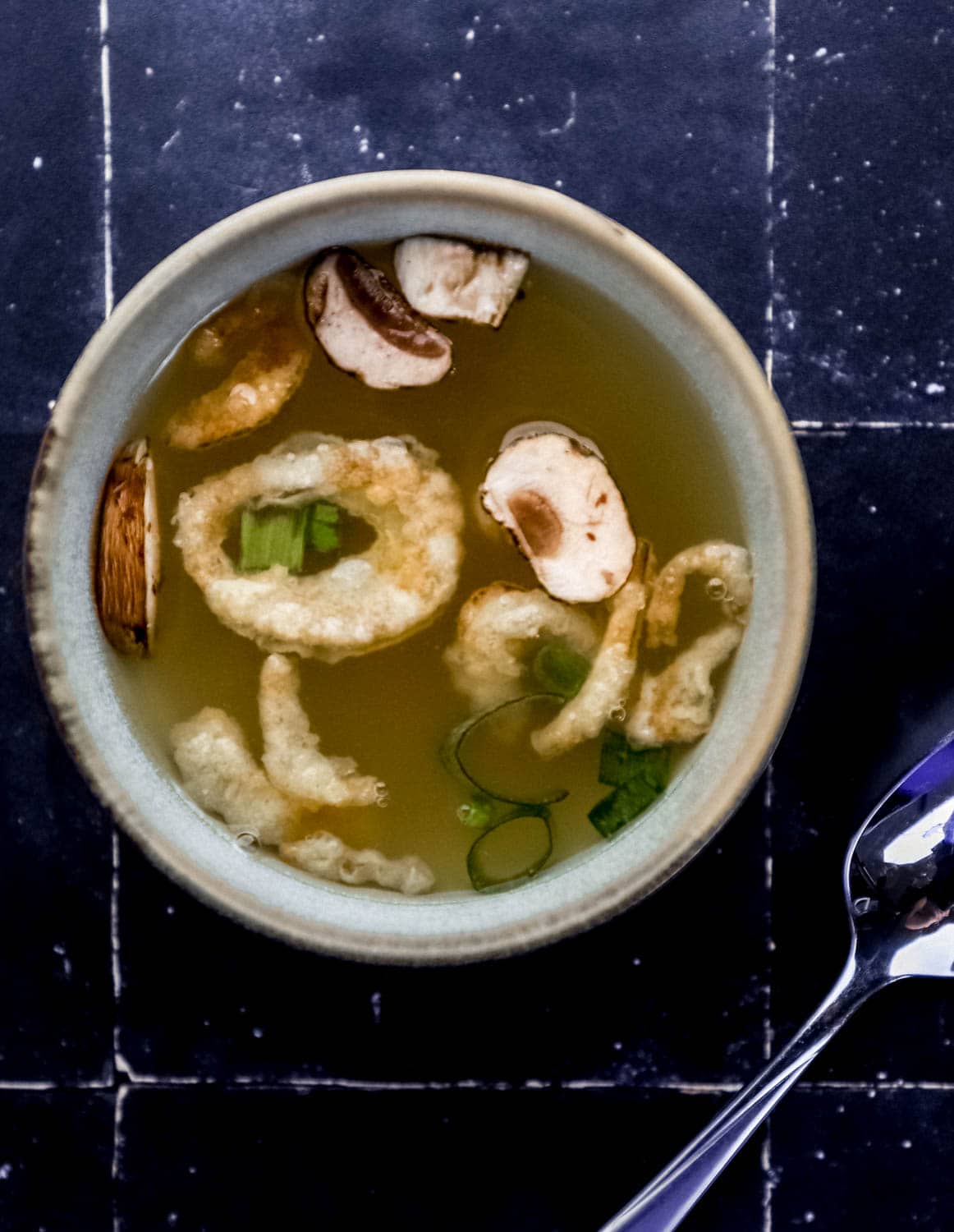
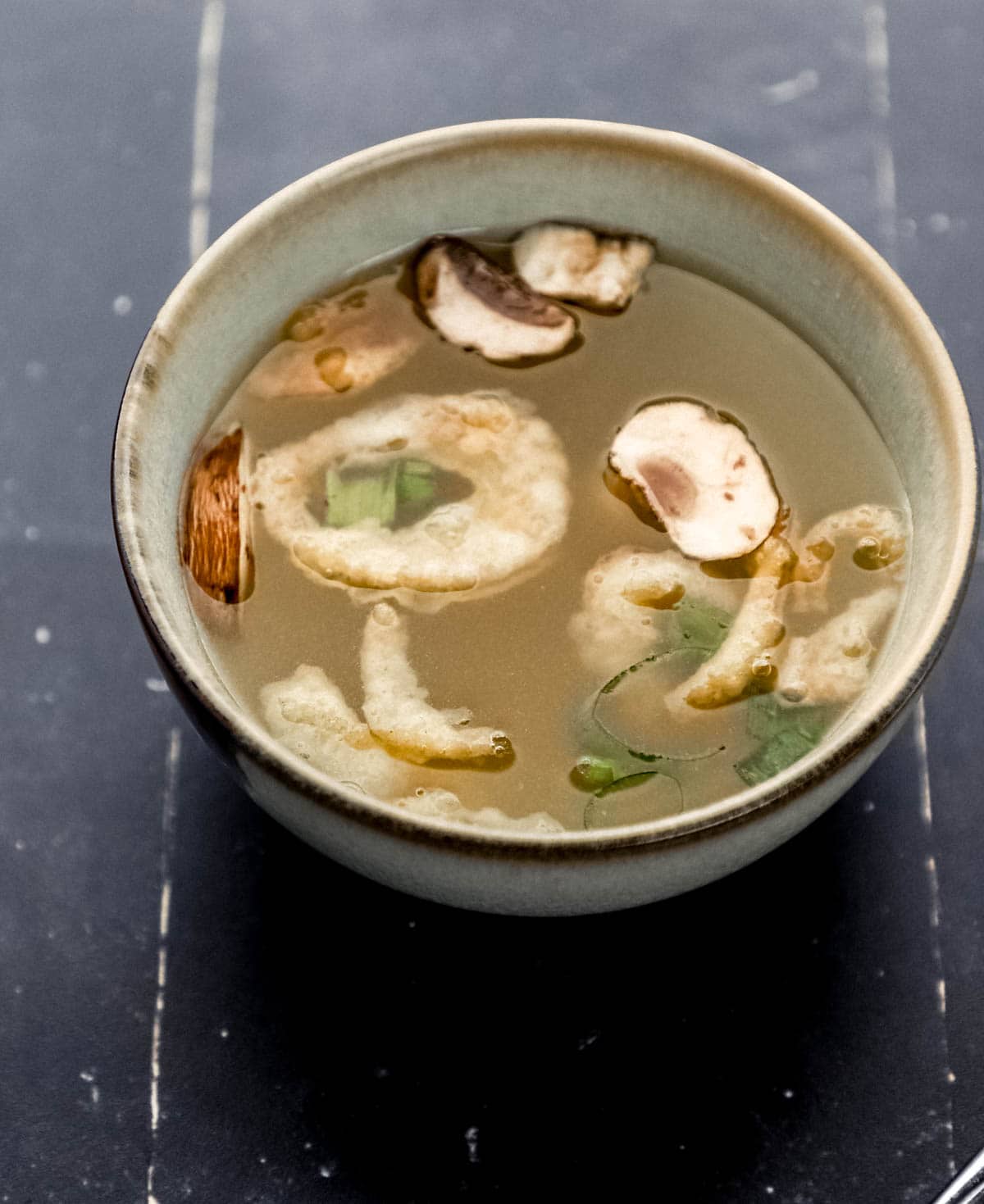
Ladle about one cup of hot broth into each bowl. Top with a few thinly sliced mushrooms, a small handful of crispy fried onions, and freshly chopped green onions. Serve immediately while the soup is still hot. The fried onions are best when they're still crisp from the hot broth.
Want To Save This Recipe?
LaKita's Expert Tips
- Simmer longer for more depth. The 15-20 minute simmer gets the job done, but if you have time, 45 minutes to an hour will give you a noticeably richer, more restaurant-style broth. This is the single biggest difference between a quick homemade version and what you'd get at a hibachi restaurant.
- Try a broth blend. Using half chicken broth and half beef broth creates a deeper, more complex flavor than chicken broth alone. It's my go-to for company.
- Add ginger for authenticity. A small knob of fresh ginger (about a half-inch piece, sliced) added to the simmering broth adds a subtle warmth that takes this soup to the next level. Remove it when you strain the vegetables.
- A splash of soy sauce finishes it. After straining, stir in about half a teaspoon to one teaspoon of soy sauce. This adds a layer of umami that rounds out the broth beautifully without making it taste like soy sauce.
- Slice the mushrooms paper-thin. The thinner you slice them, the softer they'll become from the hot broth without any additional cooking. A sharp knife makes a real difference here.
- Add fried onions just before serving. If they sit in the hot broth for too long they'll get soggy. Add them right before you bring the bowls to the table.
- Make a big batch. This broth freezes beautifully (store garnishes separately). Double the recipe and freeze the strained broth in portions so you can have hibachi soup ready in minutes any night of the week.
Variations & Substitutions
- Make it vegan/vegetarian: Swap the chicken broth for vegetable broth or mushroom broth. The mushroom broth in particular gives you a lot of umami depth without any animal products.
- Use beef broth: Beef broth gives the soup a darker color and richer, meatier flavor, closer to the version you'd get at Benihana. Use it alone or blend with chicken broth.
- Add ginger: Slice a half-inch knob of fresh ginger and add it to the simmering pot with the other aromatics. It adds a subtle warmth and is a common addition in authentic versions.
- Make it gluten-free: Use gluten-free soy sauce or coconut aminos as your finishing splash. Double-check your fried onion brand label for any gluten-containing ingredients.
- Try shiitake mushrooms: Dried shiitake mushrooms (reconstituted in warm water) give you significantly more umami than fresh button mushrooms. Save the soaking liquid and add it to the broth in place of some of the water for incredible depth.
- Instant Pot method: Combine all broth ingredients in your Instant Pot and cook on high pressure for 20 minutes, then quick release. Strain and garnish as directed. The pressure cooker extracts flavor in a fraction of the time.
- Add noodles: Ladle the broth over a small portion of thin rice vermicelli noodles for a heartier bowl. Hibachi Noodles are a great companion if you want a more substantial side.
Make-Ahead & Storage
Make-Ahead
This hibachi soup is actually better when made ahead. The broth continues to develop flavor as it sits, which is exactly why restaurant versions taste so rich. They're often made hours or even a day in advance. Make the broth up to 3 days ahead of time, strain it, and store it in an airtight container in the refrigerator. When ready to serve, reheat on the stovetop and add fresh garnishes just before serving.
Storage & Reheating
Store the strained broth (without garnishes) in an airtight container in the refrigerator for up to 5 days. Store the mushrooms, green onions, and fried onions separately so they stay fresh. To reheat, warm the broth in a small saucepan over medium heat until steaming, about 3 to 5 minutes. You can also microwave it in 60-second intervals. Once hot, garnish fresh and serve. The broth freezes well for up to 3 months in a freezer-safe container. Thaw overnight in the refrigerator before reheating.
What to Serve with Hibachi Soup
- As a starter before a full hibachi dinner - Pair it with Hibachi Chicken, Hibachi Fried Rice, and Hibachi Vegetables for a complete restaurant-style meal at home.
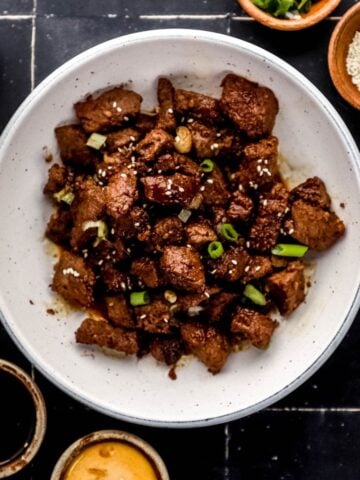
- Alongside hibachi proteins - This soup pairs beautifully with Hibachi Shrimp or Hibachi Steak for a heartier meal.
- With a drizzle of ginger dressing - Serve a simple green salad dressed with Hibachi Ginger Dressing alongside the soup for a light, restaurant-style first course.
- With yum yum sauce on the side - Yum Yum Sauce is the perfect dipping sauce for any proteins you serve alongside this soup.
- As a light lunch - A bowl of this hibachi soup with a side of rice is a simple, satisfying lunch on a cold day.
Frequently Asked Questions
Hibachi soup (also called Japanese clear soup, Japanese onion soup, or Miyabi soup) is made from a chicken broth or beef broth base simmered with aromatics like onion, carrot, celery, and garlic. After simmering, the vegetables are strained out, leaving a clear, flavorful broth. It's then served topped with thinly sliced mushrooms, crispy fried onions, and chopped green onions.
The main difference is the base. Japanese clear soup gets its flavor from simmering broth with vegetables and aromatics, leaving the broth completely clear. Miso soup uses a dashi base with dissolved miso paste added at the end, which gives it a cloudy appearance and a more fermented, savory flavor. Both are topped with mushrooms and green onions, but they have distinct flavor profiles.
Restaurant hibachi soup is often made in large batches and simmered for several hours. Sometimes the day before, which gives the flavors much more time to develop. Some restaurants also use a combination of broths (chicken and beef) and may add soy sauce or other umami boosters. The good news is that you can replicate this at home by extending your simmer time to 45-60 minutes, using a broth blend, and making the broth a day ahead.
Yes, and it's actually recommended! The broth tastes better the longer it sits. Make the broth up to 3 days in advance, strain it, and refrigerate. Add the mushrooms, fried onions, and green onions fresh when you serve it, never store the garnishes in the broth.
Chicken broth gives a lighter, cleaner flavor and a clearer appearance. Beef broth gives a richer, darker, more restaurant-style flavor. A 50/50 blend of chicken and beef broth is my favorite, it balances the lightness of chicken with the depth of beef. Low-sodium versions of either work great if you want to control the salt level.
Yes! Combine all your broth ingredients in the Instant Pot and cook on high pressure for 20 minutes with a quick release. Strain the vegetables, stir in a splash of soy sauce if desired, and garnish as usual. The Instant Pot does a great job of extracting flavor quickly.
Button mushrooms (white mushrooms) are the classic choice and what most hibachi restaurants use. Shiitake mushrooms add significantly more umami depth, especially if you use dried shiitake and reserve the soaking water to add to the broth. Cremini mushrooms are also a great middle-ground option with more flavor than button mushrooms.
Yes, this is one of the lightest soups you can make. It's naturally low in calories (around 79 calories per serving), low in fat, and contains no cream or heavy additions. It's also naturally gluten-free if you use gluten-free soy sauce and check your fried onion label.
Strain the broth through a fine-mesh strainer after simmering to remove all the vegetable solids. If you notice any fat or small particles still floating in the broth, skim them off with a large spoon before serving. Avoid boiling the soup aggressively. A low, steady simmer keeps the broth clear and the flavor delicate.
Yes! Freeze the strained broth (without garnishes) in a freezer-safe container for up to 3 months. When ready to serve, thaw overnight in the refrigerator, reheat on the stovetop or in the microwave, and add fresh mushrooms, fried onions, and green onions just before serving.
📖 Recipe

Hibachi Soup Recipe
Video
Equipment
- 1 large stockpot or saucepan
Ingredients
- 4 cups chicken broth
- 2 cups water
- ½ large onion, roughly chopped
- ¼ cup carrot, roughly chopped
- ¼ cup celery, roughly chopped
- 1 clove garlic, chopped
- ½ teaspoon salt
- 1 cup fried onions
- ½ cup mushrooms, thinly sliced (button or shiitake)
- 2 stalks green onions, chopped
Instructions
- Begin the hibachi soup recipe by grabbing a large pot or large saucepan and placing it on the stovetop over medium-high heat.
- Add coarsely ½ chopped onion, ¼ cup carrot, ¼ cup celery, 1 clove garlic, ½ teaspoon salt, 4 cups chicken broth, and 2 cups water. It is perfectly fine for the veggie to be cut in large chunks. Stir to combine.
- Allow the soup to boil, reduce the heat to low, and allow the soup to simmer for about 15 to 20 minutes, until the onion becomes translucent.
- Carefully use a fine-mesh sieve to strain the vegetables out of the broth. You can discard the vegetables or save them for another meal.
- Spoon about a cup of clear broth into each bowl. Top with a few pieces of fried onion, mushroom slices, and freshly chopped green onions. Serve immediately while the soup is still warm. Enjoy!
Notes
- Feel free to use chicken, beef, veggie broth, or a combination of chicken and beef broth to create a rich and flavorful broth. Low-sodium broth can be used if needed.
- Don't skip garnishing the soup with crispy fried onion. You can use store-bought or fry thinly sliced onions until golden and crispy.
- Simmer the soup low and slow for at least 15 minutes, but up to 45 minutes is perfectly fine.
- Thinly slice button mushrooms or shiitake mushrooms to add a savory umami flavor. If you prefer to simmer some extra mushrooms in the broth, you can do that as well for additional flavor.
- Stain the soup using a fine-mesh strainer to remove the vegetables. If you notice any fat or particles floating around in the soup, simply skim them out using a large spoon. The soup should be simple and almost clear.
Did You Make This Recipe?
If you give this hibachi soup recipe a try, I'd love to know what you think! Leave a comment below, share a photo on Instagram and tag @SimplyLaKita, or save it on Pinterest for later. Got questions about the broth, the garnishes, or making it ahead? Drop them in the comments, I'm always happy to help!


Peter says
Yummy made this and it tasted better than the hibachi soup at my local restaurant. Thank you !!
LaKita says
That’s the best kind of feedback, better than the restaurant?! Love to hear it! Thanks so much for trying it! 🖤