



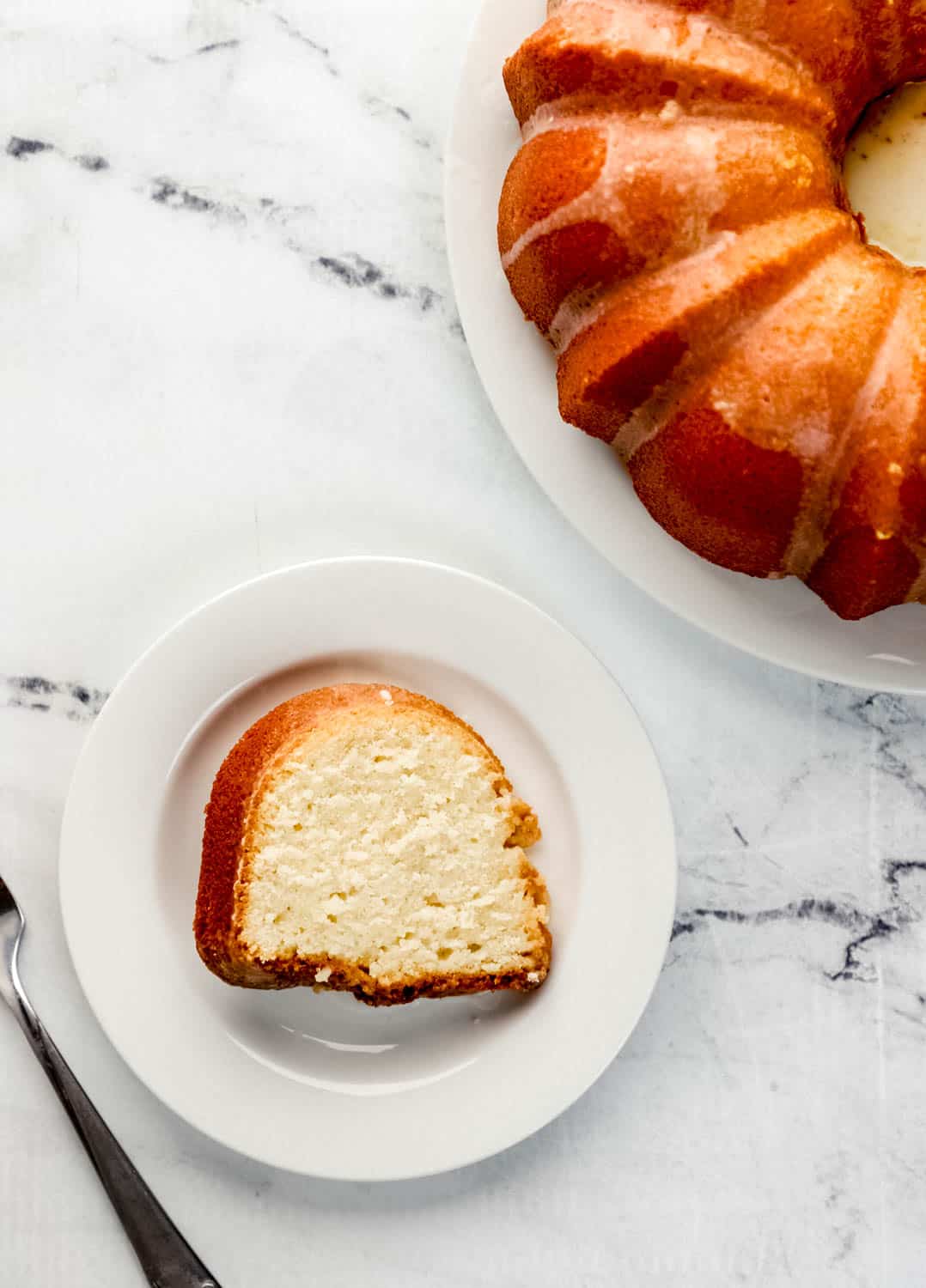
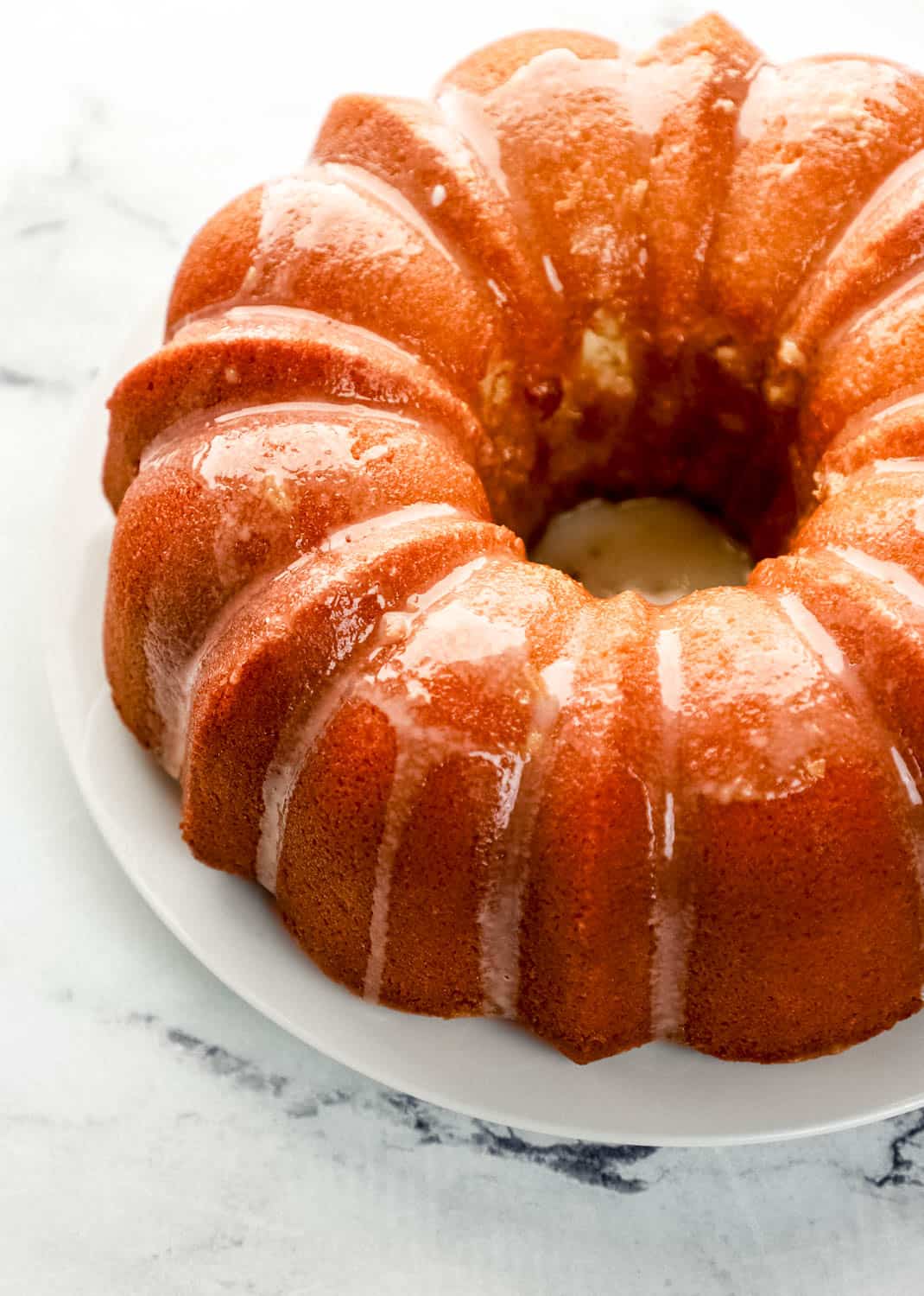
This 7UP Pound Cake recipe is a Southern classic that never goes out of style. It's rich, buttery, and moist, with the perfect balance of sweetness and a subtle lemon-lime flavor from the soda. Baked in a bundt pan and finished with a bright lemon glaze, this cake is the kind of dessert that brings families together at Sunday dinner or the holidays.
Updated August 27, 2026: I've refreshed this post with new tips, expanded FAQs, and helpful make-ahead instructions based on your questions and feedback. Same delicious recipe, even more helpful! Originally posted on June 16, 2014, and photos updated on September 5, 2025.
Want To Save This Recipe?
Watch this quick video tutorial!
There was always a 7UP pound cake somewhere in my grandmother's kitchen. On the counter under a glass dome, wrapped in foil for church on Sunday, or halfway gone before anybody admitted to cutting into it. It was the cake that showed up for graduations, for funerals, for Tuesday. When I finally made one myself, standing on a step stool with a hand mixer that rattled the whole counter, I understood why she never bothered with a different recipe.
I've been baking this cake for more than a decade now, and I've made it enough times to know exactly where it goes wrong and how to keep it from happening. I've tested it in tube pans and bundt pans, with the glaze warm and with the glaze cool, and I've fielded enough questions from readers to know which step trips people up. This is the version my family asks for by name.
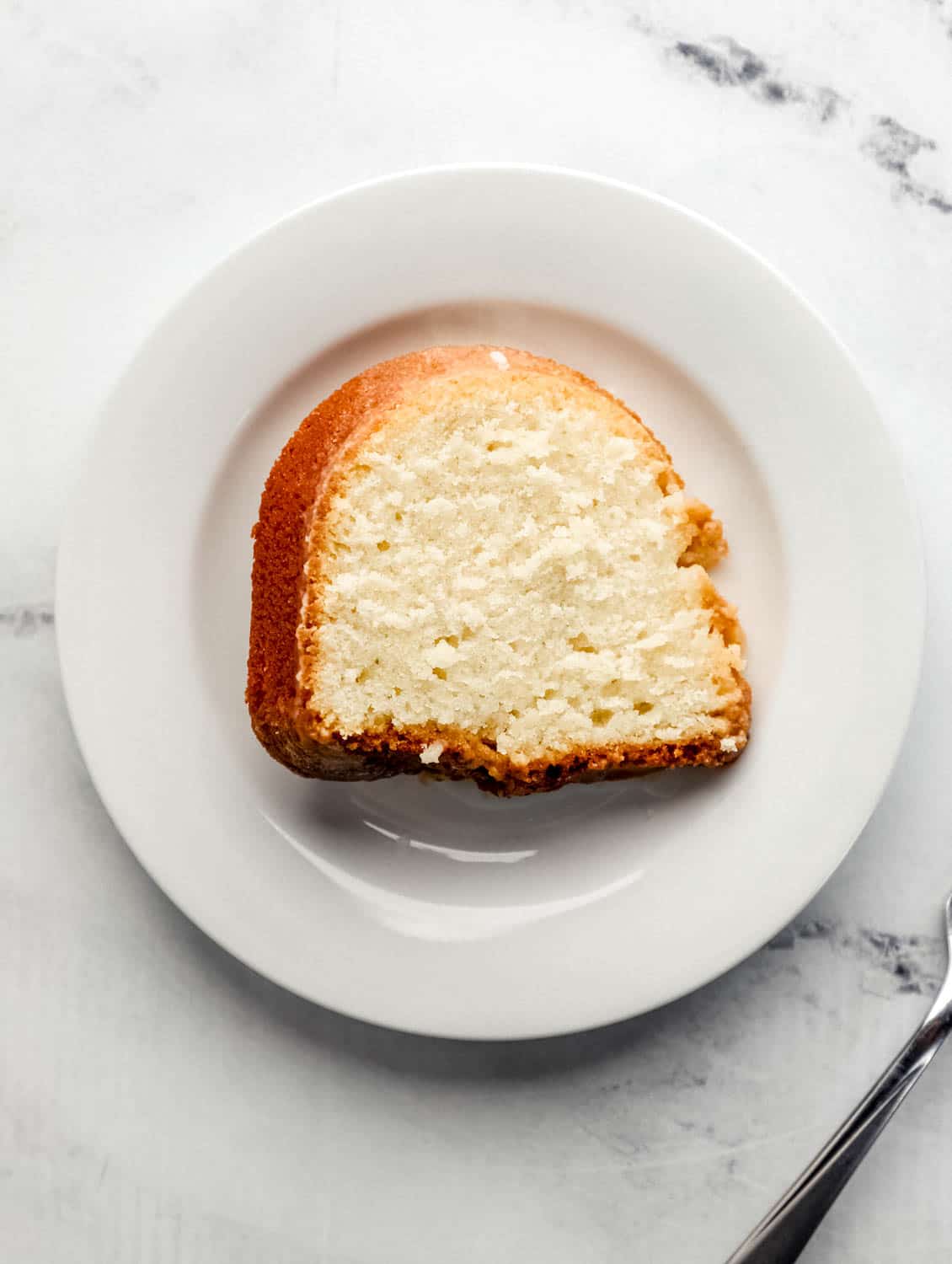
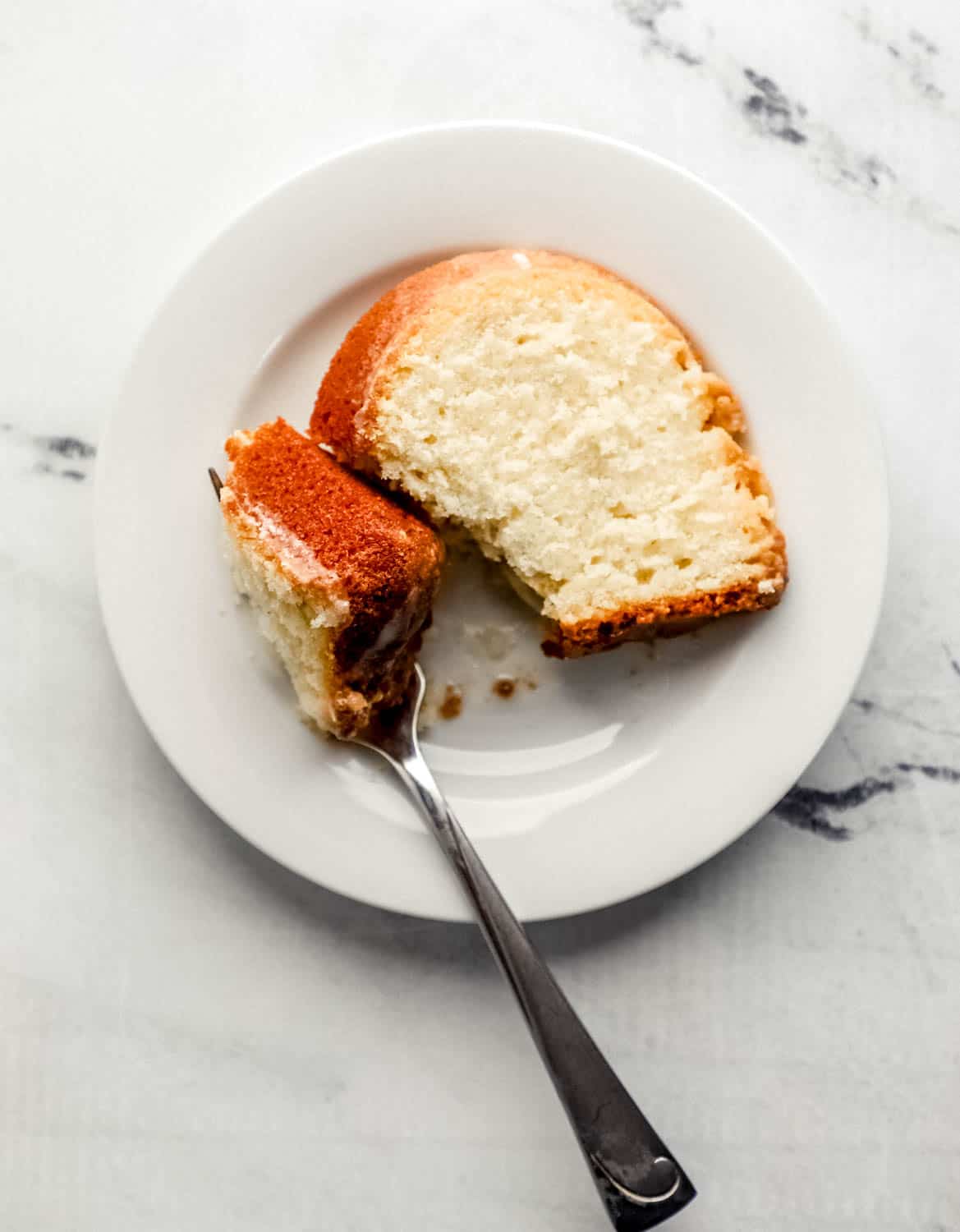
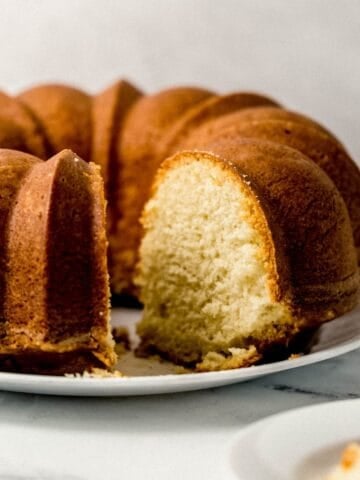
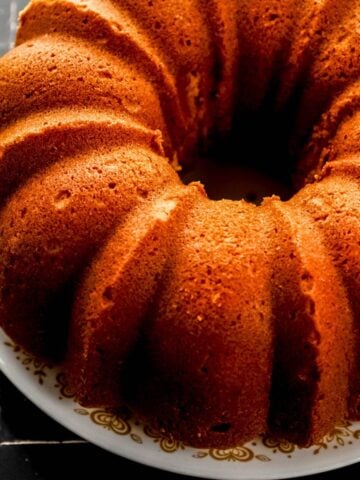
It takes about ten minutes of real work and ninety minutes of patience, and what comes out is a dense, buttery cake with a crackly golden crust and a lemon-lime brightness running all the way through it. Let's get started!
Jump to:
- Watch this quick video tutorial!
- Why You'll Love This Old-Fashioned 7UP Pound Cake
- Ingredients you'll need
- How to Make Old-Fashioned 7UP Pound Cake
- LaKita's Expert Tips
- Variations & Substitutions
- Make-Ahead & Storage
- What to Serve with 7UP Pound Cake
- Frequently asked questions
- 📖 Recipe
- Did You Make This Recipe?
Why You'll Love This Old-Fashioned 7UP Pound Cake
- Southern tradition - This is the cake that shows up at family reunions, church suppers, and holiday tables across the South, and it has earned every bit of that reputation.
- No leavening required - The carbonation in the 7UP does the lifting, which means no baking powder, no baking soda, and one less thing to measure wrong.
- Butter and shortening together - The combination gives you butter's flavor and shortening's tenderness, which is what produces that dense-but-not-heavy pound cake crumb.
- Makes a crowd happy - Sixteen generous slices from one pan, and it holds beautifully for days, which makes it a genuinely useful cake to have around.
Ingredients you'll need
Here's everything you'll need to make this recipe.
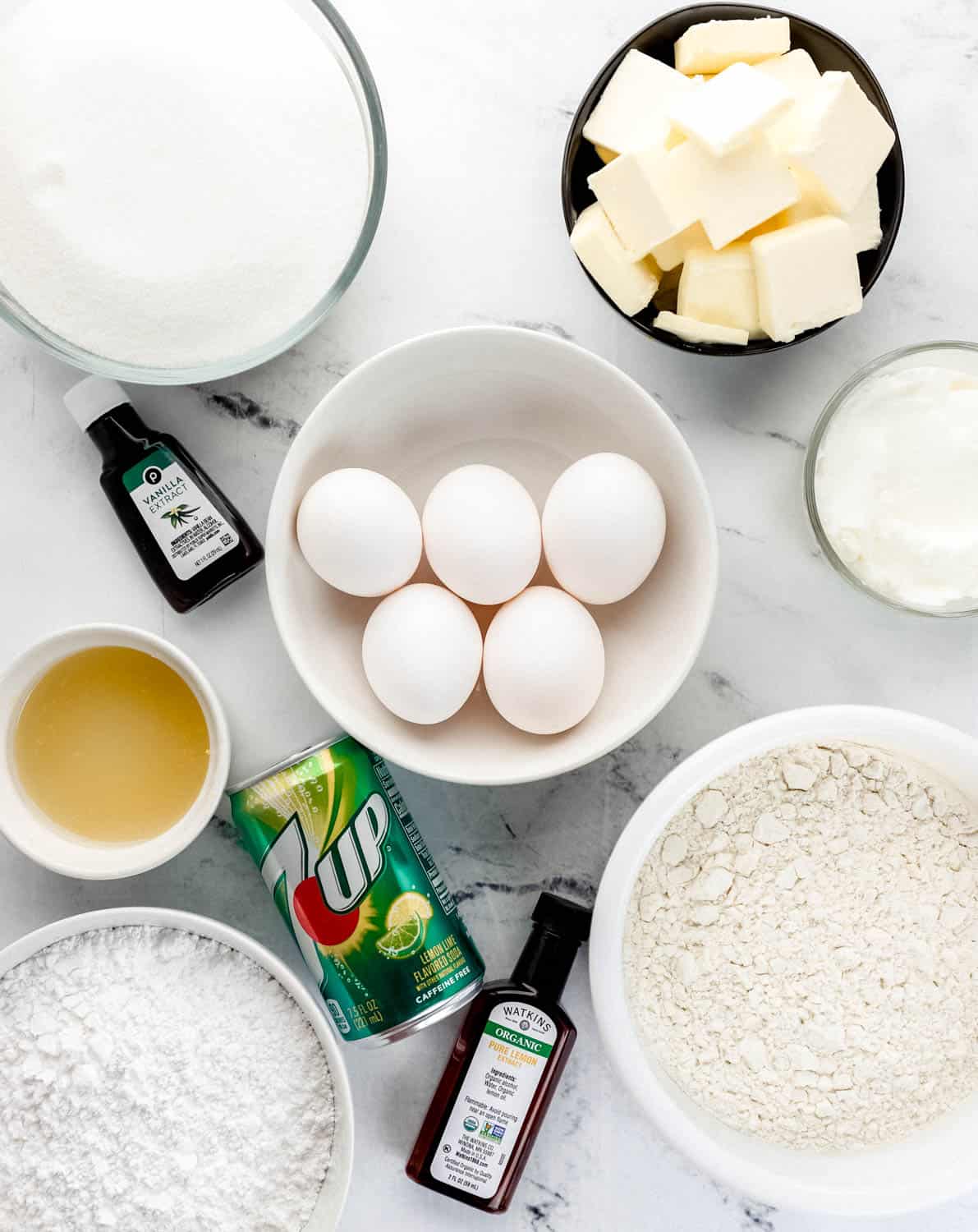
- Butter and shortening. Butter brings the flavor and the browning, shortening brings tenderness and helps the crumb stay soft for days. Going all-butter works, but the cake firms up faster on the counter. Bring both fully to room temperature. Cold fat won't hold air when you cream it, and that air is the only leavening this cake gets.
- Granulated sugar. More than just sweetness. The sharp edges of the sugar crystals cut air pockets into the butter during creaming, and those pockets are what make the cake rise.
- Eggs. Large, room temperature, added one at a time. Cold eggs hitting creamed butter will seize it into a curdled-looking mess, and while the cake usually recovers, the crumb never comes out quite as fine.
- All-purpose flour. The backbone. Measure it by spooning it into the cup and leveling it off. Scooping straight from the bag packs in as much as an extra ounce per cup, which is the most common reason a pound cake comes out dry.
- 7UP. The lift and the signature lemon-lime note. Any lemon-lime soda works in a pinch, though the flavor shifts slightly between brands. Use the regular version, never diet, the sugar contributes to both the structure and the crust.
- Vanilla and lemon extract. Vanilla rounds out the butter. Lemon extract sharpens the citrus so the soda flavor reads as intentional rather than vague.
- Powdered sugar, lemon juice, and lemon zest. The glaze. Fresh juice matters here, bottled lemon juice tastes flat against all that butter, and the zest is where most of the aroma lives.
👉🏾 See the recipe card below for exact quantities and full instructions.
How to Make Old-Fashioned 7UP Pound Cake
Here's a quick overview of the process. Full step-by-step instructions are in the recipe card below.
Step 1: Prep the Pan Properly
Grease every crease of a 12-cup bundt or tube pan and dust it with flour, tapping out the excess, or use a baking spray that already contains flour. This is not the step to rush. A pound cake this dense will hold onto any spot you missed, and there's no rescuing a cake that comes out in pieces after ninety minutes in the oven.
Step 2: Cream the Butter, Shortening, and Sugar
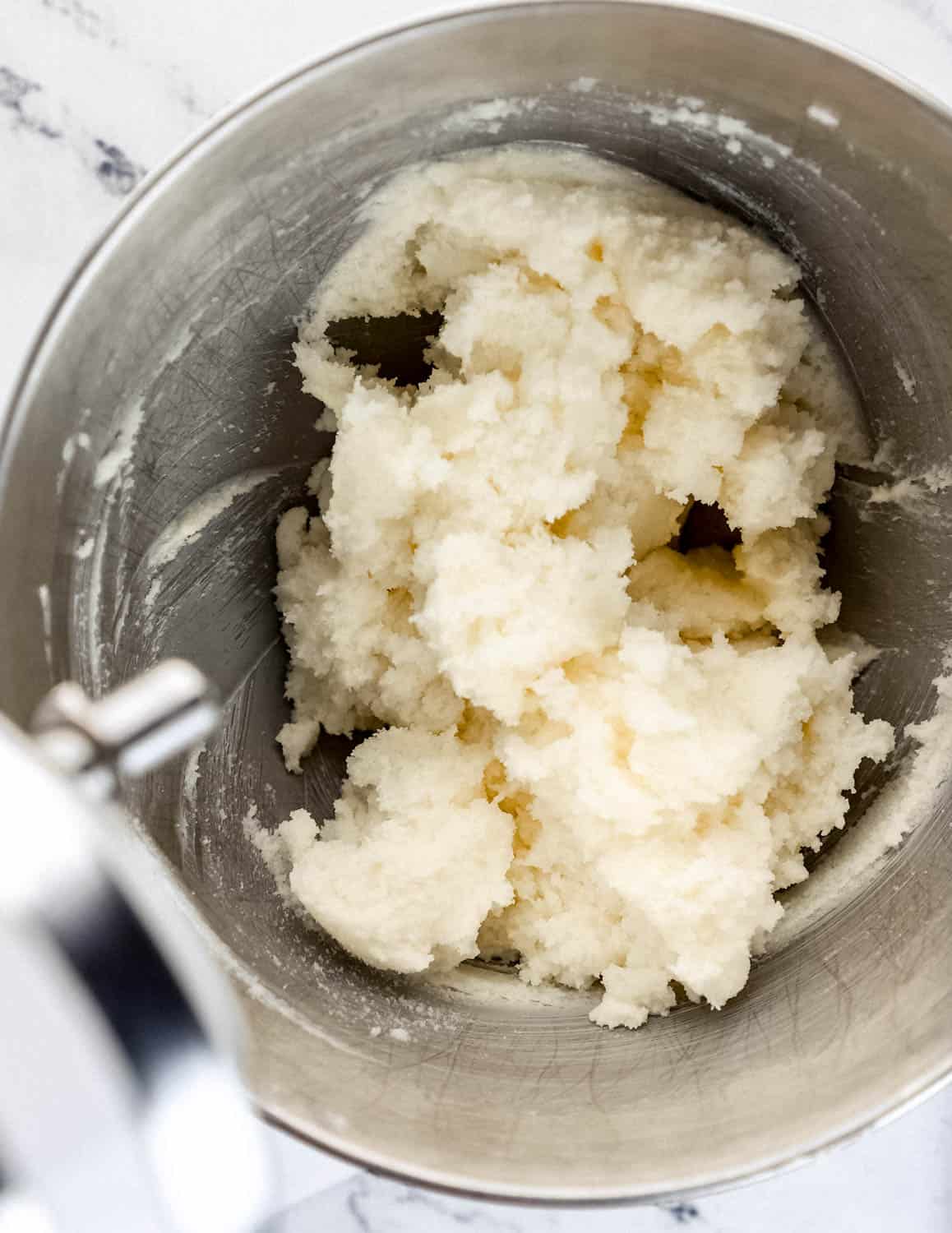
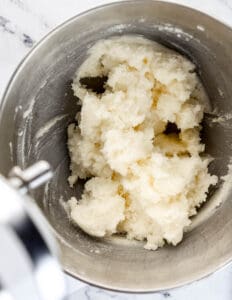
Beat the butter and shortening together until they're smooth and uniform, then add the sugar and keep going for a full three minutes. You're looking for a noticeably paler, fluffier mixture, that color change tells you air is going in. Most disappointing pound cakes are under-creamed, not over-baked.
Step 3: Add the Eggs and Extracts
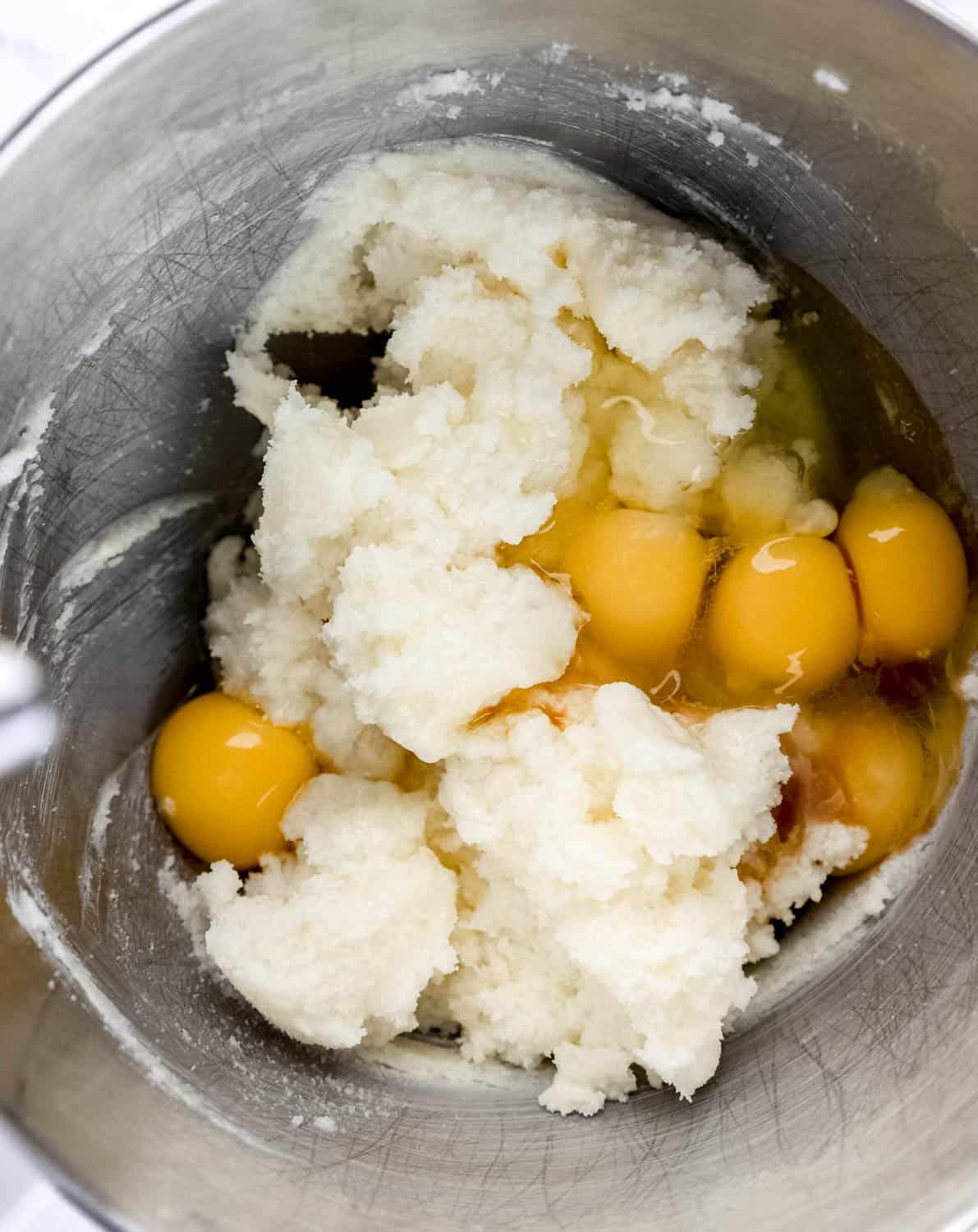
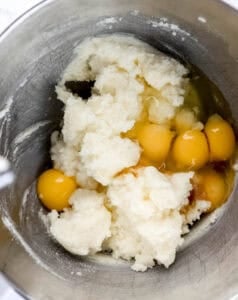
Add the eggs one at a time, mixing until each one disappears before the next goes in. Scrape the bowl down with a spatula between additions, because butter clings to the sides and unmixed butter turns into greasy streaks in the finished cake. Add the vanilla and lemon extract with the last egg.
Step 4: Alternate the Flour and the 7UP
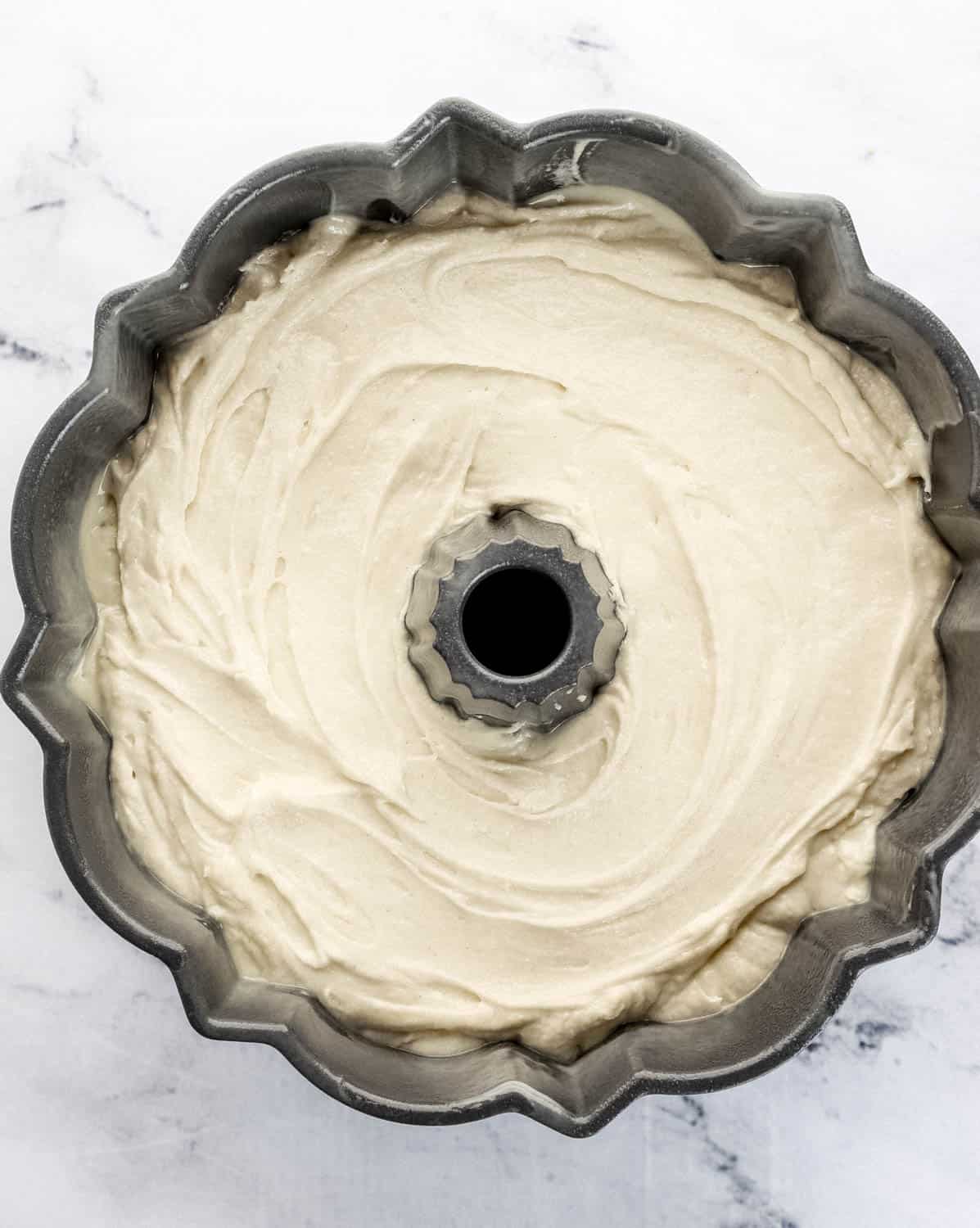
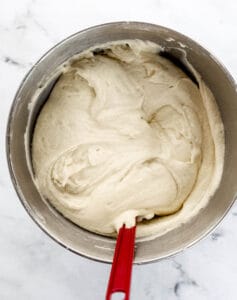
Add the flour and the soda in alternating additions, starting and ending with flour, and mix only until each addition disappears. Once flour meets liquid, gluten starts developing, and gluten is the enemy of a tender crumb. A few streaks at the end are fine, finish it by hand with a spatula.
Step 5: Bake Low, and Don't Peek
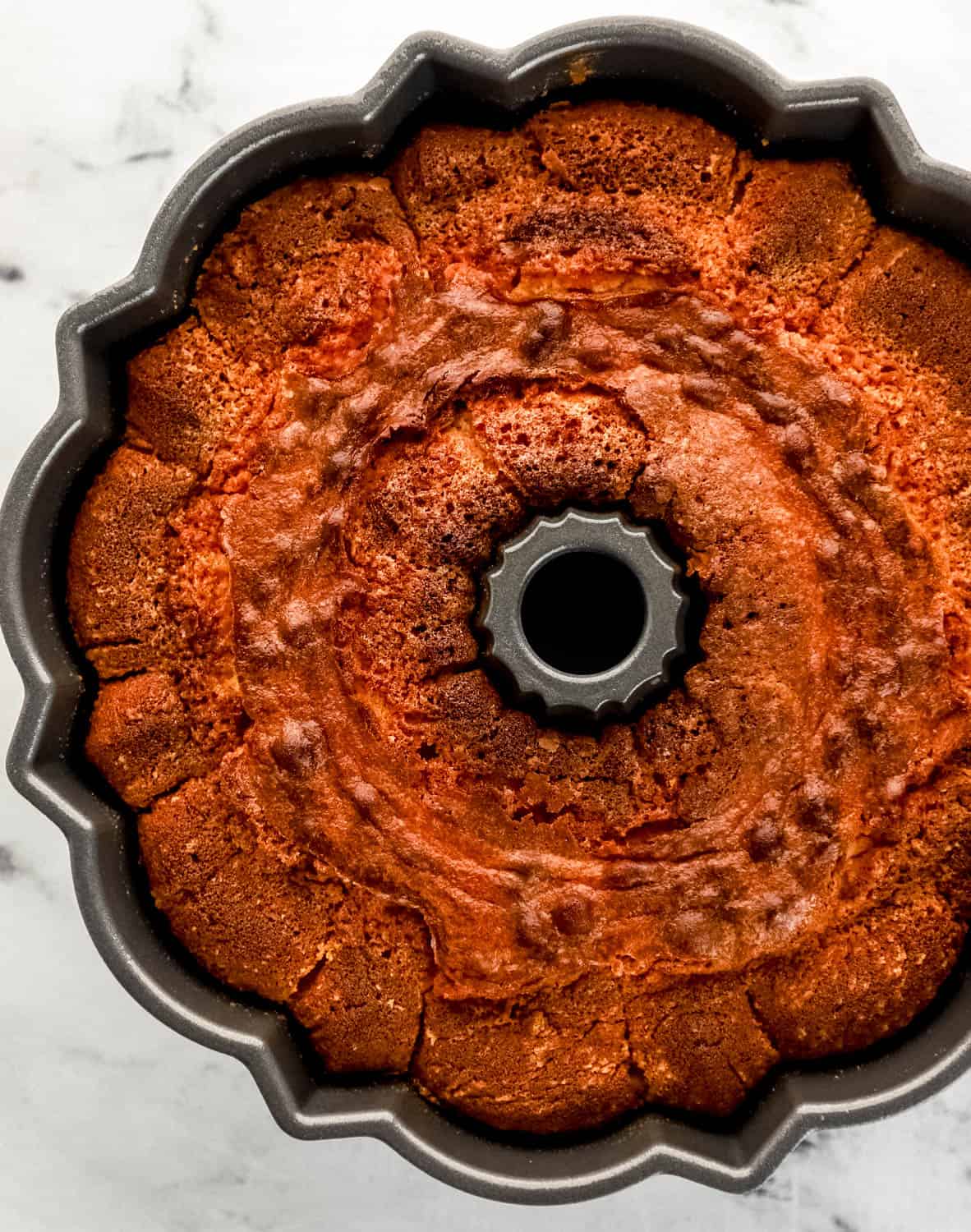
Into a 325°F oven for about ninety minutes. Low and slow lets the center set before the outside overbakes, which is how you get that even golden crust. Start testing at the eighty-minute mark with a long skewer in the thickest part. A few moist crumbs are perfect, wet batter means keep going. Opening the door before then can drop the temperature enough to sink the middle.
Step 6: Glaze While It's Still Warm
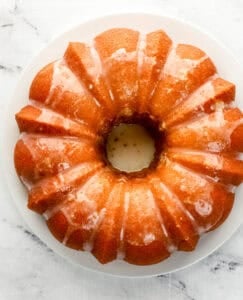
Let the cake rest in the pan ten to fifteen minutes, then turn it out. Whisk the glaze while it rests, and pour it over while the cake is still warm to the touch. Warm cake drinks the glaze in rather than wearing it on top, and that's the difference between a glazed pound cake and a frosted one.
LaKita's Expert Tips
Here are my best tips for making this recipe turn out perfectly every time.
- Pull everything out an hour early. Butter, eggs, shortening, and the soda too. Room-temperature soda is the practice most Southern bakers swear by.
- Weigh your flour if you can. Three cups should land around 360 grams. This one change fixes more dry pound cakes than any other.
- Listen to the mixer. When the batter goes from a wet slap to a heavier, quieter fold, the flour is in. That's your cue to stop.
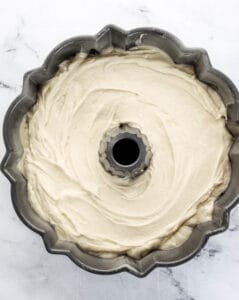
- Fill the pan no more than two-thirds full. This batter rises more than people expect, and overfilling gives you a cake with a mushroomed edge that won't sit flat.
- Cool on a rack, not a plate. Trapped steam under a warm cake turns the bottom gummy.
- If it sticks, go warm. Set the inverted pan on a warm damp towel for two or three minutes before trying again. Forcing it cold is how cakes break.
- It's better on day two. The butter flavor settles and the crumb tightens up. If you're baking for an event, bake the day before.
Variations & Substitutions
This recipe is flexible, here are some easy ways to make it your own.
- Sour cream version - For an even denser, tangier crumb, fold in sour cream and pull back on the soda to keep the batter balanced. If that's the direction you like, my Homemade Sour Cream Pound Cake is built around it from the start.
- Cake flour version - Swapping cake flour for all-purpose gives a lighter, more delicate crumb closer to a bakery-style pound cake. You'll need slightly more cake flour by volume than all-purpose.
- Cake mix shortcut - A boxed yellow or lemon cake mix with 7UP standing in for the water makes a faster, softer, sweeter cake. It's a different animal from a from-scratch pound cake, but it's a real option on a short timeline.
- Sprite or Starry - Any regular lemon-lime soda works. The flavor shifts a touch between brands and 7UP is the traditional choice, but nobody at your table is going to file a complaint.
- Mini bundts for gifting - This batter divides well into mini bundt pans for holiday gifts or a dessert table. For a smaller batch, my Mini Pound Cake for Two is scaled for it already.
- Another soda entirely - If you like what the soda does here, my Sun Drop Pound Cake takes the same idea in a citrusier direction.
- Lighter option - When you want something a little less rich, my Greek Yogurt Pound Cake uses yogurt for moisture and comes together faster.
Make-Ahead & Storage
Make-Ahead
This cake is genuinely better made a day ahead. The butter flavor deepens and the crumb sets into that classic dense texture. Bake it, cool it completely, and leave it unglazed under a cake dome overnight, then glaze the morning you're serving it. You can also measure and sift the dry ingredients up to three days ahead and leave them covered on the counter. For holiday baking, bake and freeze up to a month out, then thaw and glaze the day before.
Storage & Reheating
Room temperature: Airtight container or a cake dome, four to five days. This is the best method. Refrigeration dries pound cake out faster than the counter does.
Refrigerator: Up to a week if your kitchen runs warm, wrapped tightly in plastic first. Bring slices back to room temperature before serving or the texture stays tight and waxy.
Freezer: Wrap the unglazed cake (whole or in slices) in plastic and then in foil. Thaw overnight in the refrigerator, then bring to room temperature and glaze.
Reheating: A single slice in the microwave for eight to ten seconds brings back that just-baked softness. For a whole cake, twelve minutes in a 300°F oven, loosely tented with foil.
What to Serve with 7UP Pound Cake
Here are some of my favorite ways to serve this dish.
- A scoop of vanilla ice cream on a warm slice, try it with my No-Churn Vanilla Ice Cream.
- Macerated strawberries and whipped cream turn it into a proper spring dessert. My Strawberry Pound Cake leans into the same idea.
- Strong coffee or hot tea in the afternoon, plain, no glaze needed.
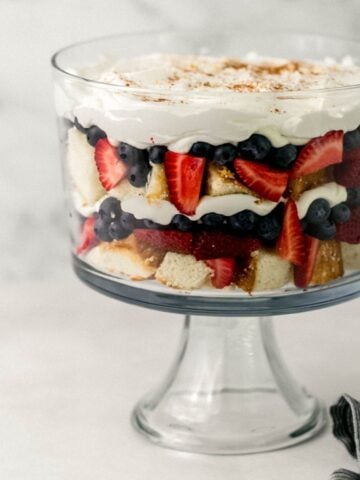
- Cubed into a trifle when you've got leftovers going slightly stale. That's exactly what my Berry Trifle with Pound Cake calls for.
- Alongside another Southern classic on a holiday dessert table. My Sweet Potato Pound Cake and this one together cover both ends of the flavor spectrum.
Frequently asked questions
Yes. Any regular lemon-lime soda will do the same work, Sprite, Starry, or a store brand. The carbonation is what provides the lift, and that's consistent across brands. 7UP has a slightly softer, less sharp citrus note that most Southern bakers prefer, but the difference is subtle once the cake is baked and glazed. The one rule: use the regular version, not diet.
You can, and it produces a lighter, more delicate crumb. Cake flour has less protein, so it develops less gluten and gives you something closer to a bakery-style pound cake. Because cake flour is lighter, you'll need slightly more of it by volume than all-purpose
Yes, and it's a genuinely useful shortcut when you're short on time. A yellow or lemon cake mix with 7UP in place of the water gets you a soft, sweet cake in about half the time. Be clear about what you're making, though: a box-mix version is a lighter, fluffier cake, not the dense from-scratch pound cake this recipe produces. Different cake, different occasion.
The carbonation in the soda supplies the lift, along with all the air you beat into the butter and sugar during creaming. That's the whole trick, and it's why the creaming step matters so much. It's doing the job that leavening would normally do. Adding baking powder on top of that would give you a light, airy cake, which is the opposite of what a pound cake should be.
Three things, in order of importance. Measure the flour by spooning and leveling rather than scooping, since packed flour is the number one cause of dry pound cake. Start checking for doneness at eighty minutes instead of waiting for the full ninety. And glaze the cake while it's still warm so the glaze soaks in rather than sitting on top. Storing it on the counter rather than in the refrigerator also keeps it softer longer.
You can, and it gives you a denser crumb with a slight tang that cuts the sweetness. You'd fold it in with the wet ingredients and reduce the soda to keep the batter from getting too loose. If sour cream pound cake is what you're really after, my sour cream version is built for it from the ground up.
A 12-cup bundt pan or a tube pan. This is a full three-cup-of-flour batter and it needs the capacity, a standard 10-cup bundt will overflow. If you only have loaf pans, split the batter between two 9x5 loaves and start checking at fifty minutes, since they bake considerably faster than a bundt.
I don't recommend it. The sugar in regular soda contributes to browning, crust formation, and moisture retention, not just sweetness. Diet versions leave you with a paler cake and a slightly rubbery texture. Same goes for sparkling water, which has the carbonation but none of the sugar or flavor.
Usually one of three things. The oven door was opened before the center set, hold off until at least the eighty-minute mark. The batter was overmixed after the flour went in, which builds gluten that collapses as it cools. Or it came out slightly underbaked. A skewer in the thickest part should come out with moist crumbs, not wet batter. A little doming and cracking on top is normal and desirable.
A day ahead is ideal. This cake genuinely improves overnight as the butter flavor settles. Bake and cool it fully, leave it unglazed under a dome, and glaze the morning you're serving. For longer lead times, freeze the unglazed cake wrapped in plastic and foil, then thaw overnight in the refrigerator and glaze once it's back to room temperature.
📖 Recipe
Old-Fashioned 7UP Pound Cake Recipe (Southern, From Scratch)
Video
Equipment
- 1 stand mixer or hand mixer
- 1 Tube or Bundt Pan
Ingredients
- Pound Cake Ingredients:
- 1 cup butter (2 sticks)
- ½ cup shortening
- 3 cups granulated sugar
- 5 large eggs
- ½ teaspoon vanilla extract
- 1 teaspoon lemon extract
- 3 cups all-purpose flour
- ¾ cup 7 up or lemon-lime soda
- Glaze Ingredients:
- 1 ½ cups powdered sugar
- 3 tablespoons lemon juice
- zest of 1 lemon
Instructions
- Preheat oven to 325°F. Grease and flour a bundt or tube pan.
- Cream 1 cup butter and ½ cup shortening until smooth. Add 3 cups sugar and beat until fluffy.
- Add 5 large eggs one at a time, then mix in ½ teaspoon vanilla and 1 teaspoon lemon extract. Mix until combined. Scrape the sides of the bowl with a rubber spatula to make sure fully mixed.
- Slowly add 3 cups flour and ¾ cup 7UP, alternating until combined. Don't overmix.
- Pour into pan and bake 1 hour 30 minutes, or until a tester comes out clean.
- Cool for 10-15 minutes, then remove from pan.
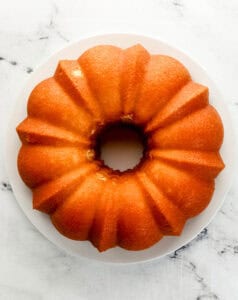
- Whisk glaze ingredients (1 ½ cups powdered sugar, 3 tablespoons lemon juice, lemon zest). Drizzle over cake while slightly warm. Enjoy!
Did You Make This Recipe?
If you give this old-fashioned 7UP pound cake a try, I'd love to know what you think! Leave a comment below, share a photo on Instagram and tag @SimplyLaKita, or save it on Pinterest for later. And if it turned out well for you, please take a second to leave a star rating on the recipe card. It genuinely helps other bakers find the recipe when they're searching. Got a question about your pan, your oven, or a swap you're thinking about? Ask me in the comments, y'all, I read every one.
Leave a Reply