
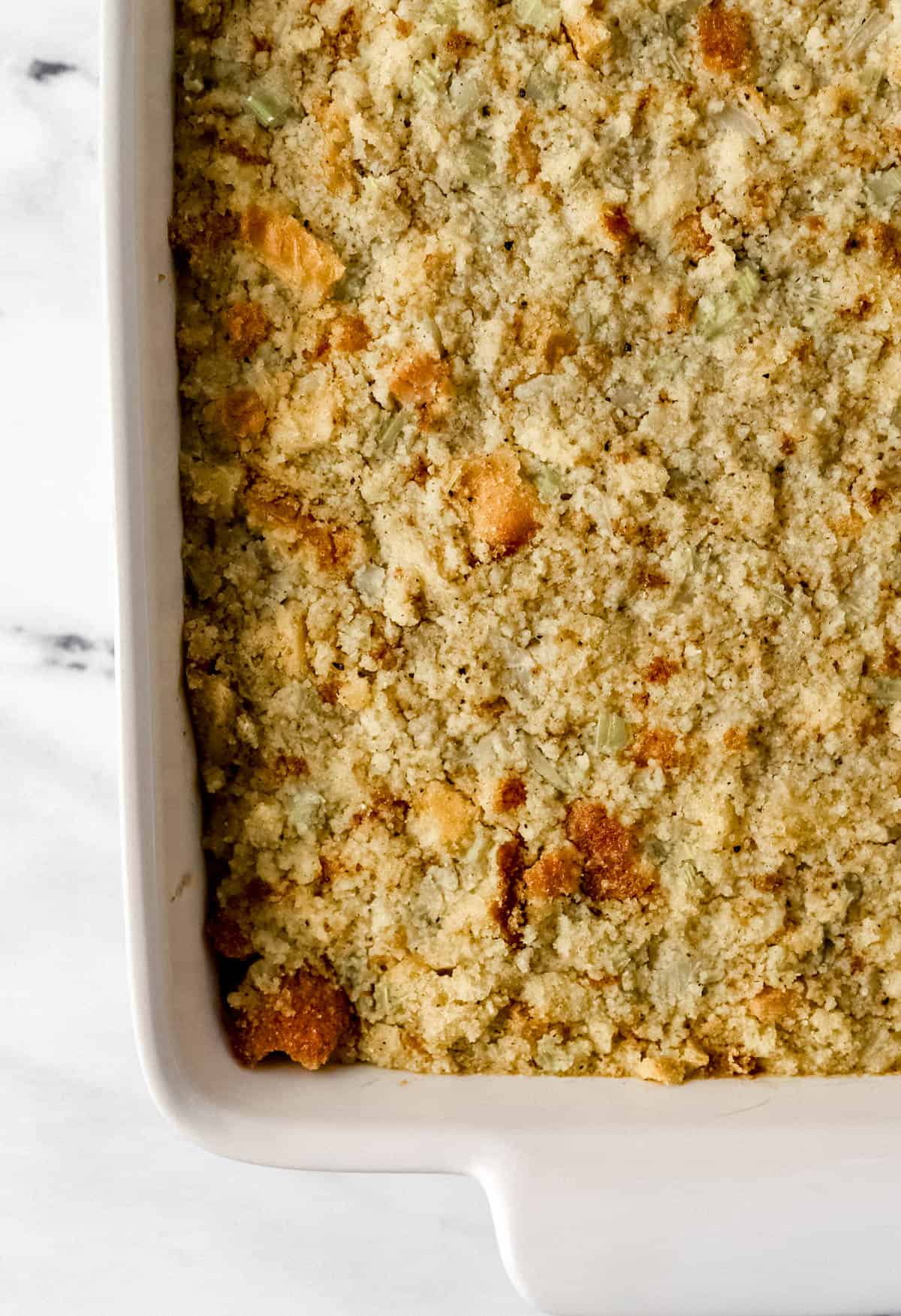
Yes, you can make cornbread dressing ahead of time, but the best method depends on how far ahead you're working. Prep the cornbread, vegetables, and wet ingredients separately a few days ahead, or assemble the dressing and freeze it immediately for longer storage.
This guide walks you through what to prep ahead, whether to freeze dressing before or after baking, how to bake it from frozen, and the best way to reheat leftovers without drying them out.
Use this guide alongside my Classic Cornbread Dressing recipe for the full ingredient list and recipe instructions.
Updated September 17, 2026: I've simplified this guide, clarified the make-ahead timeline, and updated the food-safety instructions for preparing, freezing, thawing, and reheating cornbread dressing. Originally posted on October 7, 2025.
Want To Save This Recipe?
The Short Answer
If you're planning Thanksgiving dinner, here's the easiest way to decide what to do:
- 3 to 4 days ahead: Bake the cornbread and prep the cooked vegetables.
- 1 to 2 days ahead: Keep the dry components and refrigerated wet components separate.
- More than a day ahead: Assemble the dressing and freeze it immediately rather than storing the uncooked mixture in the refrigerator.
- After baking: Refrigerate leftovers within 2 hours and use them within 3 to 4 days.
- For longer storage: Freeze cooked dressing in a whole pan or individual portions.
The center of cornbread dressing should reach 165°F when cooked or reheated.
Jump to:
- The Short Answer
- Why You'll Love This Make-Ahead Method
- Can You Make Cornbread Dressing Ahead of Time?
- My Cornbread Dressing Make-Ahead Timeline
- Should You Freeze Cornbread Dressing Before or After Baking?
- How to Freeze Unbaked Cornbread Dressing
- Can You Bake Cornbread Dressing From Frozen?
- How to Freeze Baked Cornbread Dressing
- How to Reheat Cornbread Dressing Without Drying It Out
- How to Keep Make-Ahead Dressing Moist
- Best Pan for Make-Ahead Cornbread Dressing
- Can You Freeze Cornbread Dressing With Eggs?
- Cornbread Dressing Storage Guide
- Troubleshooting
- Frequently Asked Questions
- What to Serve With Cornbread Dressing
Why You'll Love This Make-Ahead Method
- Less work on Thanksgiving Day: Most of the chopping, cornbread baking, and mixing can happen before the holiday rush.
- Flexible: Prep individual components ahead or freeze an entire pan.
- Freezer friendly: Both unbaked and baked dressing can be frozen.
- Keeps the texture right: A little planning helps preserve that moist center and crisp golden top.
- Perfect for big holiday meals: Getting the dressing handled early frees up precious oven and counter space.
Can You Make Cornbread Dressing Ahead of Time?
Absolutely, but I recommend prepping the components separately if you're keeping them in the refrigerator.
Bake the cornbread ahead. Cook the onion and celery ahead. Prepare the wet mixture ahead and refrigerate it separately.
Then combine everything when you're ready to bake.
If you want to completely assemble the dressing several days ahead, freeze the assembled dressing immediately instead of holding the uncooked mixture in the refrigerator.
That gives you the convenience of a fully assembled casserole without having to worry about storing a wet, uncooked dressing mixture for several days.
My Cornbread Dressing Make-Ahead Timeline
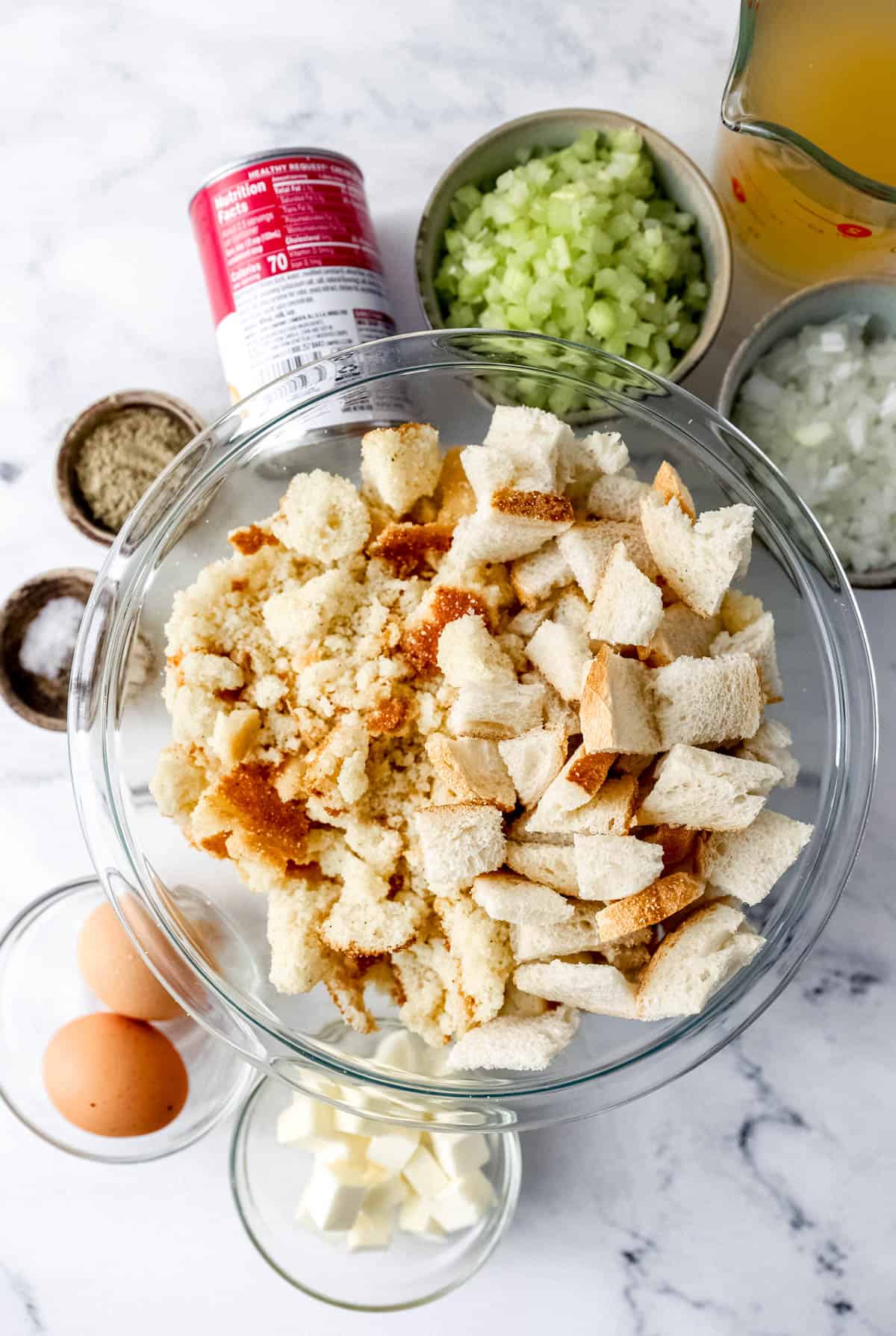
3 to 4 Days Before
This is the perfect time to do the jobs that don't require assembling the final casserole.
Bake the cornbread. Let it cool completely, crumble or cut it as directed in your recipe, and store it covered.
A little drying time can actually help the cornbread absorb the flavorful broth later.
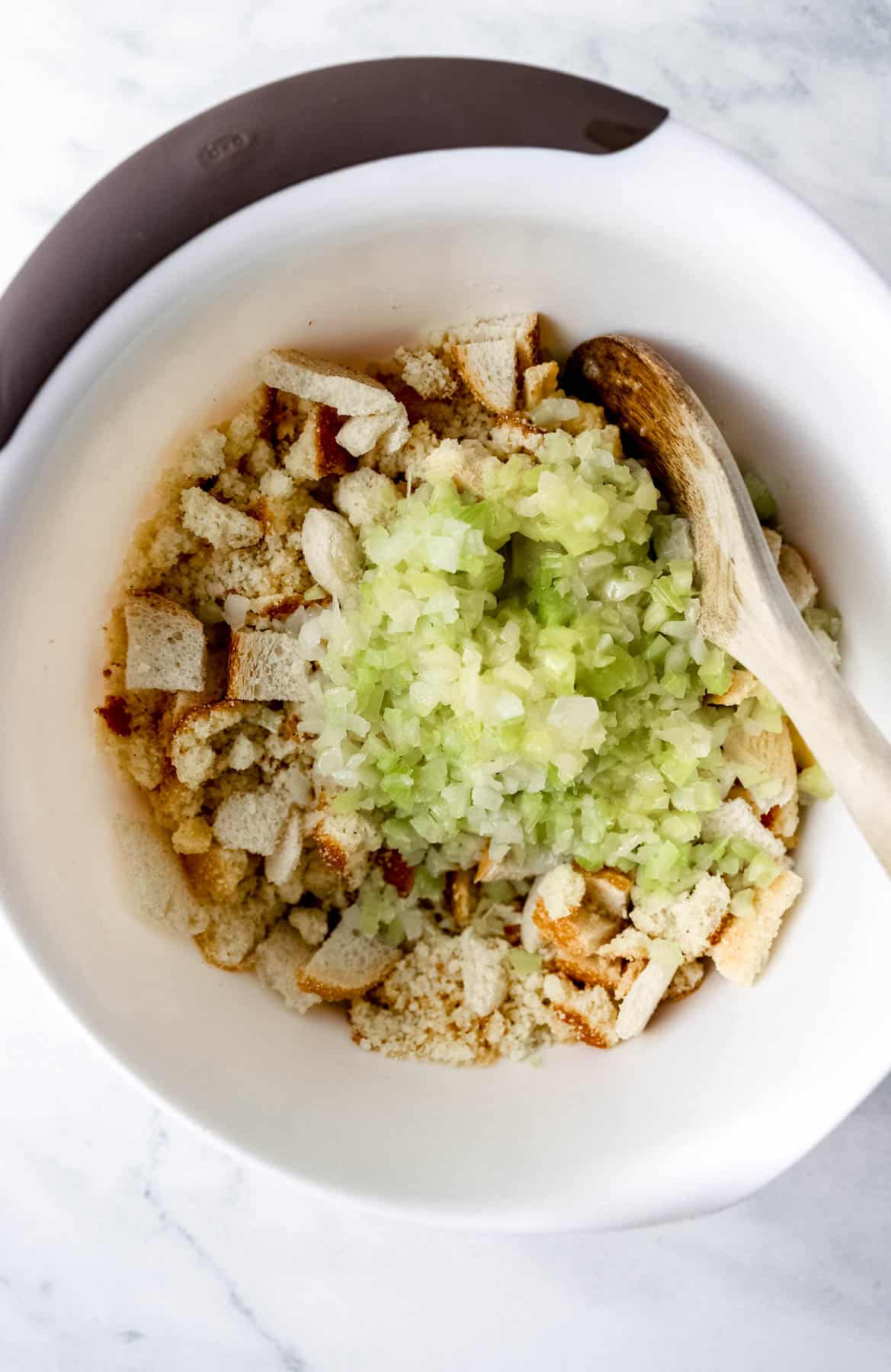
Cook the onion and celery. Sauté them according to the recipe, allow them to cool, then store them in an airtight container in the refrigerator.
You can also gather your seasonings, casserole dish, stock, and other ingredients so everything is ready when it's time to assemble.
1 to 2 Days Before
Keep the components separate.
Combine your dry cornbread mixture and seasonings if desired.
Prepare the liquid ingredients separately and keep them refrigerated.
When you're ready to bake, combine the ingredients, transfer the dressing to the prepared casserole dish, and put it into the oven.
Several Days or Weeks Before
Want the whole pan finished and waiting for you?
Assemble the dressing and freeze it immediately.
This is my favorite option when I want Thanksgiving Day to require as little work as possible.
Should You Freeze Cornbread Dressing Before or After Baking?
Either works, but they serve different purposes.
Freeze It Before Baking If...
You want the closest thing to freshly made dressing on Thanksgiving Day.
Freezing it unbaked allows the dressing to bake and brown for the first time when you're ready to serve it.
Freeze It After Baking If...
You're freezing leftovers or want something that only needs reheating.
Baked dressing is especially convenient when you freeze it in individual portions.
My pick for holiday prep: Freeze it before baking when possible.
How to Freeze Unbaked Cornbread Dressing
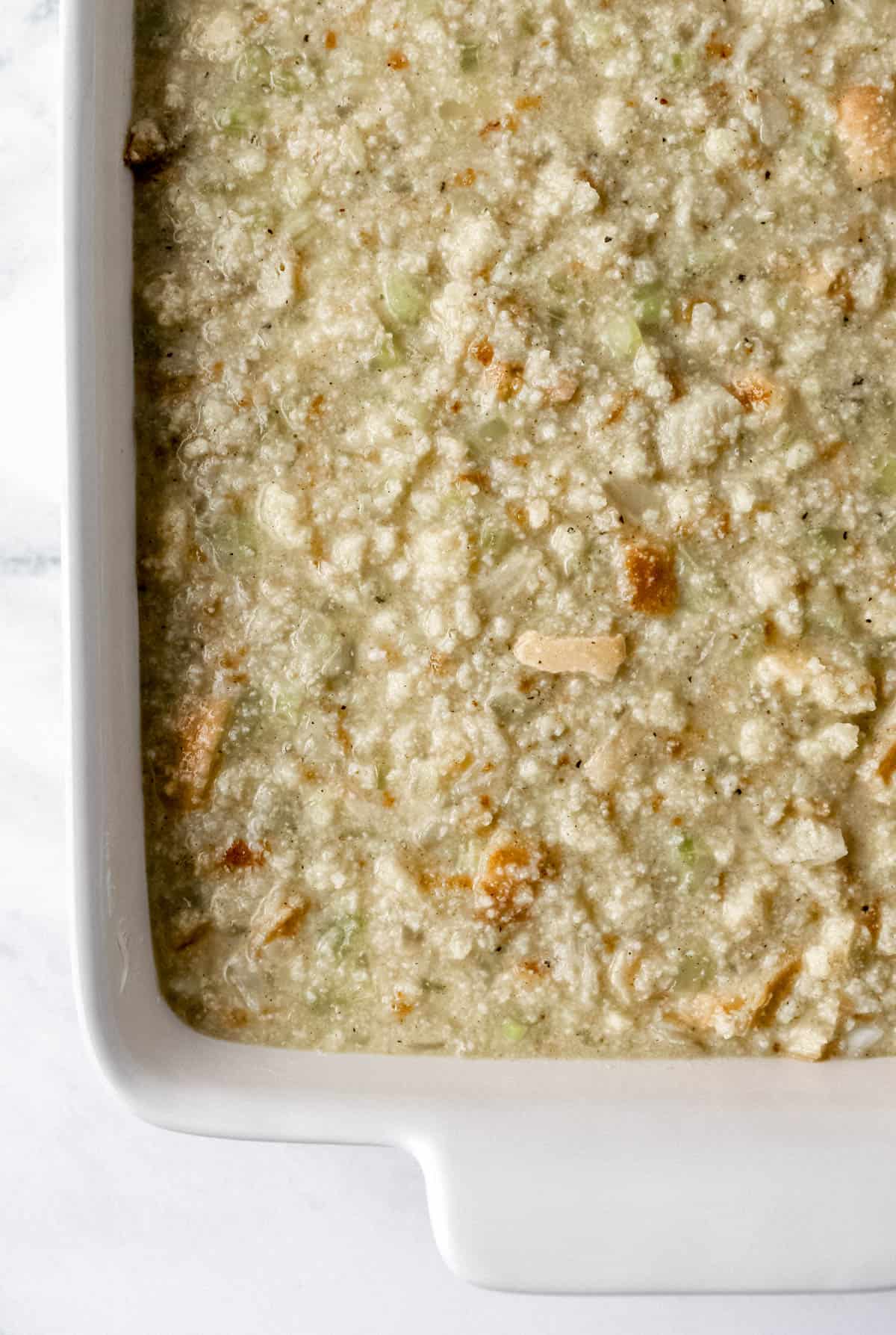
Prepare the dressing according to the recipe and place it in a freezer-safe baking dish.
1. Choose the Right Pan
A disposable aluminum baking pan works especially well because you don't have to tie up one of your casserole dishes in the freezer.
You can also use a freezer-safe 9×13-inch baking dish.
2. Assemble the Dressing
Spread the prepared dressing evenly in the pan without packing it down too firmly.
A shallow, even layer will cook more evenly than a very deep pan.
3. Wrap It Well
Cover the surface tightly with freezer-safe wrap, then cover the entire pan with heavy-duty aluminum foil or a secure freezer-safe lid.
4. Label It
Write the following on the pan:
- Cornbread Dressing
- Date frozen
- Oven temperature
- Reminder to cook to 165°F
Future holiday-you will appreciate this. 😂
5. Freeze Immediately
Place the assembled dressing directly into the freezer.
For the best flavor and texture, I like to use frozen dressing within about 3 months.
Can You Bake Cornbread Dressing From Frozen?
Yes.
In fact, baking unbaked dressing directly from frozen is a convenient option because you don't have to wait for the entire casserole to thaw first.
Remove any plastic wrap before baking and cover the pan with foil.
Bake in a 350°F oven until the center is hot, then remove the foil during the last portion of baking so the top can brown.
Because pan depth, casserole material, and how firmly the dressing is packed can all affect cooking time, use temperature rather than the clock as your final doneness test.
The center should reach 165°F.
Frozen dressing will take longer than freshly assembled dressing, so give yourself extra oven time on Thanksgiving Day.
How to Freeze Baked Cornbread Dressing
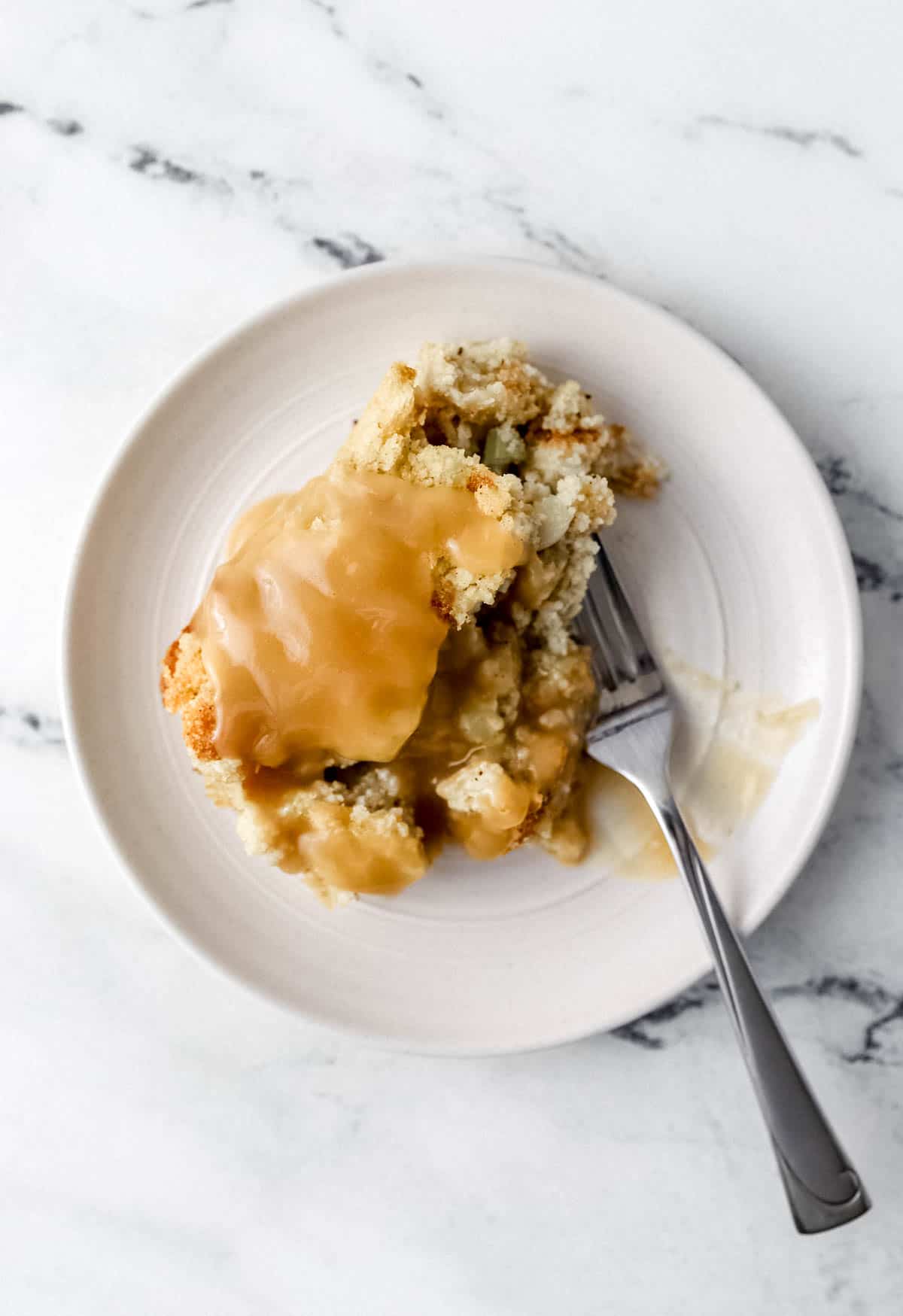
Freezing baked dressing is easy and works especially well for leftovers.
Whole Pan
Allow the dressing to cool, then transfer it to the refrigerator or freezer promptly.
Once chilled, cover the pan tightly with freezer-safe wrap and foil.
Freeze for up to about 3 months for best quality.
Individual Portions
Cut the chilled dressing into serving-size portions.
Wrap each portion well and place them together in a freezer-safe container or freezer bag.
This is my favorite method for leftovers because you can pull out exactly what you need.
How to Reheat Cornbread Dressing Without Drying It Out
Cornbread dressing naturally absorbs moisture as it sits, so reheating it gently is the key.
Whole Pan
Heat the oven to 325°F.
Add a few spoonfuls of warm chicken or turkey stock if the dressing looks dry.
Cover the pan with foil and reheat until hot throughout.
Remove the foil near the end if you'd like to crisp the top again.
The center should reach 165°F.
Individual Portion
Place a serving in a microwave-safe dish.
Add a teaspoon or two of stock if needed, cover loosely, and heat until hot throughout.
For crispier edges, reheat the portion in the oven or a covered skillet instead.
How to Keep Make-Ahead Dressing Moist
Nobody wants a pan of dry dressing sitting next to the turkey. 😩
A few things make a big difference:
Start with enough liquid. The cornbread should be thoroughly moistened before baking but not swimming in broth.
Don't pack it down. A lighter hand gives you a softer interior instead of a dense casserole.
Cover during part of the baking time. Foil helps keep moisture inside while the center heats.
Add warm stock if needed. If reheated dressing looks dry, drizzle a little warm stock over it before covering and reheating.
Don't overbake. Once the center reaches the proper temperature and the top has browned, take it out.
Best Pan for Make-Ahead Cornbread Dressing
A 9×13-inch casserole dish is the classic choice.
A wider, shallower pan gives you:
- More crispy edges
- More golden surface area
- Faster, more even cooking
A deeper casserole gives you:
- More soft interior
- Fewer crispy edges
- Longer baking time
If you're doubling the recipe, I recommend using two pans instead of one extra-deep casserole.
Bonus: bake one now and freeze the other.
Can You Freeze Cornbread Dressing With Eggs?
Yes, an assembled uncooked dressing containing eggs can be frozen.
Once the wet and dry components have been combined, freeze the dressing immediately rather than storing the uncooked mixture in the refrigerator for several days.
When you're ready to cook it, bake until the center reaches 165°F.
Cornbread Dressing Storage Guide
Cooked Dressing in the Refrigerator
Refrigerate cooked dressing within 2 hours after cooking.
Store it in a covered container and use within 3 to 4 days.
Cooked Dressing in the Freezer
Freeze well-wrapped cooked dressing for longer storage.
For the best quality, I prefer to use it within about 3 months.
Unbaked Dressing
If the dressing has already been completely assembled with the wet ingredients, either:
- Bake it immediately, or
- Freeze it immediately.
For refrigerator make-ahead prep, keep the components separate until you're ready to combine and bake.
Troubleshooting
My dressing looks dry after reheating.
Drizzle a small amount of warm chicken or turkey stock over the top, cover with foil, and continue heating.
Start with a few tablespoons rather than pouring in a large amount at once.
The top is brown but the middle isn't hot enough.
Cover the pan loosely with foil and continue baking.
This protects the browned top while the center finishes heating.
My dressing is too wet.
Continue baking it uncovered for a little longer so some of the excess moisture can evaporate.
Remember that it will also firm slightly as it rests.
The edges are getting too dark.
Cover the edges or the entire pan loosely with foil until the center finishes heating.
I want extra crispy edges.
Use a wider, shallower baking dish and finish the dressing uncovered.
Two smaller pans will also give you more crispy surface area than one deep casserole.
Frequently Asked Questions
You can prep the ingredients two days ahead, but keep the wet and dry components separate in the refrigerator.
If you want the dressing completely assembled two days ahead, freeze the assembled pan immediately and bake it later.
Yes! In fact, cornbread is one of the easiest parts of the recipe to prepare ahead.
Bake it several days before Thanksgiving, let it cool completely, and store it until you're ready to assemble the dressing.
For a holiday meal, I prefer freezing it uncooked so it can bake fresh on the day you serve it.
For leftovers, freezing it after baking is easiest.
No. Frozen dressing can be cooked directly from frozen.
Just allow additional baking time and check the center with an instant-read thermometer to make sure it reaches 165°F.
Yes. Freeze it as a whole casserole or in individual portions.
Individual portions are especially handy because you can reheat only what you need.
Cooked cornbread dressing will keep for 3 to 4 days when refrigerated promptly and stored properly.
Add a little warm broth if needed, cover the dressing while most of it reheats, and remove the foil near the end if you want to restore the crisp top.
Cooked or reheated dressing should reach 165°F in the center.
What to Serve With Cornbread Dressing
Build the rest of your holiday plate with:
- Slow Cooker Turkey Breast
- Cajun Maple Glazed Spatchcock Turkey
- Southern Collard Greens with Ham Hocks
- Southern Mac and Cheese
- Easy Green Bean Casserole
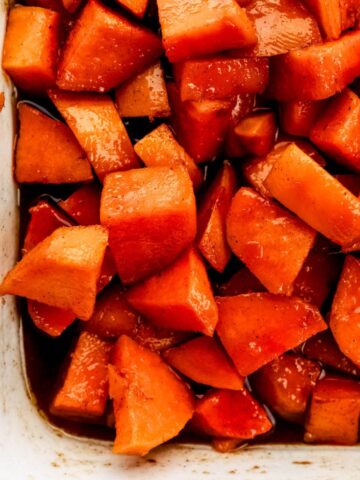
- Easy Candied Yams
- Southern Sweet Potato Pie
Once you know when the dressing is getting made, Thanksgiving dinner gets a whole lot easier.
If this guide helped you get ahead on your holiday cooking, leave a comment below and tell me: are you Team Make-It-Ahead or Team Thanksgiving-Morning Chaos? 😂
Leave a Reply